
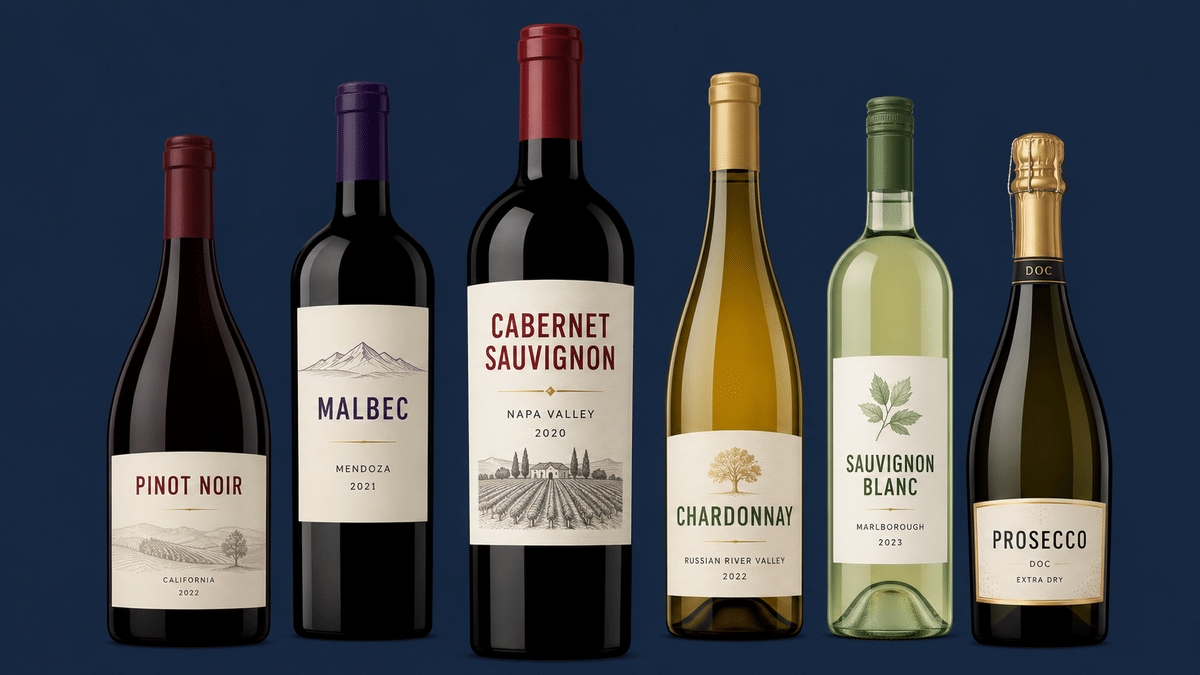
If You Like This Wine, Try That: Your Guide to Finding Similar Wines You'll Love
Do you remember that moment when you found a wine you fell in love with? The wine that made you so crazy about wine that you couldn't wait until you had it again? Do you also ever run into the situation where you can't find the exact wine you are looking for, and you are standing in a store in front of several hundred bottles you've never heard of, or starting at the wine list at a restaurant, or at a dinner party with wines to choose from but no idea what to choose, and realize you have absolutely no idea how to find something like that wine you love?
That's the moment most wine drinkers hit. And it's the moment when most of us wish we had some sort of cheat sheet, in our heads or in our pockets, to help us find a wine that can give us a similar experience to the wine we love. It is also the moment where we find ourselves just drinking the same one or two wines that we always drink because we don't know what else to drink.
We don't blame anyone who finds themselves in that situation for staying safe. The wine world is not designed to help casual drinkers find their way. Big wine brands and distributors want us to drink the few wines that they make and sell. The labels of foreign wines reward expertise you don't have. The bottles are grouped by region or by grape or by whatever the distributor paid for shelf space, none of which tells you whether a wine will feel anything like the one you loved. Staff recommendations are inconsistent and the questions embarrassing. And when you do take a chance and it doesn't work, you're out $20+ and freshly reminded why you stick to what you know. Bad wine experiences are really disappointing, not just financially but psychologically. They train you to stop trying. Over time, most people end up sticking to what they know and never bothering to stray.
That's the problem every guide on this page was built to fix. We're Joe and Carmela Mele, the independent husband-and-wife team behind The Wine Pair Podcast, recommended by Decanter Magazine, named one of Ear Worthy's Best Independent Podcasts of 2026, and a Top 100 Food Podcast on Apple. We've released more than 225 episodes, tasted more than 500 wines on the podcast, and we buy all of the wine we review with our own money. No free samples or sponsorships, and never from wineries or wine brands. Our goal is to give our listeners our unvarnished and honest feelings and information about the wines we drink. And these "find similar wine" guides are meant to do the same. Be a trusted source for you.
What "Similar" Actually Means in Wine
Most people, when they look for a wine similar to one they love, are thinking about flavor. That seems logical. It's also why the search keeps failing, because too often, the flavor descriptions are either cryptic, or they are just not nuanced, precise, or clear enough.
For instance, the flavor of "cherry" appears on the tasting notes of a pale, light-bodied Beaujolais and a deep, extracted Amarone. They are completely different wines. "Fruity" describes a $9 sweet rosé and a serious Grenache from the Southern Rhone. Dry wines range from crisp, acidic whites to heavy, oaky California Cabs. The words sound the same; the wines do not drink the same. Chasing flavor or style descriptors will steer you toward the wrong bottle more often than not.
What actually makes two wines feel similar when you drink them has as much to do with structure as it does with flavor. Structure can be broken down into these four items: Body, tannin, acidity, and weight. Body is how the wine feels in your mouth, from light and watery to rich and heavy. Tannin is that drying, chalky grip on your gums, often compared to tea, that ranges from from almost none in Beaujolais to substantial in Cabernet Sauvignon. Acidity is the brightness that makes your mouth water and keeps a wine from tasting flat. And weighted is how the fruit is experienced, such as light and fresh up front when you first taste the wine, or dense and dark and slow to open. Wines that share those structural markers will feel like natural companions even when they taste different on the surface. Wines that look similar on a label but diverge on structure will disappoint you every time.
Each of the six guides below was built around these structural markers, drawn from real episodes where we tasted the wines, discussed and deconstructed them, talked through what connects them to other wines, explored what foods they pair with well, and gave them really honest ratings and reviews. These guides were not assembled from generic wine knowledge. They were written because after five years of podcasting and 125,000+ downloads with listeners in more than 5 countries, we know exactly which questions wine drinkers actually ask, and what they are looking for when they want to try something new.
If You Love Pinot Noir
Pinot Noir drinkers are among the most loyal in the wine world, and there's a reason for that. What they love isn't exactly a flavor. It's a feeling. Pinot has a lightness and an elegance that makes it feel effortless when you drink and and fantastic with food. The tannins are generally soft, and complement the flavor of the wine by creating a clean, dry ending on the taste. The high acidity makes it feel alive and energetic. The cherry and earth notes are beautiful, complex, and reserved. At its best, it is not a punch-you-in-the-face wine, but rather a sophisticated experience.
Pinot is also, for a lot of drinkers, the wine that first made them take wine seriously. Unfortunately, it can also be very expensive. In fact, the most expensive wines in the world are Pinot Noirs from Burgundy. The grape is famously finicky, prone to rot, only really expressive in a handful of climates, and priced accordingly.
Our Pinot Noir guide covers six wines that share Pinot's structural DNA across four countries. Mencía from northwestern Spain (Bierzo and Ribeira Sacra) is the closest structural match we found: medium body, medium tannin, high acidity, flowers and stone on the finish, and regularly available under $20. Beaujolais (Gamay grape, not Pinot Noir, but a close cousin in structure and spirit) delivers the food-friendliness and bright cherry character at the friendliest price point on the list. Frappato from Sicily goes even lighter, more floral, more delicate, the choice if you like Pinot on the lighter end. But you must drink it chilled! Cinsault from southern France or South Africa shares the silky, almost weightless texture. Etna Rosso from Mount Etna is Pinot's volcanic Italian cousin: same weight class, sharper acidity, a distinct mineral tension from the volcanic soil that makes it one of the most interesting bottles on the list. And Red Burgundy, the original, the standard, the wine that everything on this list is ultimately measured against, is where you end up when you're ready to see what Pinot looks like in the hands of people who've been perfecting it for centuries.
If You Love Malbec
A lot of people's wine journey beyond the basics like Cabernet Sauvignon and Merlot starts with Malbec, and it makes complete sense why. Malbec is bold without being punishing. Dark-fruited, smooth, forgiving, relatively easy to find at almost every price point from $9 to $35. It overdelivers at the $12 to $18 range more consistently than almost any other red. And the tannin is firm enough to feel serious without the aggressive grip that can make other bold reds feel like homework.
The result is that Malbec creates more "unstuck" drinkers than any other wine we've encountered. People who've been buying the same bottle for years and genuinely want to try something new but don't know where to start often find their "gateway" wine in Malbec. The guide we built for Malbec drinkers covers both directions: wines that are close enough to feel safe, and wines that are far enough to feel like discovery.
Primitivo from Puglia is another great option that is poorly known. It's genetically related to Zinfandel, drinks like a richer Malbec cousin with dried fig and black pepper instead of blueberry and chocolate, and solid bottles come in regularly under $15. Nero d'Avola from Sicily shares the same dark fruit weight with a spice and herbal note that Malbec doesn't have, another strong value option. Grenache (or Garnacha if it's from Spain, same grape) is the move if you want to stay dark-fruited and approachable but go lighter and more food-flexible: less tannin, warmer and fruitier, the most versatile wine on the list when it comes to what you eat with it. Syrah is where you go when Malbec has started feeling predictable: everything Malbec does, Syrah does and then adds black pepper, smoked meat, and a complexity that rewards attention in a way the more easygoing Malbec doesn't always. Zinfandel is the American bold-red cousin, jammier and spicier. While it is the same grape as Primitivo, the American version is bigger and bolder. And Pinotage from South Africa is the adventurous pick: bold, dark-fruited, with a distinctive smokiness that is either its signature or its flaw depending on how you feel about smoked meat in a wine glass.
If You Love Cabernet Sauvignon
Cabernet Sauvignon is the anchor of the American wine market, and although we are not the biggest fans, when many people think about red wine, they start with Cabernet Sauvignon. It delivers exactly what a lot of drinkers want from a serious red: firm tannin, dark fruit (blackberry, black cherry, cedar) and a finish that punches you in the face. It pairs well with the foods with red meat and bold stews. It exists at every price point from $8 to $800. And it's consistent enough that once you find a producer you trust, you can buy it without thinking.
What a lot of Cab drinkers don't know is that they're already drinking part of a larger family and might not realize it. Bordeaux blends are mostly Cabernet, with Merlot and sometimes Cabernet Franc or Petit Verdot blended in to add some complexity and firmness. When you open a Napa Meritage or a value bottle from the Medoc, you're already in Cab territory. You just have a slightly different cast of characters in the blend. Our Cabernet guide uses that family tree as the map.
Merlot is the most immediate step: same Bordeaux family, same dark fruit vocabulary, but softer and more velvety in the tannin and more immediately drinkable without needing a steak in hand. Carménère is one of our favorite recommendations for Cab drinkers, descended from the same lineage as Cabernet Franc, grown almost exclusively in Chile, with the same structural weight as Cab but a distinctive green pepper and tobacco flavors that makes it both immediately identifiable and interesting, and usually available for under $20. Tannat from Uruguay or France is for the drinker who felt like Cab's tannin was the best part and wants more of it. It carries some of the highest tannin levels of any red grape, an earthier and more rustic profile, and an age-worthiness that rivals serious Bordeaux. Rioja Reserva (Tempranillo) gives you real structure and oak presence in a familiar weight class but with cherry, tobacco, and vanilla instead of blackberry and cedar. And Barolo, made from Nebbiolo in Piedmont, is where most serious Cab drinkers eventually end up: massive tannin, high acidity, dried cherry and rose and truffle, the wine that changes the way you think about what a bold red can be.
Wines Similar to Cabernet Sauvignon
If You Love Chardonnay
Chardonnay is the most misunderstood grape in the wine world, and most of the bad reputation it gets is the winemaker's fault, not the grape's. The heavily oaked, buttery, almost-sweet California-style bottles that put people off are a stylistic choice, and a fairly aggressive one. That version is the reason why many people go through their ABC stage: Anything But Chardonnay. However, the same Chardonnay grape, grown in a cooler climate with no oak, produces something completely different: lean, bright, mineral, electric.
Our Chardonnay guide is structured a little differently from the others because what Chardonnay drinkers actually love varies more than any other wine we cover. Some people love the richness and the body. Some love the oak and the vanilla. Some love the stone fruit aka peaches and apricots. Some love all of the above. The guide is almost diagnostic: figure out what you love about your Chardonnay, and it will route you to the right alternative.
If you love the body and the stone fruit but want to try something that achieves it without oak, Viognier is the answer. Full body, peach and apricot and honey aromas, silky texture, all from the grape itself without any barrels involved. If you love the structure of Chardonnay but want to understand what the grape actually is underneath the oak the answer is Chablis. Chablis is 100% Chardonnay from the cool northern edge of Burgundy, completely unoaked, and a revelation if the only Chardonnay you've had is the big California style. If you want to see how much complexity the barrel-and-age approach can actually produce when it's done properly, traditional White Rioja, labeled Crianza or Reserva, is where you look. Sometimes with a serious oak character, the Viura grape gives it a different fruit story, and usually can be found under $20. For Italian alternatives, Fiano from Campania and Verdicchio from Marche both offer the body and texture Chardonnay lovers recognize without replicating Chardonnay's flavors, and both are excellent values. And Grenache Blanc from southern France is for anyone who wants Chardonnay's full-bodied texture in a warmer, earthier, more food-friendly package.
If You Love Sauvignon Blanc
Sauvignon Blanc drinkers love the wine for what it delivers: crisp, dry, citrus and herbal freshness, and something that feels clean and alive. It's a specific experience, and when a Sauvignon Blanc delivers on it, there's really nothing else you'd rather drink with a piece of grilled fish or a bowl of Thai noodles.
The good news is that those characteristics (electric acidity, citrus and grass, food-friendliness) show up in wines from Spain, Austria, France, Greece, Argentina, and the Basque Country, many of them relatively easy to find and, in several cases, better value than the Sauvignon Blancs sitting next to them on the shelf.
Albariño from Galicia in northwestern Spain is the most natural first step to take: same citrus brightness, same seafood-friendliness, slightly rounder and more stone-fruit-forward with a coastal salinity that Sauvignon Blanc doesn't have. Grüner Veltliner from Austria is the herbal, citrus-forward Austrian white with a white pepper bite that sets it apart: a serious food wine, underrated, and one of the better values in the wine world. Picpoul de Pinet from southern France is the lean, zippy, citrus-driven option at the best price on the list, regularly under $15 and a natural with oysters. Assyrtiko from Santorini is the deep end: one of the most electrically acidic white wines in the world, grown in volcanic pumice soil that shows up in the glass as mineral and saline complexity that no other white quite replicates. Torrontés from Argentina is the aromatic outlier: intensely floral, rose petals and citrus blossom, dry and refreshing but with a completely different aromas story than Sauvignon Blanc. And Txakoli, the Basque Country's house white, is lightly fizzy, bone dry, under 11% alcohol, and one of those wines you describe to someone and watch them get immediately curious.
Wines Similar to Sauvignon Blanc
If You Love Prosecco
Most sparkling wine guides start with Champagne and work backwards. Ours doesn't, and that's because most people start their sparkling wine journey with Prosecco. Starting with Champagne for most of us is not realistic, and the experience of Champagne is much different than Prosecco. Where Prosecco is fruity, light, and slightly sweet, Champagne is rich, textured, and yeasty.
Therefore, our Prosecco guide starts from Prosecco and moves outward. Cava from Spain is the most immediate step: affordable, bottle-fermented, drier and slightly more complex than Prosecco, and usually under $15. Crémant d'Alsace from France is the elegant alternative: fine bubbles, floral and mineral, Alsatian grapes, a bit more refined than both Cava and Prosecco. Pét-Nat is for the curious: low-intervention, hazy, naturally fermented in the bottle, slightly funky in the best way and genuinely different every time. German Riesling Sekt is the wildcard, electric with acidity and baking spice, and often the most similar to Prosecco. American sparkling brut from producers like Gruet in New Mexico or Treveri Cellars in Washington gives you the Champagne method (bottle fermentation, lees aging, toasty complexity) at Prosecco pricing. And Lambrusco is perhaps the most fun recommendation we've ever made: it's a red sparkling wine from Emilia-Romagna, it pairs with charcuterie better than almost anything else we've tasted, and we gave it a 10 out of 10, which we almost never do.
For the Prosecco drinker who wants to understand what Italy can do with sparkling wine when it's really trying, Franciacorta is the answer: bottle-fermented, aged on the lees for at least 18 months, made from Chardonnay and Pinot Noir, and a genuine step up to a completely different level of complexity. We covered it in its own episode and gave it a 9 out of 10 at $27.99. It's not a casual Tuesday wine, but it might become your special-occasion wine.
What Five Years of Tasting Has Actually Taught Us
The bigger insight behind all of this isn't about specific wines. It's about how exploration actually works.
Most wine drinkers think exploration means taking big leaps: trying something completely different, going to a new country or a new grape with no preparation. That approach works for some people, but it can be really intimidating, and unfortunately when it fails, it can scare people off from wanting to stray from the tried and true. The approach that actually works, consistently, is starting from structure. Finding the wine that's 80% familiar and 20% new. Building confidence with that bottle, and then taking another small step. Over time, the new territory becomes familiar, and you take another step.
Every person who goes from "I only drink Cabernet" to knowing six wines they genuinely love is just able to experience more, and have more flexibility when out with friends or in unfamiliar places. More good bottles. Fewer bad ones. More interesting dinners. More things to talk about. It's not about becoming a wine snob. It's about getting more out of something you already enjoy.
There's Also a Visual Reference
If you'd rather see how these wines relate to each other at a glance (body, tannin, acidity, fruit profile), we also built a wine similarity chart that maps popular reds along those dimensions. It's not as deep as the individual guides, but it's a useful at-a-glance companion when you want to quickly place a wine before picking a guide.
Handy Chart to Help You Find Wines Similar to Ones You Like
Frequently Asked Questions
Q. How do you find wines similar to one you like?
A. Start with wines that are similar to the wine you love and move out in increments, not big leaps. Using our guide, start with a wine you know you will enjoy, and then try the other wines we suggest, and you will start to find that they are often variations on the same theme. Sometimes the flavors will be similar, but not the body. Sometimes the body will be similar, but the aromas and tannins will hit differently. And if the first one you try doesn't do it for you, just keep trying.
Q. What makes two wines similar to each other?
A. Structure, much more than flavor. Two wines can both smell like cherries and drink completely differently. One light and tart, the other heavy and jammy, one dry and one almost sweet. The things that actually make a wine feel familiar are body, tannin, acidity, and how the fruit is weighted. Wines that share most of those characteristics will feel like natural companions even when they come from different countries and taste different on the surface.
Q. Is there a way to find a cheaper version of an expensive wine I love?
A. Usually yes, though you need to diagnose what you love about the expensive bottle first. Most expensive wines are priced for one specific reason: a famous appellation, a particular producer, the grape's scarcity, or the vintage. If you can identify what you love (the structure, the mineral quality, the fruit profile), you can often find that same characteristic in a wine from a less prestigious region at a fraction of the cost. Our Cabernet guide routes Napa drinkers toward Carménère and Rioja. Our Pinot Noir guide puts Mencía alongside bottles that cost twice as much and lose the comparison.
Q. What should I try if I've been drinking the same one or two wines for years?
A. Pick the guide that matches your current go-to and start with the first recommendation. We ordered every guide by structural similarity, so the first wine is always the closest match: familiar enough to actually enjoy, different enough to feel like discovery. The goal for that first bottle isn't to challenge yourself. It's to build confidence. Once it works, the next wine on the list is a small step further. That's the whole strategy.
Q. Are the wines in these guides expensive or hard to find?
A. We focused on everyday wines, not prestige chasing. The podcast has always covered wines under $25 that are relatively easy to find at a decent wine shop, Total Wine, Trader Joe's, or Costco. Most of what we recommend fits that profile. We don't suggest wines we can't actually buy, and we don't give good ratings to wines that don't earn them. On our 1 to 10 scale, a 7 means we'd buy it again. Anything under a 7, we say so clearly, and it doesn't make the guide. And we buy every wine we drink so that you know our ratings are real and reliable.