
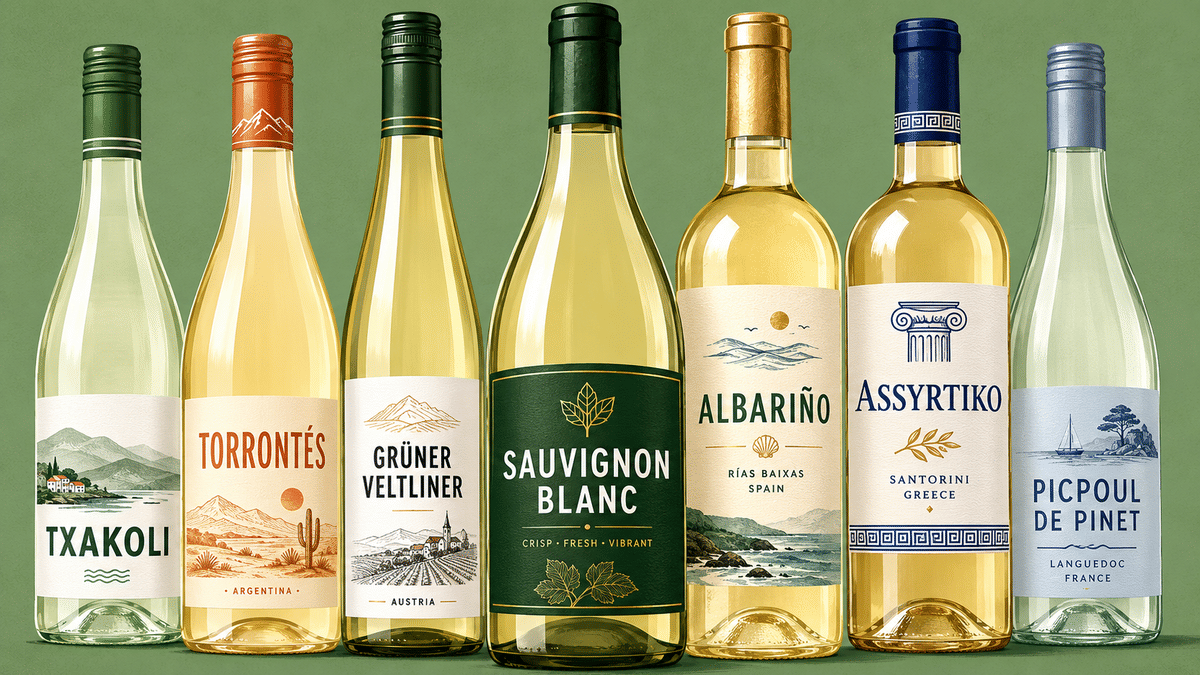
Wines Similar to Sauvignon Blanc: What to Drink When You Want Something Like Sauvignon Blanc
If you drink New Zealand Sauvignon Blanc regularly, you know what you like: razor-sharp acidity, that unmistakable grassy and herbal character, grapefruit and lime zest, and a bone-dry finish. It is one of the most recognizable white wine styles in the world: crisp, fresh, and great with food. Nothing else quite does what it does.
The challenge is that Sauvignon Blanc is so good, it can be hard to move away from. A lot of white wine suggestions land wrong for Sauv Blanc drinkers because they go too neutral, too soft, or too heavy. The wines on this list were chosen because they share at least one of the things that makes Sauvignon Blanc so drinkable: the electric acidity, the citrus and herbal freshness, the food-friendliness, and/or the aromatic expressiveness. Some are more obvious picks, some will surprise you, but all of them make sense once you understand what Sauvignon Blanc drinkers are actually after.
This list comes from us, Joe and Carmela Mele, The Wine Pair Podcast, and we are an independent husband-and-wife podcast. We focus on affordable wines that are relatively easy to find, we buy all our own wine, and we aim to give really honest ratings and reviews regardless of whether the answer is flattering. No free samples or sponsorships, just two people tasting wine and telling you what they actually found.
Sauvignon Blanc
Sauvignon Blanc
Marlborough, New Zealand / Loire Valley, FranceBone-dry, razor-sharp acidity, light body. Grapefruit, lime, fresh herbs. The white wine that refuses to be boring.
The Sauvignon Blanc most people know and love comes from Marlborough in New Zealand, and it is one of the most distinctive white wine styles in the world: bone dry, very high acidity, intensely aromatic, and loaded with grapefruit, lime, passion fruit, and freshly cut grass. It is the wine that turned a generation of drinkers onto white wine precisely because it is so crisp, approachable, and refreshing. People who thought they didn't like white wine often found Sauvignon Blanc a wine they fell in love with.
The grape also grows in the Loire Valley in France, where it produces Sancerre and Pouilly-Fumé: more elegant, more stony or what they sometimes call "flinty," less aromatic, and while delicious ice cold, still has a freshness and elegance even as it warms a bit. If you know and love that style, some of the wines on this list will feel very familiar. But the anchor for this page is the New Zealand style because that is what most Sauvignon Blanc drinkers mean when they say they love the wine.
Albariño
Albariño
Rias Baixas, Galicia, SpainCrisp and citrusy, medium-light body, saline mineral finish. Lemon, white peach, sea salt. Spain's answer to Sauvignon Blanc, with a salty mineral edge that sets it apart.
What you'll recognize from Sauvignon Blanc: The citrus freshness and the food-friendliness. Albariño is crisp, dry, and built for the table in exactly the way Sauvignon Blanc is. The acidity is high and mouth-puckering. The fruit flavors are citrus-tinged. It drinks as a companion to food, and is also an excellent standalone sipper.
What's different: Albariño is rounder and more stone-fruit-forward than Sauvignon Blanc. Where Sauv Blanc leans toward grapefruit, lime, and grass, Albariño goes toward white peach, lemon, and a distinctive saline quality that comes from its coastal growing region in Rias Baixas, Galicia. It is less herbal and more fruity, with a slight almond bitterness on the finish. The overall feeling is warmer and more generous than the sharp precision of NZ Sauvignon Blanc.
Try this if: You love Sauvignon Blanc's freshness and acidity but want something a little rounder and more approachable. Albariño is also the more food-versatile pick: it handles shellfish, grilled fish, and lighter pasta dishes as well as SB does, but it also works with richer seafood and Spanish cuisine. It is the most commonly recommended Sauvignon Blanc alternative, and for good reason.
Our Albariño episode: WTF is Albariño?
Grüner Veltliner
Grüner Veltliner
Wachau / Kamptal, AustriaHigh acidity, medium body, distinctly herbal and spicy. Lemon, white pepper, fresh herbs. Austria's proudest white, and the food wine that never quits.
What you'll recognize from Sauvignon Blanc: The herbal, green character. Grüner Veltliner has a fresh, vegetal quality that Sauvignon Blanc drinkers recognize immediately: crisp, high acidity, bone dry, and carrying a herb-forward aromatic profile that feels in the same family as Sauvignon Blanc's grassy expressiveness. Grüner Veltliner is a true underdog. Underappreciated and not well enough known, it is one of our favorite white wines and one we wish more people knew about.
What's different: Grüner Veltliner has a white pepper bite that Sauvignon Blanc does not have. That spice note is Grüner Veltliner's signature, and it comes through as almost like a pie filling taste. The fruit is more lemon, lime, and green apple rather than the tropical and grapefruit of NZ Sauv Blanc, and the wine has more weight and structure. It is a more serious food wine than Sauvignon Blanc and can handle dishes that would overwhelm it: schnitzel, Asian spices, bitter greens, roasted vegetables with strong flavors.
Try this if: You love Sauvignon Blanc as a food wine and want something that can handle a wider range of dishes. Grüner Veltliner is Austria's great white grape and one of the most underrated whites in the world. We have covered it on the show, and it consistently punches well above its price.
Our Grüner Veltliner episode: WTF is Grüner Veltliner?
Picpoul de Pinet
Picpoul de Pinet
Languedoc, FranceBone dry and needle-sharp, very light body, searingly high acidity. Citrus zest, sea air, green apple. The name means "lip stinger" and the wine delivers on the promise.
What you'll recognize from Sauvignon Blanc: Zesty, mouth-puckering acidity. The bright crispness and the lemon-forward character. Picpoul is bone dry with high acidity and a very clean, direct citrus taste. If what you love about Sauvignon Blanc is that it cuts through food and makes your mouth water, Picpoul does the same thing.
What's different: Picpoul is more neutral in aroma than Sauvignon Blanc. There is no grassy or herbal intensity, no tropical fruit, just clean lemon and citrus pith and a slight sea air quality that comes from its home in the Languedoc near the Mediterranean coast. The name means "lip stinger" in the local dialect, which tells you everything you need to know about the acidity. It is a wine we call zippy. It feels almost electric in the mouth. It is typically lower in alcohol than Sauv Blanc, very light in body, and excellent value: most bottles come in under $15.
Try this if: You love Sauvignon Blanc as a seafood wine and want the French version. Picpoul with oysters, mussels, or any shellfish is one of those perfect matches. Escargot anyone?!? It is also a great restaurant pick because it is almost always reasonably priced on a wine list.
Our Picpoul episode: WTF is Picpoul?
Assyrtiko
Assyrtiko
Santorini, GreeceLean and electric, volcanic mineral depth, bright citrus. Lemon zest, sea salt, volcanic stone. Santorini in a glass, one of the world's great white wines.
What you'll recognize from Sauvignon Blanc: The electric acidity. Assyrtiko from Santorini has some of the highest natural acidity of any white wine grape in the world. If what you love about Sauvignon Blanc is that mouth-watering tartness that makes your mouth feel buzzy, Assyrtiko gives you that in abundance.
What's different: Assyrtiko has a volcanic mineral character that New Zealand Sauvignon Blanc does not have. The wine comes from vines grown on the pumice and lava soils of Santorini, and that shows up in the mouth as a stony, smoky, saline depth that is completely its own. The fruit is lemon zest and citrus pith rather than tropical or grassy. At the premium level, some Assyrtiko sees a little oak, which adds texture. It feels more serious and complex than Sauvignon Blanc, and it ages better than almost any other white wine on this list.
Try this if: You love Sauvignon Blanc's acidity and crispness and want something with more mineral depth and complexity. Assyrtiko is one of the great white wines of the world, and most SB drinkers have never tried it. It is worth seeking out.
Our Assyrtiko episode: WTF is Assyrtiko?
Torrontés
Torrontés
Salta / Mendoza, ArgentinaIntensely aromatic, dry and refreshing, medium-light body. Rose petals, peach blossom, citrus. Argentina's most distinctive white, and one of the most underrated anywhere.
What you'll recognize from Sauvignon Blanc: The aromatic expressiveness. Torrontés hits your nose immediately when you open the bottle in the same way that a good Sauvignon Blanc does: it announces itself. The aromas are bold, the wine is completely dry, and it is built for warm weather and food. Sipping by the pool?!? Yes!!!
What's different: Torrontés is more floral and less herbaceous than Sauvignon Blanc. Where Sauv Blanc can come across as grassy and tropical, Torrontés has more aromas and flavors of rose petals, peach blossom, orange zest, and stone fruit. It smells almost sweet in the way a very aromatic wine can, but it finishes dry and refreshing. The acidity is lower than Sauvignon Blanc, which makes it feel softer on the palate. It comes from Argentina's high-altitude wine regions, primarily Salta, and it is almost always an excellent value. A truly under-the-radar white wine that needs to be explored.
Try this if: You love Sauvignon Blanc's aromatic expressiveness but want something more floral and less grassy. Torrontés is one of the most underrated white wines in the world for the price, and it is a great conversation starter because almost no one has heard of it.
Our Torrontés episode: WTF is Torrontés?
Txakoli
Txakoli
Getariako Txakolina, Basque Country, SpainVery light, slightly fizzy, bone dry and saline. Citrus, green apple, sea spray. The Basque Country's house white, and a total summer essential.
What you'll recognize from Sauvignon Blanc: The crispness and the refreshment. Txakoli is bone dry, very high acidity, and one of the most immediately thirst-quenching wines you can drink. If you reach for Sauvignon Blanc because it is the most refreshing thing in your refrigerator, Txakoli belongs right next to it.
What's different: Txakoli has a slight natural fizz that most wines do not have. It is perlant, meaning just a touch of carbonation, which adds to the refreshing quality without making it a sparkling wine. It is very light in body, very low in alcohol (often under 11%), intensely saline and coastal in character, and traditionally poured from a height to release the bubbles. It's a show! It comes from the Basque Country of Spain and is most often drunk young and very cold with octopus, clams, anchovies, or anything from the sea. It is the most unique alternative on this list, and also one of the most fun.
Try this if: You want the most refreshing possible alternative to Sauvignon Blanc for summer drinking and seafood. Txakoli is not a wine most people know, and it is one of the most enjoyable discoveries you can make as a wine drinker.
Our Txakoli episode: WTF is Txakoli?
Also Worth a Look for Sauvignon Blanc Lovers
Muscadet is the Loire Valley's leanest, most mineral white wine, made from the Melon de Bourgogne grape. The best examples are made sur lie, meaning the wine rests on the dead yeast after fermentation, which gives it a subtle creaminess underneath the crispness. If you love Sauvignon Blanc for its minerality and want something even more refined and food-focused, Muscadet is the answer. It pairs perfectly with oysters and shellfish in the same way Picpoul does, and it is typically one of the best values in French white wine. We covered it on the show: WTF is Muscadet?
Verdejo is one of the most frequently cited Sauvignon Blanc alternatives among wine experts, and for good reason. Spain's Verdejo, grown primarily in the Rueda DO, shares Sauv Blanc's grapefruit and grassy freshness, high acidity, and bone-dry finish. It is typically very affordable and relatively easy to find in most wine shops, making it a natural everyday swap for anyone who drinks New Zealand Sauvignon Blanc regularly. We have not covered it on the show yet, but it is on the list.
Food pairings that work across the group
Sauvignon Blanc's pairing logic comes from its acidity and freshness: it cuts through fat, amplifies seafood, and makes anything bright and citrusy taste better. Most of the wines on this list follow the same logic, which makes them easy to swap in.
Albariño and Txakoli are the best pure seafood wines on the list: oysters, clams, mussels, grilled fish, anything from the ocean. Grüner Veltliner and Assyrtiko can handle bolder dishes that would overwhelm a lighter SB: schnitzel, Greek salads, roasted vegetables with strong flavors. Picpoul and Muscadet are the most classic oyster wines. Torrontés works beautifully with fragrant and slightly spiced dishes: Thai food, Vietnamese salads, anything with lemongrass or fresh herbs.
Pairings that work across the group:
Oysters, clams, mussels, any raw shellfish
Grilled or baked fish: sea bass, branzino, halibut, sole
Shrimp, scallops, crab
Escargot
Goat cheese and fresh chèvre
Green salads and grain bowls with citrus dressing
Thai food, Vietnamese food, anything with fresh herbs and lime and some spice
Sushi and sashimi
Light pasta: pasta primavera, spaghetti alle vongole, pasta with pesto
Listen to the episodes
We have covered all six wines on the show, plus the also-worth-a-look addition. Good places to start:
Frequently Asked Questions
Q. What wine is similar to Sauvignon Blanc but less acidic?
A. Torrontés is the closest match if high acidity is your main concern. It has the same aromatic, expressive character as Sauvignon Blanc but with naturally lower acidity and a softer finish. Albariño is another option: it shares Sauvignon Blanc's citrus freshness and food-friendliness but has a rounder, softer texture. If you want to stay in the crisp white category but dial back the tartness, both are worth trying.
Q. Is Pinot Grigio similar to Sauvignon Blanc?
A. They are both dry, crisp whites, but they taste quite different. Sauvignon Blanc is aromatic and herbaceous with high acidity and bold citrus or tropical fruit character. Pinot Grigio, especially the Italian style, is much more neutral: lighter, more subtle, with pear and almond notes and less aromatic intensity. Sauvignon Blanc drinkers often find Pinot Grigio a little thin by comparison. Albariño is usually a better alternative because it shares Sauvignon Blanc's citrus character and freshness.
Q. What is the closest wine to New Zealand Sauvignon Blanc?
A. Albariño from Spain's Rias Baixas is the most commonly recommended match. Like New Zealand Sauvignon Blanc, it is crisp, citrus-forward, aromatic, and built for seafood. The main difference is that Albariño is peachier and rounder where NZ SB leans grassy and tropical. For something even closer in the herbal and citrus direction, Grüner Veltliner from Austria has the same green, fresh character with a white pepper edge that Sauvignon Blanc drinkers recognize.
Q. What does Albariño taste like compared to Sauvignon Blanc?
A. Both are dry, citrus-forward, high-acid whites built for food. The main differences: Albariño is rounder and more stone-fruit-forward, with peach and lemon, a saline mineral quality, and a slight almond bitterness on the finish. Sauvignon Blanc is more aromatic and herby, leaning toward grapefruit, lime, and grass. Think of Albariño as Sauvignon Blanc's warmer, rounder Spanish cousin.
Q. What is a good, affordable, under-the-radar alternative to Sauvignon Blanc?
A. Picpoul de Pinet from southern France is one of the best white wine values anywhere: very crisp, lemon-forward, bone dry, and almost always under $15. Txakoli from Spain's Basque Country is another great pick at similar prices, with a slight natural fizz and a saline, coastal character. Both pair well with the same seafood and light dishes that Sauvignon Blanc handles best.