
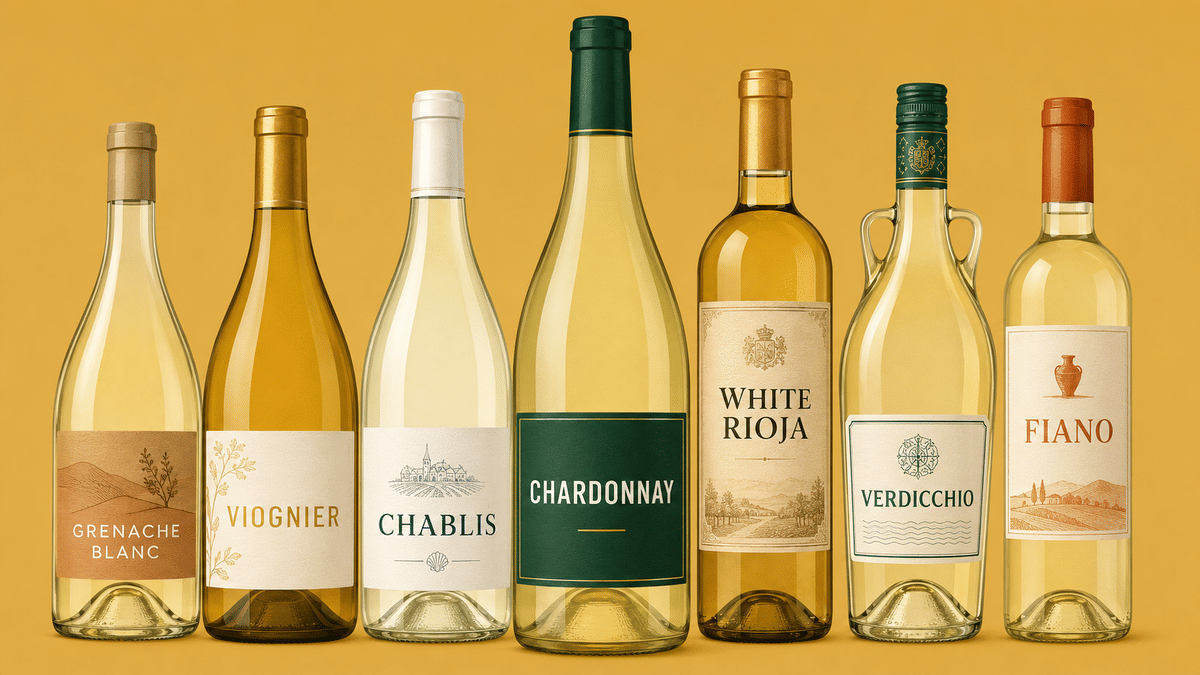
Wines Similar to Chardonnay: 6 Whites That Drink Like Chardonnay
If you drink California-style Chardonnay regularly, you know exactly what you are looking for: a bigger bodied white with notes of vanilla and butterscotch, some oak character, and ripe stone fruit like peach or nectarine that blend together into a mouth filling flavor bomb. The version most people know is this style: oaked Chardonnay commonly from California and many parts of Burgundy that delivers butter, vanilla, and a kind of roundness that feels satisfying in a way crisp whites usually don't.
And while you love your Chardonnay, the challenge is finding something else when you want a bit of a change of pace. A lot of white wine suggestions land wrong for Chardonnay drinkers because they go too lean, too sharp, or too aromatic. The wines on this list were chosen for the opposite reason. They each carry some version of what you recognize from Chardonnay: the body, the texture, the stone fruit, the vanilla, the butter, and/or the oak. Some are more obvious alternatives, some will surprise you, but all of them make sense once you understand how we explain they have many of the same things Chardonnay drinkers are actually after.
This list comes from us, Joe and Carmela, The Wine Pair Podcast, and we are an independent husband-and-wife podcast. We focus on affordable wines that are relatively easy to find, we only review wines that we buy with our own money, and we aim to give really honest ratings and reviews regardless of whether the answer is flattering. No free samples or sponsorships, no prestige chasing, just two people tasting wine and telling you what they actually found.
Chardonnay
Chardonnay
Napa Valley / Burgundy, France / AustraliaFull body, rich texture, substantial oak presence. Butter, vanilla, ripe apple. The white wine that red wine drinkers actually reach for.
Chardonnay is the most planted white grape in the world, but the style that most people recognize is the highly oaked California or Burgundy versions of Chardonnay: full body, stone fruits like or apricot, sometimes orchard fruits like apples made into pie filling, and the vanilla and butter that come from barrel fermentation and malolactic fermentation. That last process, where sharp malic acid converts to softer lactic acid, is what gives oaked Chardonnay its signature creamy texture. Unoaked or lightly oaked versions exist and taste completely different, leaner and more mineral (more on that below!), but when someone says they love Chardonnay without specifying, they almost always mean this rich, rounded style.
Chardonnay grows almost everywhere, which means prices and styles vary enormously. California Chardonnay tends to be the most fruit-forward and oak-driven. White Burgundy is more restrained, with more mineral character. Australian Chardonnay can go either direction. The anchor for this page is the oaked, full-body style because that is the version Chardonnay drinkers are usually trying to find alternatives to.
Viognier
Viognier
Condrieu, France / California / Southern FranceFull body, silky and perfumed, low acidity. Peach, honey, mango. Chardonnay's aromatics-first cousin, and the white most people don't know they want until they've tried it.
What you'll recognize from Chardonnay: Full body and a generous texture. Viognier is one of the few white grapes that can match Chardonnay's weight without needing barrel aging to get there. The body is naturally rich and the mouthfeel is silky in a way that can feel unctuous. Stone fruit is central to both wines.
What's different: Viognier is intensely aromatic in a way that Chardonnay typically isn't. Where Chardonnay keeps its flavors relatively quiet and lets the oak do the talking, Viognier hits you with perfume that "lifts" out of the glass: peach blossoms, honey, apricot, sometimes even mango. The acidity is lower than Chardonnay, which makes it feel even rounder. There is no oak character in most Viognier, so the richness comes from the grape itself rather than the barrel.
Try this if: You like Chardonnay's body and stone fruit character but you want something more expressive and aromatic. Viognier is also an excellent choice if you tend to find oaked Chardonnay a little heavy: the richness is there without the butter or oaky overlay. Condrieu in France is the prestige version, but good California and Southern French Viognier land at Chardonnay prices.
Our Viognier episode: If You Like Chardonnay, You'll Love Viognier (Episode)
Chablis
Chablis
Chablis, Burgundy, FranceLean, sleek, taut with electric acidity. Lemon, flint, oyster shell. The version of Chardonnay that wine geeks fight over, and everyone else discovers by accident.
What you'll recognize from Chardonnay: Chablis is Chardonnay from Burgundy. Literally. The grape is Chardonnay, grown in a cool subregion of Burgundy in northern France called, you guessed it, Chablis. What you'll recognize is the bone-dry character and the precision that a good Chardonnay carries underneath all the oak.
What's different: Chablis is almost never oaked, or only very lightly so. Without barrel influence, the grape comes across completely differently: lean, mineral, electric with acidity, and carrying a distinctive steely character that no other white wine quite replicates. The fruit goes toward lemon and green apple rather than ripe stone fruit. If you love oaked Chardonnay for its fullness and butter, Chablis might not land right. But if you've ever wondered what Chardonnay tastes like before the winery adds the barrel, this is the answer. It is elegant and beautiful.
Try this if: You're already a Chardonnay drinker who wants to understand why wine people get worked up about the grape. Chablis shows you what Chardonnay's mineral backbone actually is, stripped of the oak. It's also an excellent food wine. Pair it with oysters, grilled fish, or anything with brine or cream. Premier Cru Chablis around $30-40 is genuinely one of the best value-to-quality plays in white wine.
Our Chablis episode: WTF Is Chablis?
White Rioja
White Rioja
Rioja, SpainMedium-full body, oak-forward, soft and round. Vanilla, toasted almond, ripe pear. Rioja's white, hiding in plain sight behind all those bottles of red.
What you'll recognize from Chardonnay: When oaked, White Rioja can feel very similar. White Rioja, is usually from a blend of grapes but primarily from Viura grapes in Spain's Rioja region, and can be one of the most oak-forward white wines in the world. Traditional-style White Rioja gets long barrel aging in American oak and comes out with vanilla, toasted almond, and a richness that Chardonnay drinkers recognize immediately. Look for bottles labeled with Crianza or Reserva which refer to aging, and a deeper yellow color If what you love about Chardonnay is the wood character, White Rioja is your wine.
What's different: Viura has naturally high acidity and less body than Chardonnay, so the texture is a little leaner underneath all that oak. The fruit character is different too: more pear and stone fruit than butter and tropical notes. Modern-style White Rioja, which skips the extended barrel aging, is fresher and lighter, so be careful when selecting it. The fresh style is more like Chablis. Traditional-style is the one that Chardonnay drinkers connect with most.
Try this if: You love the barrel character in oaked Chardonnay and want to see how far that style can go. White Rioja is also an excellent value: traditional-style bottles that deliver real complexity regularly come in under $20. We covered this wine in a full episode and really loved it. However, we drank the fresh, not the oaked style.
Our White Rioja episode: Viura: The Great White Wine Hiding in Rioja's Red Wine Shadow
Grenache Blanc
Grenache Blanc
Southern Rhone / Roussillon, FranceMedium body, generous texture, naturally low acidity. White peach, apricot, almond. Southern France's answer to Chardonnay's weight without the butter.
What you'll recognize from Chardonnay: Body and texture. Grenache Blanc is a naturally full-bodied white grape that delivers the kind of weight Chardonnay drinkers expect, and is often compared to Chardonnay. Stone fruit is front and center. The mouthfeel is medium to big for a white wine. This is not a lean, crisp white: it fills the mouth in the way Chardonnay does.
What's different: Grenache Blanc is lower in acidity than Chardonnay and typically sees little or no oak, so the richness is all grape. The aromatics run toward white peach, apricot, and almond with a floral edge. It is more herbal and Southern French in character than Chardonnay: warmer, a little earthier, a little wilder. Find it from the Rhone Valley, Roussillon, or the Southern Rhone appellations. Good bottles cost less than comparable Chardonnay.
Try this if: You like Chardonnay's texture and stone fruit but want something less oak-driven and more food-versatile. Grenache Blanc pairs well with richer seafood, white bean dishes, and anything from Provencal cuisine. This is exactly what everyday wines, not prestige chasing, looks like in practice.
Our Grenache Blanc episode: WTF Is White Grenache? An Alternative for Chardonnay Lovers
Verdicchio
Verdicchio
Marche, ItalyMedium body, clean lines, laser-sharp acidity. Green apple, lemon, bitter almond. Verdicchio's bitter finish is the feature, not the flaw.
What you'll recognize from Chardonnay: Dry, substantial, and food-serious. Verdicchio has enough body and structure to sit where Chardonnay sits at the table: it handles richer food without disappearing. The texture is clean and purposeful. A little off the beaten path, but this is not anything like an Italian Pinot Grigio.
What's different: Verdicchio is leaner and more mineral than Chardonnay, with significantly higher acidity. The defining characteristic is a slightly bitter, almond-like finish that is completely absent in Chardonnay and is either immediately interesting or takes one glass to adjust to. The fruit is green apple and lemon rather than ripe stone fruit. From Verdicchio dei Castelli di Jesi in the Marche region of Italy, it is almost always unoaked and a real value. We tried it on our podcast, and we have found that Verdicchio consistently punches well above its price.
Try this if: You like Chardonnay as a food wine and want something Italian that can hold its own with pasta, seafood, and anything with olive oil and herbs. Verdicchio with grilled branzino or spaghetti alle vongole is one of those matches that makes you wonder why more people don't know this grape.
Our Verdicchio episode: Italian Wine Adventure #9: Verdicchio, a Great Wine for Chardonnay Lovers
Fiano
Fiano
Campania, ItalyMedium-full body, textured and dry, richly structured. Peach, honey, toasted hazelnut. An ancient Southern Italian grape that nearly went extinct, and clearly should not have.
What you'll recognize from Chardonnay: Another Italian white that drinks like a Chardonnay. Body, texture, and a honeyed richness that Chardonnay drinkers find immediately comfortable. Fiano is medium-full bodied with a textured, almost waxy mouthfeel. Stone fruit leads the flavor profile. It has the kind of presence in the mouth that makes you feel like you are drinking something substantial.
What's different: Fiano comes from Campania in Southern Italy, around Naples, and it carries a warmth and earthiness that Chardonnay doesn't have. The honey and hazelnut notes are more pronounced, the fruit is peach rather than butter, and the finish has a pleasant savory quality. It is almost always unoaked, so the texture comes from the grape itself. Fiano di Avellino is the best version and is not expensive. This is an ancient grape that nearly went extinct, which tells you something about the wine industry's priorities and nothing about how good Fiano actually is.
Try this if: You want to find a white wine that drinks like Chardonnay but comes from somewhere completely different. Fiano with Neapolitan food, pasta with cream sauces, or grilled shellfish is an experience worth having. It is one of the best-kept secrets in Italian wine. Bravo!
Our Fiano episode: Italian Wine Adventure #10: Fiano, a Nearly Extinct Ancient Grape Makes a Comeback
Also Worth a Look for Chardonnay Lovers
Grechetto is another Italian white that Chardonnay drinkers should know. It comes primarily from Umbria, tends toward medium body with a nutty, slightly waxy texture, and carries peach and almond notes that overlap meaningfully with oaked Chardonnay's profile. It is almost never oaked, so the weight comes from the grape, and good bottles cost well under $20. We covered it on the show: Italian Wine Adventure #16: Grechetto.
Arneis is from Piedmont in Northern Italy and has been called a hidden white wine gem for good reason. It is aromatic and dry with a delicate floral note, peach and pear fruit, and a soft, round finish that Chardonnay drinkers tend to like immediately. Lower in acidity than most northern Italian whites, it sits comfortably in the same textural neighborhood as a lighter Chardonnay. The episode covers exactly why this grape nearly disappeared and why that would have been a real loss: Italian Wine Adventure #13: Arneis, a Hidden White Wine Gem from Piedmont for Chardonnay Lovers.
Chenin Blanc is worth adding if you are a Chardonnay drinker who wants something with similar body. South African Chenin Blanc in particular lands in a similar neighborhood to oaked Chardonnay: medium-full body, stone fruit, a slight honeyed character, and enough texture to feel substantial in the glass. South Africa is the world's largest Chenin Blanc producer, making more than half of all the Chenin Blanc produced globally, and they have gotten very good at it. We have covered it twice on the show: WTF is Chenin Blanc? for the full variety introduction, and What's All the Fuss About South African Chenin Blanc? for the South African style that connects most directly to oaked Chardonnay.
Food pairings that work across the group
Chardonnay's pairing logic comes from its texture and weight: it can handle richer food than most white wines because it has the body to match. Butter and cream sauces, seafood with richness, roasted poultry, and anything with nuts or toasted flavors all work well with oaked Chardonnay, and most of the wines on this list follow similar logic.
Viognier and Fiano work particularly well with anything fragrant and slightly spiced: Moroccan-style chicken, Thai dishes with coconut, or mild curries. Verdicchio and Chablis are the best pure seafood wines on the list: oysters, clams, grilled fish, anything with brine and acidity. White Rioja and Grenache Blanc can handle pork dishes, roasted vegetables with olive oil, and richer cheese boards. All six wines work with creamy pasta, grilled chicken, and classic French or Italian preparations.
Pairings that work across the group:
Roast chicken, chicken with cream sauce, chicken piccata
Grilled or baked fish: branzino, halibut, sea bass, salmon
Shrimp, scallops, lobster with butter
Creamy pasta: carbonara, alfredo, pasta with white wine sauce
Soft and semi-soft cheese: brie, camembert, fontina, mild gouda
Mushroom risotto, mushroom pasta
Roasted vegetables: cauliflower, leeks, fennel
Listen to the episodes
We've covered all six wines on the show, plus the three also-worth-a-look additions. Good places to start:
Viura: The Great White Wine Hiding in Rioja's Red Wine Shadow
Italian Wine Adventure #9: Verdicchio, a Great Wine for Chardonnay Lovers
Italian Wine Adventure #10: Fiano, a Nearly Extinct Ancient Grape Makes a Comeback
Italian Wine Adventure #13: Arneis, a Hidden White Wine Gem from Piedmont for Chardonnay Lovers
Frequently Asked Questions
Q. What wine is similar to Chardonnay but less buttery?
A. Viognier is the closest match. It has Chardonnay's full body and stone fruit character but gets its richness from the grape itself rather than barrel aging, so there is no butter or vanilla overlay. For something even leaner, Verdicchio from Italy gives you a dry, food-serious white with real body but nothing like the oak character of oaked Chardonnay.
Q. Is Chablis a type of Chardonnay?
A. Yes. Chablis is made from 100% Chardonnay grown in a cool region of northern Burgundy, France. What makes it taste so different from the Chardonnay most people know is the absence of oak aging and the cool climate, which pulls the grape toward lemon, stone, and mineral character instead of stone fruit and butter. If you've ever heard a wine person say Chardonnay is actually a great grape and the oak just covers it up, Chablis is what they mean.
Q. What is a good Chardonnay alternative under $20?
A. Two wines deliver consistently in this range. Verdicchio from Italy's Marche region is one of the best white wine values anywhere: dry, textured, food-friendly, and almost always well under $20. White Rioja is the other strong pick if you want something that leans into oak character: traditional-style bottles with real complexity regularly come in under $20, and they drink more expensively than they cost. Look for Crianza or Reserva on the bottle for the right style.
Q. What does Viognier taste like compared to Chardonnay?
A. Both are full-bodied and dry with stone fruit at the center, but Viognier is much more aromatic. Where Chardonnay's flavor comes partly from barrel aging, Viognier hits you with peach, honey, and apricot from the grape itself. It has lower acidity than Chardonnay, which makes it feel even rounder. Think of Viognier as Chardonnay's more perfumed, more expressive cousin.
Q. Are there good Italian white wines for Chardonnay lovers?
A. Three on this list come from Italy. Fiano, from Campania in the south, is probably the closest match to Chardonnay: medium-full body, stone fruit, a honeyed character, and real texture. Verdicchio from Marche is leaner and more mineral but has the right kind of food-seriousness. Grechetto from Umbria is the third option, sitting between the two in weight and character with nutty, slightly waxy texture Chardonnay drinkers recognize.