
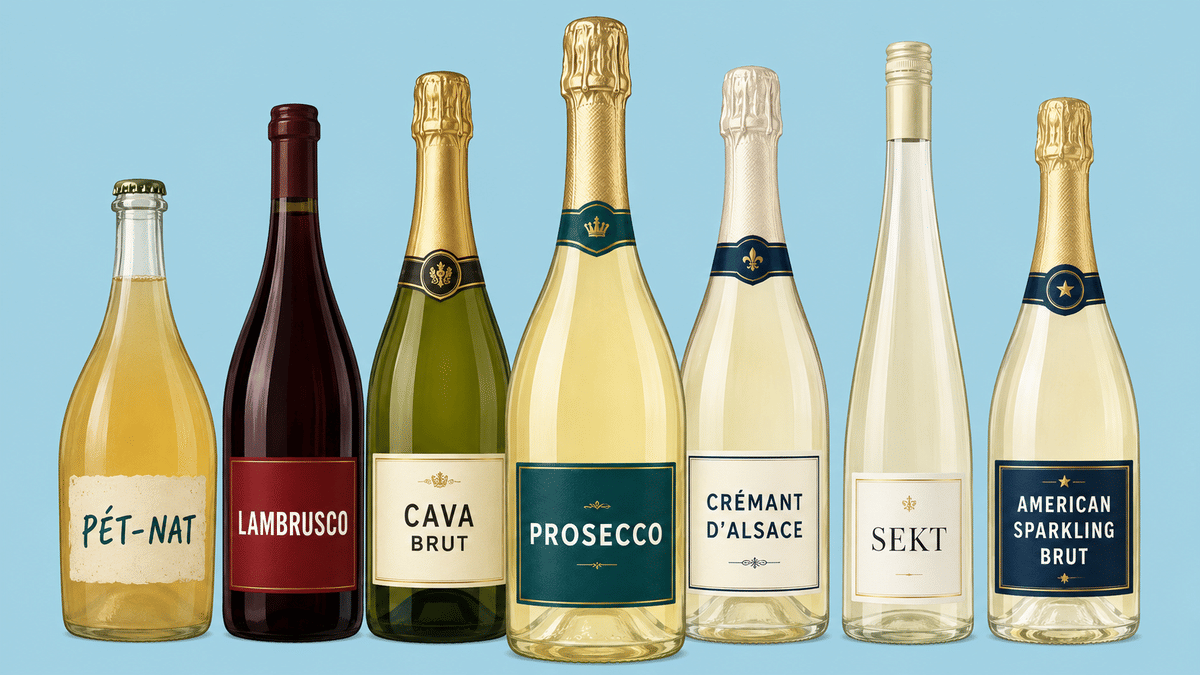
Wines Similar to Prosecco: 6 Sparkling Wines to Try After You Fall for Prosecco
Prosecco is one of the most popular and most approachable sparklings wine in the world. Light, gently fizzy, with a touch of pear and peach, a bit of sweetness, and rarely over $15. It is the bottle at every brunch table, the sparkling wine people reach for when they want something celebratory without overspending, and often the first sparkling wine someone truly falls in love with. None of that is an accident. Prosecco is a genuinely good wine for what it is.
The challenge with Prosecco is that it can start to feel like the only sparkling wine you know. There are entire worlds of sparkling wine out there, including some made in completely different ways from completely different countries, that share the lightness and freshness that makes Prosecco so drinkable. The wines on this list were chosen because they deliver at least one of the things that makes Prosecco so enjoyable: the gentle fizz, the fresh fruit character, the affordability, the food-friendliness, or just the pure fun of opening a sparkling bottle.
This list comes from us, Joe and Carmela Mele, The Wine Pair Podcast, an independent husband-and-wife podcast. We focus on affordable wines that are relatively easy to find, we buy all our own wine, and we give really honest ratings and reviews of everything we taste. No free samples or sponsorships, just two people opening bottles and telling you what they found.
Prosecco
Prosecco
Veneto, ItalyLight body, gentle fizz, touch of sweetness. Pear, peach, white flowers. Italy's most popular export, and for good reason.
Prosecco is made from the Glera grape in the Veneto region of northeastern Italy, and its combination of low price, low alcohol, and immediately appealing fruit character has made it the best-selling sparkling wine in the world. More Prosecco is sold worldwide than Champagne and Cava combined. The wine is made using the Charmat method, meaning the second fermentation that creates the bubbles happens in a large pressurized tank rather than in the bottle. This makes it faster and cheaper to produce than Champagne, and the resulting wine is lighter and fruitier, with almost none of the toasty, biscuity yeast character you find in traditional method sparklers.
The flavor profile centers on pear, white peach, and white flowers, with a gentle fizz rather than aggressive carbonation. It is slightly off-dry, meaning there is a very small amount of residual sweetness, which is part of why it appeals to such a wide range of drinkers. When people say they do not usually like sparkling wine but they like Prosecco, this is usually why: the slight sweetness takes the edge off without tipping into dessert wine territory. If you want something a bit less sweet and with less residual sugar, we always look for brut on the label rather than "dry" or "extra dry," which are confusingly sweeter styles.
We covered Prosecco on the show: Holiday Sparkling Wines #3: Brut Prosecco!
Cava Brut
Cava Brut
Catalonia, SpainMedium-light body, high acidity, bone dry. Green apple, toast, citrus zest. Spain's sparkling wine has been outsmarting its price tag for decades.
What you'll recognize from Prosecco: The price and the refreshment. Cava is Spain's traditional sparkling wine and it comes in at roughly the same price as Prosecco, often under $15. It is crisp, effervescent, and food-friendly in the same way. If you reach for Prosecco because it is a reliable and affordable bottle of bubbles, Cava belongs right next to it on the shelf.
What's different: Cava is drier and more complex than Prosecco. It uses native Spanish grapes, primarily Macabeo, Xarello, and Parellada, and is made using the traditional method, the same process used to make Champagne. The secondary fermentation happens in the bottle rather than a tank, which gives Cava a faintly toasty, biscuity quality that Prosecco does not have. The flavor goes toward spiced green apple and citrus rather than Prosecco's riper pear and peach. It is richer and more sophisticated than Prosecco.
Try this if: You want to spend the same money as Prosecco and drink something just as festive but drier and more complex. Cava is one of the genuinely great values in wine. We literally described it as "a step up from Prosecco at a similar price" in the episode title, and that description still holds.
Our Cava episodes:
Crémant d'Alsace
Crémant d'Alsace
Alsace, FranceLight-medium body, brut dry, fine persistent mousse. Apple blossom, citrus, white flowers. Alsace gives it a floral edge that no other Crémant region can replicate.
What you'll recognize from Prosecco: The freshness and the price. Crémant is France's alternative to Champagne, and Crémant d'Alsace specifically is one of the most accessible, food-friendly sparkling wines in the $15-20 range. It has the same light, brunch-ready quality as Prosecco, the same occasion-neutral versatility, but with a distinctly French elegance.
What's different: Crémant is made using the traditional method, meaning it ferments in the bottle like Champagne, which gives it a finer, more persistent bubble and more of a toasty, brioche-like yeast character. Where Prosecco is fruit-first, Crémant d'Alsace is more balanced between fruit, flowers, and minerality, made from Pinot Blanc, Riesling, and Auxerrois grapes. It feels more refined and more serious than Prosecco without being expensive or intimidating. It is a wine that impress your friends.
Try this if: You want a step up from Prosecco in complexity and refinement without stepping up in price. Crémant d'Alsace consistently punches above its weight and is one of the best-kept secrets in sparkling wine for anyone who wants Champagne quality at a Prosecco price. We tasted three different regional styles of Crémant on the show.
Our Crémant episode: Holiday Sparkling Wines #1: Crémant!
Pét-Nat
Pét-Nat
Various (Natural Wine World)Light body, gentle fizz, hazy and unfiltered. Crunchy apple, lemon, bread. The sparkling wine that plays by its own rules.
What you'll recognize from Prosecco: The lightness, the casual vibe, and the fruit-forward freshness. At least most of the time. If can lean into funky as well because of how it is made. Pét-Nat is the natural wine world's sparkling style, made by the méthode ancestrale, the oldest sparkling wine method in existence. The best examples have a crunchy apple, lemon, and fresh bread quality that puts them in the same approachable, refreshing territory as Prosecco.
What's different: Pét-Nat is deliberately imperfect. The bottles are often hazy (unfined, unfiltered), the carbonation is gentler and more variable, and there can be a funky, yeasty quality you will not find in Prosecco. It is low-intervention wine, meaning minimal additions from harvest to bottle, and that shows up in a liveliness and uniqueness that each bottle has. No two Pét-Nats taste exactly the same. Low in alcohol, genuinely interesting. It can also be a pricier than Prosecco, sometimes by a lot.
Try this if: You love Prosecco's light and easygoing character but you are also curious about the natural wine world and want something more alive and unpredictable. Pét-Nat is the entry point into that world, and it is one of the most fun things to serve to people who think they already know what sparkling wine tastes like. We covered it on the show and came away genuinely impressed.
Our Pét-Nat episode: WTF is Pét-Nat? (Fun, Funky, Natural Sparkling Wine)
Lambrusco
Lambrusco
Emilia-Romagna, ItalyLight body, bright acidity, light tannic grip. Strawberry, cherry, wild berries. The most fun thing happening in Italian wine right now.
What you'll recognize from Prosecco: The Italian DNA, the approachability, and the festive energy. Lambrusco is sparkling, Italian, affordable, and built for food. If what you love about Prosecco is that it makes every occasion feel a little more celebratory, Lambrusco absolutely delivers that, just from a completely different direction.
What's different: Lambrusco is red. That is probably the most jarring thing about it for people who have not encountered sparkling red wine before, but it works beautifully. The bubbles and the wine's natural high acidity cut through rich food in a way that makes it one of the most food-friendly wines in the world. It comes from Emilia-Romagna in northern Italy, the same region that gave us Prosciutto di Parma and Parmigiano-Reggiano, and that pairing connection is not a coincidence. Modern Lambrusco from serious producers is dry or off-dry, loaded with strawberry and cherry fruit, and genuinely addictive.
Try this if: You want to stay in the Italian sparkling wine family but take a hard left turn. Lambrusco with a charcuterie board is one of the great food and wine experiences. We gave it one of our very rare 10/10 ratings on the show.
Our Lambrusco episode: Holiday Sparkling Wines #5: Lambrusco!
Sekt
Sekt
GermanyLight body, razor-sharp acidity, Riesling-driven. Apple cider, baking spice, bright citrus. Germany's sparkling wine secret is out.
What you'll recognize from Prosecco: The affordability, the slight sweetness, and the lightness. Good Sekt comes in at similar prices to Prosecco, usually in the $15-20 range, and the best expressions are aromatic, light, and refreshing in a way that puts them in the same casual, easy-drinking territory. Most people outside Germany have never encountered Sekt, which is remarkable given how much of it Germany produces.
What's different: Riesling Sekt has a completely different personality from Prosecco. The Riesling grape brings a precision and aromatic intensity to the bubbles that is genuinely unique: apple cider character, baking spice (clove, allspice), bright citrus, and a high natural acidity that makes the wine feel electric on the palate. Traditional-method Riesling Sekt, fermented in the bottle like Champagne, adds complexity and depth that Prosecco does not aim for. It is one of the most underrated wines in the world for what you pay.
Try this if: You love Prosecco's approachability and slight sweetness and price but you are ready for something with more aromatic personality and structure. Sekt is the most under-the-radar recommendation on this list, and it is the pick most likely to make you say "I've never had anything like this before." We covered it on the show under what might be our finest episode title.
Our Sekt episodes:
American Sparkling Brut
American Sparkling Brut
California / New Mexico / WashingtonMedium body, high acidity, bone dry. Apple, brioche, crisp citrus. America figured out traditional method decades ago, and the prices still haven't caught up.
What you'll recognize from Prosecco: The celebration energy, the approachability, and the price. American sparkling wine made in the traditional method regularly comes in under $20, and it delivers the kind of brioche and apple complexity that makes you feel like you are drinking something special, without the special-occasion price tag.
What's different: This is a fundamentally different kind of sparkling wine from Prosecco. While Prosecco uses a single Italian grape (Glera) and the Charmat tank method, American traditional method sparkling wine uses Chardonnay and Pinot Noir, the same grapes as Champagne, fermented in the bottle. That process builds more yeasty complexity, a creamier texture, and a toasty quality that Prosecco simply does not have. It is drier than Prosecco and more structured. The best producers for the money are Gruet from New Mexico, Treveri Cellars from Washington State, and Paula Kornell and Piper Sonoma from California. These are serious sparkling wines at the kind of price Prosecco is known for.
Try this if: You love Prosecco but you want to understand what Champagne-style sparkling wine actually tastes like without the sticker shock. This is your answer. We have covered it twice on the show, and the Piper Sonoma earned a 9/10.
Our American Sparkling episodes:
Franciacorta
If you have worked through Cava, Crémant, and American sparkling and you are ready to understand what Italy can do at the highest level of traditional method, Franciacorta is the answer. It is made in Lombardy using the same bottle-fermentation process as Champagne, from the same grapes (Chardonnay and Pinot Nero), with longer aging requirements, and it shows. This is Italian sparkling wine that sits at a completely different level of complexity from Prosecco.
What you'll recognize from Prosecco: The Italian identity and the celebration energy. Franciacorta shares Prosecco's home country and its sense of occasion, and both wines have a finesse and elegance that feels distinctly Italian. If you love Prosecco partly because it feels more interesting than generic supermarket bubbly, Franciacorta takes that feeling considerably further.
What's different: Everything about the process. Franciacorta ferments in the bottle, ages on the lees for a minimum of 18 months (or 30 for non-vintage, 60 for vintage), and develops the kind of toasty brioche, citrus, and fine-bubble complexity you find in Champagne. The price reflects this: good Franciacorta runs $25-30, not $12. It is not a casual weeknight bottle. But when you want the Champagne experience and you want it to be Italian, there is nothing else like it.
Try this if: You have graduated past Cava and Crémant and you want to understand why some sparkling wines command a premium. Franciacorta is the Italian answer to Champagne, and it earns that comparison honestly. We rated the Contadi Castaldi Franciacorta Brut a 9/10 at $27.99 on the show, which tells you everything you need to know.
Our Franciacorta episode: Sorry, Prosecco. Franciacorta is Italy's Answer to Champagne!
Also Worth a Look for Prosecco Lovers
Sparkling Rosé deserves its own category because it has become one of the most popular sparkling wine styles in the world, and Prosecco drinkers tend to love it. It has all the lightness and celebration energy of Prosecco but with more strawberry and red berry character and a beautiful color in the glass. Prosecco Rosé specifically is now enormous, and the sparkling rosé Cavas from Spain offer outstanding value at similar prices. We covered the full world of sparkling rosé on the show: Holiday Sparkling Wines #2: Sparkling Rosé!
Sparkling Shiraz is Australia's most surprising contribution to the sparkling wine world: a full-bodied, deeply flavored sparkling red made from Shiraz. It shares nothing with Prosecco in terms of flavor profile, but Prosecco drinkers who want to see how wide the sparkling wine world actually goes often end up fascinated by it. Black pepper and dark spice lead, with bold blackberry, dark chocolate, and celebratory bubbles. We covered it on the show: Holiday Sparkling Wines #4: Sparkling Shiraz!
Frizzante Soave is one of the closest Italian alternatives to Prosecco in terms of style and regional DNA. Made in the Veneto (the same region as Prosecco) from the Garganega grape, it is lightly sparkling, with almond, lemon, and pear notes and a very gentle carbonation. Quieter and more subtle than Prosecco, ideal for anyone who loves the Italian freshness without quite as much sweetness. We have not covered it on the show yet, but it is on the list.
Moscato d'Asti is the pick for anyone who actually loves Prosecco's hint of sweetness and wants to lean all the way into it. Made from the Moscato Bianco grape in Piedmont, it is gently sparkling, very low in alcohol (around 5%), intensely floral and peach-forward, and lightly sweet. Often served with fruit desserts or as a light after-dinner sipper. We have not covered it on the show yet, but it is on this list.
Food pairings that work across the group
The thread connecting all of these wines is high acidity and low to no tannin, which makes them exceptional food wines. The bubbles add another dimension: they cut through fat and clean the palate in a way still wines cannot. Most of the wines on this list follow Prosecco's pairing logic: lighter foods, salty snacks, brunch, seafood, and fried food all work beautifully.
Cava and Crémant follow the same food pairing rules as Champagne: oysters, fried chicken, anything salty, eggs, charcuterie. Pét-Nat is one of the best companions for charcuterie and natural cheeses. Sekt with schnitzel is a classic German pairing, and it also handles Asian cuisine and spiced dishes in a way Prosecco cannot. Lambrusco was practically invented to go with Prosciutto and Parmigiano, and it is the one wine on the list that can stand up to heavier Italian food like pizza and pasta with meat sauce. American sparkling brut handles most of the same pairings as Cava and Crémant.
Pairings that work across the group:
Charcuterie and cured meats: Prosciutto, salami, sopressata
Cheese boards, especially soft and fresh cheeses
Brunch foods: eggs, smoked salmon, avocado toast, waffles
Fried food: fried chicken, calamari, tempura, French Fries anything crispy and salty
Oysters, clams, mussels, and raw shellfish
Pizza (especially with Lambrusco)
Fresh fruit: strawberries, peaches, raspberries
Salty appetizers and snacks of almost any kind
Listen to the episodes
We have covered all six wines on the show, and two of the also-worth-a-look picks as well. There is a lot of sparkling wine content to dig into:
Also worth listening: Holiday Sparkling Wines #2: Sparkling Rosé! and Holiday Sparkling Wines #4: Sparkling Shiraz!
Frequently Asked Questions
Q. What sparkling wine is most similar to Prosecco?
A. Cava from Spain is the closest match in terms of price, style, and occasion. Like Prosecco, it is light, affordable, and built for casual drinking and food. The main difference is that Cava is drier and made using the traditional method (bottle fermentation), which gives it a faintly toasty quality that Prosecco does not have. If you want something closer to Prosecco's fruitier, more aromatic direction, Crémant d'Alsace from France is another strong match at a similar price.
Q. Is Cava the same as Prosecco?
A. No, but they fill the same role in most people's wine rotation. Both are affordable, food-friendly sparkling wines that work for any occasion. Cava is from Spain, made using the traditional method with native Spanish grapes, and it tends to be drier and slightly more complex than Prosecco. Prosecco is from Italy, made in large tanks (Charmat method) from the Glera grape, and it is fruitier and more floral. We have covered both on the show and think Cava is one of the best wine values anywhere.
Q. What is the difference between Prosecco and Champagne?
A. The main differences are how they are made, grapes, origin, and price. Champagne comes from the Champagne region of France, uses Chardonnay and Pinot Noir, and ferments in the bottle (traditional method), which builds a toasty, yeasty brioche complexity. Prosecco is from Italy, uses the Glera grape, and ferments in large tanks (Charmat method), keeping it lighter and fruitier. Champagne is also significantly more expensive. If you want the Champagne-style experience at a Prosecco price, American sparkling brut from producers like Gruet uses the same grapes and the same method for around $15.
Q. What is Pét-Nat and how does it compare to Prosecco?
A. Pét-Nat (short for pétillant naturel) is the oldest style of sparkling wine: the bottle is sealed while fermentation is still happening, trapping CO2 and creating bubbles naturally without a second fermentation step. It tends to be lower in alcohol than Prosecco, hazy rather than clear, and more variable from bottle to bottle. Sometimes, it can be super funky, so be warned. If you like Prosecco for its lightness and casual vibe, Pét-Nat shares that easy-drinking quality with the added appeal of being a low-intervention natural wine with genuine character.
Q. What is a good American sparkling wine to try if I like Prosecco?
A. Gruet from New Mexico is one of the best values in American sparkling wine: around $15, traditional method (same as Champagne), made from Chardonnay and Pinot Noir, and consistently impressive for the price. We rated it 8/10 (Joe) and 7/10 (Carmela) on the show. Treveri Cellars from Washington State, Paula Kornell, and Piper Sonoma from California are also excellent in the same price range, with Piper Sonoma earning a 9/10.