
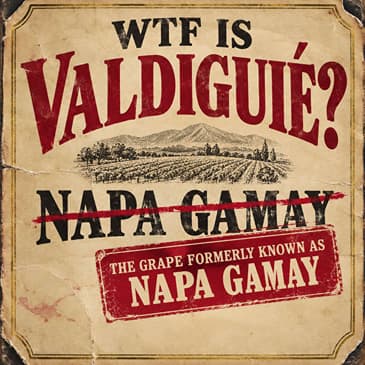
Oh wow! This wine, that you’ve probably never heard of, is a revelation! For many years this wine was known as Napa Gamay, but it was a case of mistaken identity that took several experts and eventually DNA testing to reveal the truth. And the truth is that Valdiguié is delicious and tragically little known. Nearly extinct today in France where it is originally from, it is now becoming a bit of a darling in California in the natural wine and low intervention winemaking circles. In the past, Valdiguié, which is a prolific grower, was used as blending wine, and was not appreciated as a single varietal. Today, it is finding its place among adventurous winemakers who know how to tease out its wonderful qualities. If you like Gamay or Pinot Noir and you like chilled red wines, Valdiguié needs to be on your list. One of these wines we rated a 9 out of 10! Wines reviewed in this episode: 2023 Cruse Wine Co. Rancho Chimiles Vineyard Valdiguié, 2022 Optik French Camp Valdiguié
Send us a Text Message and we'll respond in our next episode!
Contact The Wine Pair Podcast - we’d love to hear from you!
Visit our website, leave a review, and reach out to us: https://thewinepairpodcast.com/
Follow and DM us on Instagram: https://www.instagram.com/thewinepairpodcast/
Send us an email: joe@thewinepairpodcast.com
Show Notes
Episode #239: WTF is Valdiguié? Don't Call It Napa Gamay! 00:00
________________________
KEY QUESTIONS
- Is Napa Gamay the same as Valdiguié?
- What is Valdiguié?
- Should you chill Valdiguié?
- What does Valdiguié taste like?
- Is Valdiguié worth trying?
- What food pairs with Valdiguié?
- Why is Valdiguié so hard to find?
________________________
Episode Overview and First Thoughts on Valdiguié 00:35
Hello fellow wine Seekers! And welcome to The Wine Pair Podcast. I’m Joe, your sommelier of reasonably priced wine, and this is my wife and my wine pairing partner in crime, Carmela. And we are The Wine Pair!
If you're new to our podcast, here's what we do: Every week we buy wines under $25 with our own money, taste them, and give you our brutally honest opinion on whether they're worth buying. Nobody pays us to review specific wines, we don't accept free bottles from wineries, and we're not afraid to call out a bad wine when we taste one. Decanter Magazine calls us fun, irreverent, chatty, and entertaining - so if that sounds like your vibe, welcome to our tribe of wine lovers.
Ok. Fair warning, Carmela. Today, we are drinking a wine we have never had before, which is always fun, and this is a wine that was at one time called Napa Gamay, which is a wine we really like. However, the real wine we are going to drink today is not actually Gamay, and we’ll share more on that later, but the wine we are covering today is called Valdiguié. (Val Dee Ghee-Aye) That’s not the fair warning though.
The fair warning is because the wines we are drinking today are not under $25. They are under $30, so it’s close, but we get you may be wondering why we are going over our price cap of $25, and why we have been doing that more often periodically. Well, first, wine is just getting more expensive thanks to things like tariffs and inflation, but the bigger reason is that sometimes, to be able to cover a wine on the podcast, we just need to expand the top of our cap because there are no wines that fit under it. And that’s important to us because we really want to focus on wines that are different, off the beaten path, and help you understand and learn about wine in a bigger and broader way. So, we will go above the cap when we feel like there is a good wine that we need to cover. And here we are today.
Back to Valdiguié. I am really curious about this wine, Carmela. Especially since there is some reference or comparison to Gamay because, as our faithful listeners know, we are fans of lighter red wines. Most of the time, anyway. We’ll see if that’s true today. Now, for the life of me, I can’t remember where I even heard about this wine from, because it is not a wine you hear much about, so if I am doing a horrible job of remembering what one of you out there in listening land asked us to cover, please remind me.
One really interesting thing about this wine is that it is, as many wines are, a wine of French origins, but it had a bit of a refounding in Napa, and both of the wines we are trying today come from California, so this will be a good test for us. We tend to not love the style of wine that often comes from California because it can be pretty heavy and big and flabby, but we are going to give Valdiguié a real and honest opportunity to win us over.
What I am going to start with, before we get to the specific wines we have for today, is to talk about the history of Valdiguié in France, and then in the next section, we are going to focus more on Valdiguié from California.
Valdiguié seems to be a relatively new wine varietal, but despite that, there is significant confusion about it. The grape was first commercially grown and sold in the late 1800’s, so not very long ago. The origins of Valdiguié are a little mysterious, however, and there are actually three different stories about how the grape was discovered. And strangely enough, all three involve someone named Valdiguié, or some variation of that name. But, as far as I could tell, the three potential people who have this same name are not related. Weird.
The first story dates back to the late 1700s and involves a landowner named Valdéguier, who supposedly grew different grape varieties in his garden and may have discovered a new variety that eventually became Valdiguié. There is some speculation that it came from another French grape called Mérille, but that connection hasn't been proven.
The second story involves a vineyard worker named Guillaume Valdiguier, no relation, who supposedly discovered the grape in an abandoned vineyard associated with a former Knights Templar monastery in southwestern France sometime around the middle of the 1800s. Unfortunately, there's no evidence that the Knights Templar themselves were making Valdiguié wine, so, I am skep.
And then there's the third story, involving a grower named Jean-Baptiste Valdiguié, who had a vineyard near the village of Puylaroque in the 1840s. He may have discovered the grape there. But these stories are kind of thin, and sort of strange.
So, which story is true? Nobody really knows. What we do know is that Valdiguié came from southwestern France sometime before the late 1800s, some sources saying in 1874, some saying in 1884, and so its actual origins will just remain a mystery I suppose.
Valdiguié became widely grown in the late 19th and early 20th centuries because it is reliable and very productive. The vines produce large, heavy clusters of dark blue-black grapes, it has a strong natural resistance to mildew, and it starts to “leaf out” as they say in late Spring, so it avoids late frosts that can ruin grape buds.
Because of its prolific output, French winemakers considered Valdiguié a workhorse or bulk grape, and we’ve heard that before, and it often doesn’t end well. It was rarely bottled as a single-varietal wine in France; instead, it was an essential blending component in inexpensive red table blends across Languedoc-Roussillon and Provence, where it added deep color and bright acidity.
By the mid-20th century, French wine producers were focusing on quality over quantity, and so they started moving away from grapes like Valdiguié, and much of the acreage was pulled up. In fact, between 1958 and 1988, Valdiguié went from over 4,000 hectares to less than 300.
Today, it is nearly extinct in France. It survives only as an obscure variety grown in small patches across the Languedoc and Provence, where it is occasionally included in regional wines.
Which is why we are going to be focusing on California Valdiguié, and we have two California Valdiguié wines to taste and review to see if they are worth your time, and we are going to learn more about Valdiguié from California in a second . . .
But first . . . we have to do our shameless plug.
Thank you for listening to us and for supporting our show, and know that we buy all of the wine we taste and review every week so that we can give you real and honest reviews. If you like what you’re hearing, please subscribe to our podcast and leave us a five star rating and review so we can grow listeners.
We also love to hear from you and we always respond so you can follow us on Instagram and Bluesky and TikTok at thewinepairpodcast. You can contact us on our website thewinepairpodcast.com, and you can sign up for our email newsletter there and you can also send us a note at joe@thewinepairpodcast.com and let us know about wines your want us to review or just shoot the breeze, we love chatting it up.
And, as we do every week, we’ll tell you someone we think you should recommend The Wine Pair Podcast to - because the best way for us to grow listeners is when you tell your family and friends about us - and this week, we want you to recommend us to anyone who is looking for an obscure, off-the-beaten path wine because they are just the kind of person who thrives on being different and original, because they may love Valdiguié and want to listen to this episode!
Topic: WTF is Valdiguié? 10:30
Carmela, let’s find out just what the eff Valdiguié is, shall we?
And, as I mentioned we are going to talk about the wine and its incarnation in California.
Valdiguié was brought to California sometime before the early 1930s when researchers at UC Davis imported grapevines from France that they believed were Gamay, the famous red wine grape from the Beaujolais region.
Valdiguié was attractive to California growers because it is, as we have mentioned already, a very productive grape. That was especially important during Prohibition, when there was still a market for grapes people could use to make their own wine at home.
So, you may be asking yourself how people were able to make wine at home. Well, even though Prohibition made the commercial sale of wine illegal, there was an exemption that allowed Americans to make wine at home. In fact, California growers started shipping enormous quantities of grapes by railroad to cities across the country, where people would use them to make their own wine. By 1927, California was shipping more than 72,000 railroad cars of grapes a year.
And because Valdiguié could produce so much fruit, it became a popular grape during this period, although it was still being called Gamay. So, while Prohibition was devastating for California wineries, it actually created a good market for grape growers who could still sell their grapes to home winemakers. And Valdiguié was one of the grapes that benefited.
After Prohibition ended in 1933, Valdiguié continued to grow in popularity, particularly for inexpensive California red wines. It was used by some pretty well-known wineries, including Sutter Home, Charles Krug, and Sebastiani.
Remember, no one was calling this grape Valdiguié at the time, because everyone thought this grape was Gamay. To make things more confusing, California was also growing another grape at the time called Gamay Beaujolais, which was actually a clone of Pinot Noir, not Gama either. So there were two different grapes being called Gamay in California, and neither one was actually Gamay.
In 1970, Harold Olmo, a professor of viticulture at UC Davis, tried to sort out the confusion, but he did not do an awesome job. He correctly identified the grape being called Gamay Beaujolais was a clone of Pinot Noir. But, he also believed Valdiguié was really Gamay from France, so he called it Napa Gamay. As we know now, he was incorrect.
To solve the final part of the mystery, in 1980 a French grape expert named Pierre Galet visited Napa Valley and examined “Napa Gamay.” Galet was one of the world's leading experts in identifying grape varieties, a science called ampelography, which we discussed in another episode and is the study of grapevines and their physical characteristics.
He was invited by the same professor Olmo to examine the grapevine collection at UC Davis, and Galet discovered that they had misidentified many of the grapevines they were growing, and making wines under the wrong name. This was before DNA testing became widely available, but Galet was able to determine that they had misidentified the grapes by closely examining things like the shape of leaves, grape clusters, etc. and fortunately, he had a good knowledge of obscure French wine grapes.
It was during this visit that he discovered that the grapevines being called California Gamay weren't Gamay at all. Based on their physical characteristics, he identified them as Valdiguié.
In the 1990s, researchers at UC Davis began using DNA fingerprinting to further confirm the true identities of these grapes, and they confirmed that what was being called Napa Gamay was indeed Valdiguié. And, in a bit of trivia, the federal government continued allowing wines to be labeled Napa Gamay until 1999.
But something else was happening in California during this period that was going to have a pretty big impact on Valdiguié. Starting in the 1970s, and particularly through the 1980s and 1990s, the California wine industry was starting to change, and wineries started focusing on wines made from the grapes California is most recognized for today: Cabernet Sauvignon, Chardonnay, and Pinot Noir.
And that wasn't great news for Valdiguié. Its biggest advantage had always been that it was productive and could make large quantities of relatively inexpensive wine. But as the industry shifted, Valdiguié didn't fit anymore. So growers began pulling out Valdiguié vines and replacing them with varieties that were more popular. And over the following decades, the thousands of acres that had once been planted across California dwindled dramatically.
But not everyone gave up on Valdiguié. One winery that stuck with it was J. Lohr in Monterey County, which began making its Wildflower wine from the grape in 1976, back when it was still known as Gamay. And even after its true identity was discovered, J. Lohr continued making it.
Then, beginning in the 2010s, a new generation of smaller California winemakers started taking another look at Valdiguié. Some discovered that there were still old vineyards around California, including vines planted back in the 1940s and 1950s. And what they found was that Valdiguié had some qualities that made it worth another look. It naturally retains high acidity even when fully ripe which is good in California because that is a problem for grapes grown in the hot weather of California.
Some also started experimenting with carbonic maceration, the winemaking technique commonly used in Beaujolais, which can bring out bright, fruity flavors, almost candy-like. Others began making rosés and even sparkling wines. So, instead of treating Valdiguié as a high-yielding grape for boring wines, these winemakers began seeing what it could do when grown and made specifically for its own qualities.
Today, Valdiguié is still a pretty obscure grape and production remains quite limited. According to California's 2025 grape acreage report, there are only about 220 acres of Valdiguié left in the entire state, compared to more than 6,100 acres at its peak in 1977.
But its reputation has certainly improved, and Valdiguié has developed a following among winemakers, particularly low intervention and natural wine makers. So, while Valdiguié is unlikely to become the next Cabernet Sauvignon or Pinot Noir, it has managed to go from a grape that California growers were pulling out of the ground to one that some winemakers are actively seeking out, by its correct name. So, you may be one of the cool kids if you bust one out at your next dinner party.
One final note, this is likely a wine you want to chill.
But that’s enough information. I think it’s time to learn a little more about the specific wines we are drinking today. Whaddya say?
Valdiguié Wines We Chose for This Episode 21:21
As I mentioned at the top of the show, the wines we have chosen for this episode are under $30, and, even at that, they were on sale, so they are usually not even that cheap but anyway, they should be relatively easy to find because I bought them at wine.com. Now, I am not sure how easy it is going to be to find Valdiguié, but since it is becoming a darling of natural and low intervention wine makers, I would be on the lookout for it in shops that specialize in those wines. And, as always, go to your local wine shop and they will be happy to help you.
The first wine we are going to drink today is the 2023 Cruse Wine Co. Rancho Chimiles Vineyard Valdiguié, and it got a 90 rating from Robert Parker’s Wine Advocate, who is not my favorite, but, hey, some people swear by them so there’s that.
According to the tech sheet, the Rancho Chimiles vineyard is in a cooler area in south Napa, near the Vacas mountains where mid-morning fog prevents the temperature from getting too high. Vines are 40+ years old, and they moved to full organic in 2023, I believe.
They say the fruit was destemmed into an open concrete tank and that fermentation with native yeasts occurs spontaneously with manual punchdowns and light pumpovers, which sounds a bit sexual, but is not. After 10 days on the skins, they lightly press the wine and then transfer it to large, used puncheons (which are large wooden casks) and barrels. They also say that malolactic fermentation occurred naturally with the wine. This is not uncommon in natural or low-intervention winemaking, and it can happen spontaneously with bacteria living on the skins.
They only made 300 cases of this wine, and the winemaker Michael Cruse, although he is in Napa, focuses on more obscure grapes like Valdiguie, Tannant, Carignan and St Laurent.
The next wine we are going to drink is the 2022 Optik French Camp Valdiguie, and it got some high ratings including TP 94, JS 92, and D 91. This wine comes from California as well, but this time from Paso Robles, and I think is going to be a pretty different experience than the first one because Paso is a warmer area, and the alcohol content is relatively high for what I would expect from a wine like this. It also has kind of a weird label which feels appropriate for Halloween which is just around the corner, so there.
The tech sheets don’t actually give a ton of information about this wine other than it is aged for 11 months in new French oak, which is another reason why I think this will be a different wine, focusing on some oak aging versus a very fresh style. Because they call it out, the winemaker is a person named Joey Tensley who is well regarded and focuses on Rhone varietals, especially Syrah, so I wonder if that will come out in his style.
But that’s about all I got, so, I think that is enough information - let’s get to drinking! We’ll take a quick break and be right back. And, if you have these wines or similar wines, drink along with us to get some participation points, which you can trade-in for free stickers. You just need to send me an email with your mailing address, and I will get those “I drink with The Wine Pair Podcast” stickers over to you!
LINKS TO SOURCES FOR THESE SPECIFIC WINES
- https://www.skurnik.com/sku/valdiguie-rancho-chimiles-vyd-cruse-wine-co-2/
- https://serendipitywines.com/sales-sheet/?wc_id=201086&default=1
2023 Cruse Wine Co. Rancho Chimiles Vineyard Valdiguié, 2022 Optik French Camp Valdiguié Wine Tasting, Pairing, and Review 25:23
Wine: Cruse Wine Co. Rancho Chimiles Vineyard Valdiguié (Click here to find this wine on wine.com. We may be compensated if you purchase)
Region: California, Napa Valley
Vintage: 2023
Price: $29.97
Retailer: wine.com
Alcohol: 12%
Grapes: Valdiguié
Professional Rating: RP 90 Vivino
What we tasted and smelled in this Cruse Wine Co. Rancho Chimiles Vineyard Valdiguié:
- Color: Purple, opaque, much darker than expected
- On the nose: Fruity, matchstick, smoke, baking space, black pepper, black licorice, a tad hot, red fruit, bright cherry, strawberry, plum, blueberry compote
- In the mouth: Tart cherry, fruity, grapey, grape juice, very little tannin, good chilled, cherry syrup, cherry cordial, leather, some mouthfeel to it, pleasant
Food to pair with this Cruse Wine Co. Rancho Chimiles Vineyard Valdiguié: Sausage pizza, roast, Indian food, butter chicken, lentil curry, Thanksgiving, summer barbecue
As a reminder on our rating scale, we rate on a scale of 1-10, with no half points, where 7 and above means that we would buy it, and 4 and below means that we are likely to pour it down the sink, and a 5 or 6 means we are likely to drink it and finish it, but we are probably not going to buy it.
Cruse Wine Co. Rancho Chimiles Vineyard Valdiguié Wine Rating:
- Joe: 7/10
- Carmela: 7/10
Wine: Optik French Camp Valdiguie (Click here to find this wine on wine.com. We may be compensated if you purchase)
Region: California, Paso Robles
Vintage: 2022
Price: $29.97
Retailer: wine.com
Alcohol: 13.6%
Grapes: Valdiguié
Professional Rating: TP 94, JS 92, D 91 Vivino
What we tasted and smelled in this Optik French Camp Valdiguie:
- Color: Ruby red, light, translucent, looks like a Gamay
- On the nose: Fruity, tomato, basil, herby, Caprese, red raspberry, tart cherry, strawberry, matchstick
- In the mouth: Watermelon, watermelon Jolly Rancher, tart, medium bodied, crunchy, dangerous, watermelon cocktail, tomato, balsamic on the end, something rich on the end
Food to pair with this Optik French Camp Valdiguie: watermelon salad, Caprese, Thanksgiving wine, summer cookout, Indian food, smoked sausage, spicy sausage
Optik French Camp Valdiguie Wine Rating:
- Joe: 9/10
- Carmela: 8/10
Which one of these are you finishing tonight?
- Carmela: Optik French Camp Valdiguie
- Joe: Optik French Camp Valdiguie
The Test: Did we nail the taste profiles expected from Valdiguié? 38:44
- General
- Tart red fruits such as tart cherry, wild raspberry, cranberry, and pomegranate, along with darker stone fruits like plum and blackberry
- Floral aromas of lavender and elderflower blend with subtle herbal notes (dill, mint), black pepper, clove, and baking spices
- Cruse Wine Co. Rancho Chimiles Vineyard Valdiguié
- Winery: The nose is extremely expressive and intense with plenty of roses raspberries and tar. The palate is savory with a pretty grapefruit and citrus element. There is some light tannin, but the wine is mineral and steely with bright acidity and sweet fruit to finish.
- RP: scented of black cherry, blueberry, earth, spice and tar. The medium-bodied palate is unapologetically fruity and flavorful. It’s energized by vibrant acidity, framed by soft, chalky tannins and has a long, easygoing finish. This is dangerously easy to drink!
- Optik French Camp Valdiguie
- Winery: A prominent note of rose petal takes center stage, offering a subtle floral elegance that gracefully dances in the glass. Scents of cranberry and hints of brown spice weave through the background, adding a touch of warmth and complexity to the overall aroma. A bright acidity wakes up your taste buds, creating each sip to feel lively and invigorating. The dominant flavors of cranberry and raspberry burst forth, offering a juicy and fruity experience that is both tangy and sweet. Hints of watermelon add an extra layer of freshness.
- D: Tart and floral aromas, lilac, lavender, and sweet raspberry coulis. It's light and lifted on the palate, with sweet raspberries, fresh-cut strawberries and a tinge of sweet spice.
- JS: The nose offers lifted aromas of wild blackberries, charcuterie and violets. The palate is medium-bodied with fine tannins and bright acidity, giving notes of dark cherries, coffee, sarsaparilla and graphite.
What is our verdict on the Valdiguié? 41:17
Really happy we tried it, would absolutely buy it. A great find, a great wine, and a great wine to try.
And now it is time to head over to our news desk so that we can cover our wine in the news this week segment that was sent to me during the week last week by faithful listener Adrienne.
Wine in the news this week: Thieves pull off Italy’s biggest-ever wine heist, stealing 30,000 bottles worth 5 million euros 42:08
Our wine in the news this week comes from Giada Zampano writing for the Associated Press, and the article is called “Thieves pull off Italy’s biggest-ever wine heist, stealing 30,000 bottles worth 5 million euros.” And if you listened last week, you know we just talked about a Barolo heist, so I guess Italian wine theft thing is officially a trend now. By the way, the links to this article and all of the articles we use for research are in the show notes as always.
So here is what happened. On the night of October 3rd, at least seven thieves broke into a warehouse near Cortona in Tuscany that belongs to Marchesi Antinori, one of the most famous wine families in Italy. Evidently, they knew exactly what they were doing, because they disabled the alarm system first, and then, and in a detail that sounds a lot like the story we shared last week, they used the winery’s own forklifts to load two big trucks and drove off into the night. Nobody noticed until the staff showed up for work on Monday morning.
And what did they take? About 30,000 bottles from the 2023 vintage of Tignanello, Guado al Tasso and Solaia, and about 10,000 of those were Solaia alone. These wines sell for somewhere between 150 and 500 euros a bottle. All told, the haul is worth around 5 million euros, or about 5.8 million dollars. In fact, the CEO, Renzo Cotarella, said a theft of this size has never happened in Italy.
Cotarella also said he thinks it could be the same group that has been hitting other Italian wineries in recent months, which is totally my suspicion. The question is who is really behind these thefts, and what are they doing with all of the wine you are stealing.
Carmela, what do you think? I think it is very suspicious that there are now all of these similar thefts.
Listener Shoutouts 45:16
- Adrienne - wine in the news inspiration for today
- Alice - nice long letter about the wines she loves
- Bob Cutler - Cocktails with Friends - in Barolo and Barbaresco
- Corkd in ct - re: Cremant reel, Miller High Life the Champagne of Beers
- Lots of comments from Insta and TikTok viewers
Wines coming up in future episodes in case you want to drink along with us 46:33
- Juliet boxed wine: Pinot Noir, Sauvignon Blanc
- Erbaluce: Cieck Erbaluce di Caluso 2024, Luigi Ferrando La Torrazza Erbaluce di Caluso 2024
- Limoux Cremant: Vanderpump Cremant di Limoux Brut, Faire La Fete Brut Rose
- Cote du Rhone: Domaine de la Janasse Cotes du Rhone Reserve 2022, E. Guigal Cotes du Rhone Rouge 2023
- Burgundy Cremant: Simonnet-Febvre Cremant de Bourgogne Brut, JCB No. 69 Brut Rose Cremant de Bourgogne
Outro and how to find The Wine Pair Podcast 47:01
Thank you for listening to us and for supporting our show, and remember, we buy all of our own wine and we do all of the writing and recording and editing to bring you a show every week because we absolutely love doing it, and our small little ask for you is that you please follow or subscribe to our podcast and also please leave us a nice rating and review to help us grow our listeners - and a huge thank you to all of you who have done so already!
You can also follow us on Instagram and Bluesky and TikTok at thewinepairpodcast. You can contact us on our website thewinepairpodcast.com, and you can sign up for our email newsletter there and you can also visit our “Shop Wine” section where you can find links to buy the wines that we rate as buys in each episode. I will also note that on our website, if you are curious about a wine we have covered in the past, we do have a pretty good search functionality, so you can use that find wines you want to know more about.
And we want to make content you care about and you like, so send us a note or DM us and give us some feedback or let us know if there are wines you want us to try or wine making areas of the world you are curious about - and we’ll take care of it! joe@thewinepairpodcast.com
Alright, with that, we are going to sign off, so thanks again, and we will see you next time. And, as we say, life is short, so stop drinking shitty wine.
________________________
FREQUENTLY ASKED QUESTIONS
Q. Is Napa Gamay the same as Valdiguié?
A. Yes. The grape California sold for decades as "Napa Gamay" is Valdiguié, a red grape from southwest France, and it isn't Gamay at all. Pierre Galet, a French grape-identification expert, named it correctly in 1980, DNA fingerprinting later confirmed it, and U.S. labels could say "Napa Gamay" only on wines bottled before 1999.
Q. What is Valdiguié?
A. Valdiguié (val-dee-ghee-AY) is a red grape from southwest France, long grown there as a high-yielding blending grape before largely disappearing from France. In California, a new wave of young producers is making it on its own as a light to medium-bodied red that's best served chilled.
Q. Should you chill Valdiguié?
A. Yes. Valdiguié is a red you want to serve lightly chilled. Served at about 58°F, wine-fridge cold rather than refrigerator cold.
Q. What does Valdiguié taste like?
A. Valdiguié tastes tart and fruity, with cherry and strawberry notes, but California versions can vary a lot. One was dark purple and grapey, like cherry syrup with a little leather. Another was light ruby and tasted like a watermelon Jolly Rancher, with tomato and basil notes and more complexity.
Q. Is Valdiguié worth trying?
A. Yes, especially if you like Gamay, Pinot Noir or chilled red wines. Two California Valdiguiés at about $30 each both scored 7/10 or higher, a buy rating: 7/10 from both hosts for one, 9/10 and 8/10 for the other. The catch is that it's a little spendy and hard to find.
Q. What food pairs with Valdiguié?
A. Valdiguié works well with spicy and savory food. Butter chicken, lentil curry, sausage pizza and smoked or spicy sausage all fit, and a lighter, herbal style suits a Caprese or watermelon and tomato salad. It's flexible enough for a Thanksgiving table or a summer barbecue.
Q. Why is Valdiguié so hard to find?
A. Very little of it is planted. California's 2025 grape acreage report lists only about 220 acres of Valdiguié, down from around 6,000 acres at its peak, and it has largely disappeared from France. Look for it at online retailers like wine.com or shops that focus on natural wines, not the supermarket.
________________________
Support The Wine Pair Podcast by heading to our website and shopping for the wines we give our highest ratings to in our Shop Wines section. Just click on this link - you pay the same price, and we may get a small amount of compensation.
You can also support us by clicking on this affiliate link to wine.com and find great wines under $20!
And, if you are looking for a great website builder for your podcast, click on this link to use the service we use and love: Beamly, formerly known as Podcastpage.io
________________________
RESEARCH ARTICLES AND LINKS FOR THIS EPISODE
- https://en.wikipedia.org/wiki/Valdigui%C3%A9
- https://www.wine-searcher.com/grape-809-Valdiguié?srsltid=AU7gw4WahCCqrSmhBLGEmPrAGFL6lrbwFK92_L8IXdPrA5wVkVs5AjSA
- https://exploringwine.blog/2019/08/07/wine-32-Valdiguié/
- https://daily.sevenfifty.com/gamay-vs-Valdiguié-the-smackdown/
- https://winehours.com/blog-headlines/Discovering-Valdigui%C3%A9
- https://www.surprisingwines.com/wine/Valdiguié-used-to-be-called-napa-gamay-and-this-minor-grape-does-share-characteristics-with-the-wines-of-beaujolais
- https://vinepair.com/articles/california-winemakers-called-Valdiguié-by-wrong-name/
- https://thatusefulwinesite.com/varietals/reds/Valdiguié.php
- https://winery-sage.com/data/WineListpage.php?id=69
- https://fringewine.blogspot.com/2011/02/Valdiguié-california-style.html
- https://www.winepros.org/Valdiguié-guide/
- https://fps.ucdavis.edu/FGRfamilies.cfm?varietyid=1575
- https://www.youtube.com/watch?v=FZZ_q8ED5e8
- https://www.wineandspiritsmagazine.com/feature-story/wine-features/the-return-of-Valdiguié
- https://coolersomm.com/blogs/wine-storage/do-you-know-grand-auxerrois
________________________
FULL TRANSCRIPT
Joe: 00:00
Carmela, every once in a while you find a wine that that maybe has a confusing name.
Carmela: 00:04
There's a lot of wines. Confusing names in my book.
Joe: 00:07
You're right. We found one that used to be called Napa Gamay, but it ain't game at all. Its real name is Valdi Gier.
Speaker 1: 00:16
Ooh.
Joe: 00:16
And it is a try to spell that. Yeah, exactly. It is a light red wine that if you're a light red wine drinker, and maybe even not a red light red wine drinker, you're gonna really like it. I think you're gonna dig it. Hello, fellow wine seekers, and welcome to the Wine Pair Podcast. I'm Jill, your simolier of reasonably priced wine, and this is my wife and my wine pairing partner in crime, Carmela.
Carmela: 00:45
Hi there!
Joe: 00:46
And we are the wine pair.
Carmela: 00:47
Yepie!
Joe: 00:48
And Mabel's here too, our little dog.
Speaker 1: 00:50
Right.
Joe: 00:50
If you're new to our podcast, here's what we do. Every week we buy wines under $25 with our own money. We taste them and give you our brutally honest opinion on whether they're worth buying or not. Nobody pays us to review specific wines. We don't accept free bottles from wineries, and we're not afraid to call out a bad wine when we taste one. And Decanter magazine calls us fun, irreverent, chatty, and entertaining. So if that sounds like your vibe, then welcome to our tribe of wine lovers or wine seekers, I suppose. I just made that one up.
Carmela: 01:18
You know, it's good on the fly, I bet too. It's fine. I love that.
Joe: 01:22
Okay, Carmilla, fair warning. Today we are drinking a wine that we have never had before, which is always fun. And this is a wine that was at one time called Napa Gamay. Oh. Which is a wine we really like. Game. Not Napa Game, because we've never had Napa Game before. However, the real wine we are going to drink today is not actually Game, and we'll share more on that later. But the wine we're covering today is called Valdigier.
Carmela: 01:46
Valdiguier. I like that name.
Joe: 01:48
But that's not the fair warning, Carmilla.
Carmela: 01:50
Okay. The fair warning is can we just appreciate the noise in the background real quick?
Joe: 01:54
I hope you guys enjoy that. Let us know. If it bugs you, let us know. The fair warning is because the wines we're drinking today are not actually under $25.
Carmela: 02:03
Oh boy.
Joe: 02:03
They're just under $30 each.
Carmela: 02:05
You're just liking to push the envelope.
Joe: 02:08
I am. And you might be wondering why we're going over our price cap of $25 and why we've been doing that more often periodically. And here's a couple reasons why. First, wine is just getting more expensive. That's so true. Thanks to things like tariffs and inflation. And the bigger reason is that sometimes to be able to cover a wine on the podcast, we just need to expand the top of our cap because there are no wine. She's upset about it because there's a wine we want to do that doesn't fit under it. That's wine.
Carmela: 02:37
Okay. Well, I understand.
Joe: 02:39
And that's important to us because we really want to focus on wines that are different, that are off the beaten path, and help you and us understand and learn about wine in a bigger and broader way. So we're gonna go above the cap when we feel like there's a good wine that we need to cover, and that's why we're here today.
Carmela: 02:55
Do you get feedback sometimes that people are like they just push stop or end?
Joe: 02:59
I've never gotten that feedback actually. Okay, good. Okay. Okay, but back to Val de Guier. I'm really curious about this wine, Carmela, especially since there is some reference or comparison to Gamay, as we mentioned, because as our faithful listeners know, we are fans of lighter red wines.
Carmela: 03:14
Right, chillable ones. Yeah.
Joe: 03:16
Yeah, and that's what this one is, at least most of the time. So we're gonna see if that's still true today. Okay. But for the life of me, I can't remember where I even heard about this wine. Because it's not a wine you hear much about. And if I'm doing a horrible job of remembering one of you out there in listening land who asked us to cover it, then please let us know and forgive me for forgetting, but I I can't really remember how I found out about it. One really interesting thing about this wine is that it is, as many wines are, a wine of French origin. But it had a bit of a rebounding in Napa, and both the wines that we were trying today, Carmela, come from California. So this will be a good test for us because we tend not to love the style of wine that often comes from California because it can be pretty heavy and big, and I I consider it sometimes flabby. But we're gonna give Val de Guillier a real and honest opportunity to win us over.
Carmela: 04:04
Okay, I'm so interested in this. I love it.
Joe: 04:07
What I'm gonna start with, though, before we get to the specific wines we have for today, is to talk about the history of Valdiguier in France, and then in the next section, we're gonna talk about it more of its history in California, because it has two separate histories. Okay. Now Val diguier seems to be a relatively new wine varietal, but despite that, there is significant confusion about it. The grape was first commercially grown and sold in the late 1800s, so it's not that long ago. No. But the origins of Valdiguier are a little mysterious, and there are actually three different stories. They're not very good stories, but there are three different stories about how the grape was discovered, which seems odd for a grape. Yeah, for a grape that's not that old, that seems a little weird. And strangely enough, all three involve someone named Valdiguier or some variation of Valdiguier.
Carmela: 04:53
Well, it makes sense.
Joe: 04:54
Yeah, but as far as I could tell, none of them are related to each other. What? I know, it's weird. Okay, so the first story dates back to the late 1700s and involves a landowner named Valdiguier, who supposedly grew different grape varieties in his garden and may have discovered a new variety that eventually became Valdiguier. There's some speculation that it came from another French grape called Merille, but that connection hasn't been proven. I told you, these are not very good stories.
Speaker 1: 05:20
No, that's the end.
Joe: 05:21
How'd the end? Here's the second story. The second story involves a vineyard worker named Guillaume Valdiguier, no relation to the previous Valdiguier.
Carmela: 05:29
This is all coincidental.
Joe: 05:30
I know, who supposedly discovered the grape in an abandoned vineyard associated with a former Just discovered the grape. Yes, in an abandoned vineyard associated with a former Knights Templar monastery in southwestern France, sometime around the middle of the 1800s. Unfortunately, there's no evidence that the Knights Templar themselves were making Valdiguier wine, so I'm skep about that. I told you, not very good stories. The end. And then there's the third story involving a grower named Jean-Baptiste Valdiguier, yes, who had a vineyard near the village of Pouloroc in the 1840s, and he may have discovered the grape there. But that's that there's three stories. None of them are really actually very intriguing.
Carmela: 06:09
Please stand up.
Joe: 06:10
If anybody really knows, let us know. So, but which is true, we don't know.
Carmela: 06:14
That's so weird.
Joe: 06:15
What we do know is that Valdigier came from southwestern France sometime before the late 1800s. Some sources saying in 1874, some saying in 1884. And so its actual origins will just remain a mystery.
Carmela: 06:29
Oh my god. I mean, I don't mind a mystery.
Joe: 06:30
But this is a dumb mystery.
Carmela: 06:32
Oh, right. It's not that in intriguing.
Joe: 06:34
It's it's really not.
Carmela: 06:35
I'm still puzzled.
Joe: 06:37
I don't I think we're gonna continue to be puzzled. Okay. Valdigier became widely grown in the late 19th and early 20th centuries because it is a reliable grape and very productive.
Speaker 1: 06:47
Oh, nice.
Joe: 06:47
And the vines produce large, heavy clusters of dark blue-black grapes, and it has a strong natural resistance to mildew, which I also do. Wow. And it starts to leaf out, as they say, in late spring. So it avoids late frosts that can ruin grape buds. I love that though. You're such a reliable grape. And and no mildew. Right. And but because of this prolific output, French winemakers considered Val de Guier a workhorse or bulk grape, and we've heard that before.
Carmela: 07:14
Workhorse.
Joe: 07:14
And it often doesn't end well.
Carmela: 07:16
Yeah, but I don't mind being called a workhorse. I mean, nobody's called me a workhorse.
Joe: 07:19
We're not talking about you, we're talking about grapes.
Carmela: 07:21
No, I'm just saying when we talked about being a workhorse.
Joe: 07:24
You'd like being a workhorse.
Carmela: 07:25
No, I like to work hard, but like I don't know. I don't know. Did I think it was a bad thing to be called a workhorse before?
Joe: 07:30
No, you thought it was a good thing. I'm telling you, when a grape gets called a workhorse, it's not a good thing, it doesn't have a good ending.
Carmela: 07:37
Well, it's because it's being taken advantage of.
Joe: 07:39
It's true. So here's the deal. It was rarely bottled as a single varietal in France. And instead, it was an essential blending component in inexpensive red table blends across Languedo-Roussillon and Provence, where it added color and bright acidity. By the mid-20th century, French wine producers were focusing on quality over quantity, and so you know what happens. They started moving away from grapes like Val de Guilla, and much of the acreage was pulled up. In fact, between 1958 and 1988, Val de Guilla went from over 4,000 hectares to less than 300.
Speaker 1: 08:13
Oh my.
Joe: 08:14
So they were like, let me get rid of this grape. I do not like it.
Speaker 1: 08:17
Oh my goodness.
Joe: 08:18
Okay. Today it is nearly extinct in France. Oh wow. And it survives only as an obscure variety grown in small patches across the Languido and Provence, where it's occasionally included in regional wines. So you're probably in France, you're probably only going to find it if you go to like some small town and it's kind of like what they've been doing for a while.
Carmela: 08:37
Is that why it's a little more expensive?
Joe: 08:38
It's just harder to come by. Yeah, that might be part of it. But again, like we're going to talk about California Valdi Guier, because that's what we got. We got two California Val de Guier wines to taste and review to see if they're worth your time.
Carmela: 08:50
I was just testing you.
Joe: 08:51
Thank you. Thank you for checking that. And we're going to learn more about Valdigier from California in a second. But first, you got to do our shameless plug. That's right. So thank you for listening to us and supporting our little show. And know that we buy all the wine we taste and review every week so that we can give you real and honest reviews. And if you like what you're hearing, please subscribe to our podcast and leave us a five-star rating and review so we can grow listeners. And we also love to hear from you. We always respond. So you can follow us on Instagram at Blue Sky and TikTok at the WinePair Podcast. You can contact us on our website, thewinepairpodcast.com. You can sign up for our email newsletter there. And you can also send us a note at Joe at the winepairpodcast.com. And if you don't believe me, send me a note and I will respond. I bet people are out there like the hype. Yeah, no, believe the hype.
Carmela: 09:37
That's what I'm saying. If you don't, yeah, figure, find out for yourself.
Joe: 09:41
Just send a note, Joe at the wine. You can even say, are you really going to respond?
Carmela: 09:44
I hope you just get flooded with emails.
Joe: 09:47
I do too. I I mean we get quite a few emails, but I'm sure there's people out there who are like, I don't think he'd respond to me.
Carmela: 09:52
Oh, he will. Believe you me. Yes. He will.
Joe: 09:56
And just let us know what's going on. We like to shoot the breeze, as they say.
Carmela: 10:00
Does anybody just say, hey, yo, yo? No.
Joe: 10:03
Yo, yo. Yeah, sometimes they do. And as we do every week, we'll tell you someone we think you should recommend the wine pair podcast to, because the best way for us to grow listeners is, of course, when you tell your family and friends about us. And this week we want you to recommend us to anyone who's looking for an obscure, off-the-beaten path wine because they are just the kind of person who thrives on being different and original. And they may love Valdiguier and want to listen to this episode. Am I right or am I right?
Carmela: 10:29
So right.
Joe: 10:30
Okay, Carmela, let's find out just what the f Valdiguier is, shall we? Let's do it. And again, as I mentioned, we're going to talk about the wine and its incarnation in California. California. Now, Valdiguier was brought to California sometime before the early 1930s when researchers at UC Davis imported grapevines from France that they believed were Gamay, the famous red wine from the Beaujoulais region of France. Now, Val de Guier was attractive to California growers because it is, as we have mentioned already, a very productive grape. And that was especially important during Prohibition when there was still a market for grapes that could be used by people to make wine at home. Ah. So you may be asking yourself, how were people able to make wine at home? Well, even though you have feet. Yes. I have feet. Is that the criteria?
Carmela: 11:19
Right. Because you just have to be able to stomp on the grapes.
Joe: 11:21
Well, actually, it's more than that. Oh shoot. Even though Prohibition made the commercial sale of wine illegal, there was an exemption that allowed Americans to make wine at home. So in fact, California growers started shipping enormous quantities of grapes by railroad to cities across the country where people would use them to make their own wine. And by 1927, California was shipping more than 72,000 railroad cars of grapes a year. Amazing. So although those pro there's prohibition, people are making alcohol. And because Valdiguier could produce so much fruit, it became a popular grape during this period, although it was still being called Gamay. So people didn't know it was Val de Gui. So while prohibition was devastating for California wineries, it actually created a pretty good market for wine grape growers who could still sell their grapes to home winemakers. And Valdiguier was one of the grapes that benefited. And after Prohibition ended in 1933, Val de Guilla continued to grow in popularity, particularly for inexpensive California red wines. And it was used by some pretty well-known wineries, including Sutter Home, Charles Krug, and Sebastiani. Now remember, no one was calling this grape Val de Guilla at the time because everyone thought this grape was Gamay. And then to make things more confusing, Carmela, California was also growing another grape at the time called Gamay Beaujolais, which was actually a clone of Pinot Noir, not Gamay either.
Speaker 1: 12:44
Oh man.
Joe: 12:44
So there were two different grapes being called Gamay in California, and neither one of them was actually Gamay.
Carmela: 12:50
Oh my god, again.
Joe: 12:50
Well, the real or the real Gamay, please stand up. That's right. In 1970, Carmela Harold Olmo, a professor of viticulture at UC Davis, tried to sort out the confusion. But he didn't do an awesome job.
Speaker 1: 13:04
Okay.
Joe: 13:04
He but eventually he got around to it, but it was we'll get to that. He correctly identified the grape being called Gamay Beaujoulet as a clone of Pinot Noir, but he also believed that Valdigier was really Gamay from France. So he called it Napa Gamay. And now, as we know, he was incorrect. So to solve the final part of the mystery in 1980, a French grape expert named Pierre Gallet visited Napa Valley and examined Napa Gamay. And Gallet was one of the world's leading experts in identifying grape varieties, a science called ampylography, which we've discussed in another episode, which is the study of grapevines and their physical characteristics. So it's the study of people who like look at the physical characteristics to understand what grapes are.
Carmela: 13:50
Amazing.
Joe: 13:51
He was invited by this same Professor Olmo to examine the grapevine collection at UC Davis, and Gallet discovered that they had misidentified many of the grapevines they were growing, and they were making wines under the wrong name. Now, this was before DNA testing became widely available, but Gallet was able to determine that they had misidentified the grapes by closely examining things like the shape of the leaves or the grape clusters. And fortunately, he had a good knowledge of obscure French wine grapes. And it was during this visit that he discovered that the grape vines being called California Gamay weren't gimae at all. Based on their physical characteristics, he identified them as Valdiget.
unknown: 14:32
Wow.
Joe: 14:33
What a guy. So Olmo was wrong, but he brought Gallet in and Gallet figured it out. So in a way, he got it right.
Carmela: 14:40
You need like the um the ringer.
Joe: 14:42
The ringer. You need the expert. Right you need to bring in the biggest shot. The big dog. Now in the 1990s, researchers at UC Davis began using DNA fingerprinting to further confirm the true identities of all these grapes, and then they confirmed that what was being called Napa Gamay was indeed Val digier. And in a bit of trivia, the federal government continued allowing wines to be called Napa Gamay until 1999. So, I mean, I know for some people 1999 seems like a long time ago. Not for us. No, it doesn't seem very long ago.
Carmela: 15:13
1999 was a great year.
Joe: 15:15
Don't you remember thinking like 1999, like that's a big deal? Like when you were a kid, like, oh man, 1999, things are gonna change. So true.
Carmela: 15:23
There's a song, a very special song.
Joe: 15:25
But didn't you think like, oh my gosh, the year 2000, things are gonna we're gonna like be flying.
Carmela: 15:28
No, we almost thought we thought like the world was gonna end, I feel like.
Joe: 15:32
Well, we did, but didn't you didn't think that when you were a little kid, did you?
Carmela: 15:35
Well, I think we were a little afraid of returning to the next century. Do you think we wanted to party like it was 1999? And that song has stuck, you know.
Joe: 15:43
It it sure has.
Carmela: 15:45
I mean, if maybe lots of people don't know it that listen to this podcast, but it's a great song.
Joe: 15:50
It is such a great song.
Carmela: 15:52
It's such a good song. Can we get back to the wine? Yes.
Joe: 15:55
Okay, but you brought it up. I did I did, but I didn't think it was gonna go down that path, but I should have. Uh-huh. Okay. Something else was happening in California during this period, the 70s, 80s, 90s, that was going to have a pretty big impact on Valdigier. Starting in the 1970s, and particularly through the 1980s and 1990s, the California wine industry was starting to change, and winery started to focus on wines made from the grapes that California is most recognized for today. Sure. Things like Cabernet Sauvignon, Chardonnay, and Pinot Noir.
Carmela: 16:24
Right.
Joe: 16:25
And that wasn't great news for Valdiguier.
Carmela: 16:27
Hard to break in.
Joe: 16:28
Yeah, or stick around, really.
Carmela: 16:30
True.
Joe: 16:30
Its biggest advantage had always been that it was productive and could make large quantities of relatively inexpensive wine. But as the industry industry shifted, Valdiguier just didn't fit in anymore. Wow. It's kind of like the odd dog.
Carmela: 16:43
Kind of a click. Like you just couldn't break into that click.
Joe: 16:46
Yeah, it's kind of rude. They were kind of mean to it.
Carmela: 16:48
It sounds like it.
Joe: 16:49
In fact, growers began pulling out Val de Guier vines and replacing them with varieties that were more popular.
Carmela: 16:55
See, I'm telling you.
Joe: 16:56
It's like mean girls.
Carmela: 16:58
Wow, mean grapes.
Joe: 16:59
Yes. That's so true. And over the following decades, the thousands of acres that had once been planted as Val de Guier across California dwindled dramatically. But not everyone gave up on Valdiguier.
Speaker 1: 17:11
I love that.
Joe: 17:12
Some people still believed. One winery that stuck with it was J. Laure.
Speaker 1: 17:16
Good job.
Joe: 17:17
In Monterey County.
Speaker 1: 17:18
I know that one.
Joe: 17:19
You do. It's a famous winery.
Speaker 1: 17:21
Yep.
Joe: 17:21
And they began making their wildflower wine from the grape in 1976, back when it was still known as we weren't around then.
Carmela: 17:29
I'm teasing. Come on, work with me.
Joe: 17:31
Okay, sorry. I thought you were.
Carmela: 17:32
We weren't alive.
Joe: 17:33
I was so not even thought of at that time. Oh my gosh. Okay. And even after its true identity was discovered, J. Loor continued making it. Then, beginning in the 2010s, a new generation of smaller California winemakers started taking another look at Val de Gier. You know, that person that wallflower, the person in the corner waiting for me, waiting for somebody to please ask them to dance with them.
Carmela: 18:00
I think you were a dancer. I think you had plenty of attention. Nobody wanted to dance. Oh poor meaning.
Joe: 18:04
Nobody wanted to dance with me.
Carmela: 18:06
I was the Val Digier, but then you're a good dancer. But that's not Okay, I get it. This grape was a wallflower and then it blossomed. And then everybody was paying attention to it. That's right. I like this story. This is way better than the other ones.
Joe: 18:18
It's true. Some of these winemakers discovered that there were still old vineyards around California, including vines planted back in the 1940s and 1950s. And what they found was that Valdiquier had some qualities that made it worth another look.
Carmela: 18:32
Oh, like what? Like it was kind.
Joe: 18:34
It was kind. When you took its glasses off, it was actually quite pretty. Okay, and naturally retains high acidity even when fully ripe. And that's really good in California because California is so hot that when grapes grow that they lose acidity. So a wine that can keep acidity in hot weather is a really good thing.
Carmela: 18:53
Amazing.
Joe: 18:53
So some also started experimenting with carbonic maceration, which sounds dirty, but it's not. It's the winemaking technique commonly used in Beaujolais, which can bring up bright and fruity, almost candy-like flavors. And others began making roses and even sparkling wines with it. I love it. So instead of treating Valigier as a high-yielding grape for boring wines, instead of treating it like a wallflower, these winemakers began seeing what it really was all about. It's true. You know what? Look past the looks and get to the personality. I keep telling you that.
Carmela: 19:25
It was discovered. You need to ask questions, you need to dive deeper. Give something a chance.
Joe: 19:31
Sometimes you just need to remove the glasses and see the beauty.
Carmela: 19:34
Why are you wearing glasses?
Joe: 19:35
No, the persons with a wall. Okay, anyway. Today Val de Guilla is still a pretty obscure grape, and production remains pretty limited. It's kind of shy. It's kind of shy. Yeah, that's a good way to describe it. According to California's 2025 Grape Acreage Report, which I read regularly. Oh boy. There are only about 220 acres of Val de Guillier left in the entire state. And in 1977, there were actually 6,100 acres. So just like in France, it's dwindled a lot, but it's making a little bit of a comeback.
Speaker 1: 20:05
I love it.
Joe: 20:06
Its reputation has improved. Val de Guillier has developed a following among winemakers, particularly low intervention and natural winemakers. Okay. So while Val de Guier is unlikely to become the next Cabernet, Sauvignon, or Pinot Noir from California, it has managed to go from a grape that California growers were pulling out of the ground to one that some winemakers are actively seeking out by its correct name this time. Not Napa Game, but for who it really is.
Speaker 1: 20:32
Valdigier.
Joe: 20:34
Remember that, Valdi Gui.
Speaker 1: 20:35
It's way harder.
Joe: 20:36
Don't call it Napagame.
Speaker 1: 20:37
I know.
Joe: 20:37
That's not its name.
Speaker 1: 20:39
I'll try.
Joe: 20:39
Okay.
Speaker 1: 20:40
I'll try harder.
Joe: 20:41
And so you may be one of the cool kids if you go to a next your next dinner party and you pull out a bottle of Valde Guilla. People may be like, what is that all about? And you said, you know what? Here's the boring story. They think it was named after a guy named Val de Guilla, but more importantly, it was used to be Napa Gamay, and then this guy came. No, don't tell the whole story. No, that's actually a bad idea.
Carmela: 21:01
Just uncork that wine and go for it.
Joe: 21:03
And pour it out.
Carmela: 21:04
Right.
Joe: 21:05
And like you said, Carmelo, one final note. This is a wine, a red wine. You want to chill. So we got it a little bit, we got it in the wine fridge to get it a little bit cool. But that's enough information. I think it's time to learn a little bit more about the specific wines we're drinking today. What do you say? Let's do it. Okay. As I mentioned at the top of the show, the wines we have chosen for this episode are under $30. Sorry, everybody. Every once in a while you got to splurge. And even at that, Carmela, they were on sale.
Carmela: 21:33
Oh. But they're usually Wait, the sale price was under $30?
Joe: 21:36
Yes. Oh boy. The normal price, one of them was like $50.
Carmela: 21:40
My goodness.
Joe: 21:41
But you know, they should be relatively easy to find because I bought them both at wine.com.
Speaker 1: 21:45
Okay.
Joe: 21:46
And I'm not sure how easy it's gonna really be to find Valdi G, but since it's becoming a darling of natural winemakers and low intervention winemakers, I would be on the lookout for it in shops that specialize in those wines. So if you have a wine shop like that that you like. Or one in the neighborhood, then go check it out. They may have it. And as always, go to your local wine shop and they'll be happy to help you. The first wine we're going to drink today is the 2023 Cruise, that's C-R-U-S-E, wine company Rancho Chimiles Vineyard Valdigay. And it got a 90 rating from Robert Parker's wine advocate. That's not one of my favorite, but you know what? Some people swear by wine advocate. So if that's one of you, then hey, you might like it. Right. According to the tech sheet, the Rancho Chimiles Vineyard is in a cooler area in South Napa near the Vacas Mountains. That means cows. Yeah. Where mid-morning fog prevents the temperature from getting too high.
Speaker 1: 22:39
Nice.
Joe: 22:40
And the vines are 40 more than 40 years old and they moved to full organic in 2022. Wow, good for them. Yeah. They say the fruit was destemmed into an open concrete tank. Remember, concrete, they use that because it gets a little bit of oxygen in there, but it doesn't give it doesn't impart any oak taste. Fermentation happened with native yeast. It occurred spontaneously. They did manual punch downs and light pumpovers, which is kind of sexy. Woo! And after 10 days on the skins, they lightly press the wine and then transfer it to large used punch-ins. Those are large wooden casks and barrels. So because they're used, again, not going to impart oak flavor, but will let some oxygen in. They also say that malolactic fermentation occurred naturally with the wine. And so that's an evidently not uncommon in natural or low intervention winemaking and can happen spontaneously with bacteria that lives on the skins of the grapes. They only made 300 cases of this wine.
Speaker 3: 23:38
Wow.
Joe: 23:38
Yeah, and the winemaker Michael Cruz, although he's in Napa, focuses on more obscure grapes like Valdiguier, Tanat, Carignan, and Saint Laurent. So there you go. The next wine we're gonna drink is the 2022 Optic French Camp Valdiguier. It got some high ratings, including a 94 from the tasting panel, a 91 from Decanter, and a 92 from James Suffice.
Carmela: 24:02
Oh no.
Joe: 24:03
92. What is he doing? I don't know. Now this wine, of course, comes from California as well, but this time it comes from Paso Robles. Oh, we've been there. A place that we've been many times. And I think this is gonna be a pretty different wine experience than the first one because, first of all, Paso is a warmer area and the alcohol content is relatively high for what I would expect from a wine like this. It also has kind of a weird label. You'll see it when we when I bring the bottle out. I think it feels appropriate for Halloween.
Carmela: 24:31
Ooh, I love that.
Joe: 24:32
Yeah, so we'll check that out. The tech sheets don't actually give a ton of information about this wine, other than it's aged for 11 months in new French oak. Okay. So that gives us another indication it's gonna be a different wine because new oak, even though it's French oak, which is lighter oak, new oak is gonna give oak flavor.
Carmela: 24:49
Right.
Joe: 24:50
And uh because they call it out, the winemaker is a person named Joey Tinsley. Nice who's well regarded and focuses on Rhone varietals, especially Syrah. So I'm also wondering if he's gonna be making kind of a bigger, bolder style of the wine. But we're gonna find that out. We sure are. Because that's all I got. That's all the information I got. Okay. So I think it's time to get to drinking. We're gonna take a break. And so if you have a Valdigier or a Napa Game or anything even close to it, drink along with us and we'll be right back. Woo! Okay, we're back, and we're ready to try our first wine. The first wine we're gonna drink is the Cruise Wine Company Rancho Chimile's Vineyard Valdigie. It's from Napa Valley, California. It's for a 2023 vintage, $29.97. So just barely under the $30. Got it at wine.com. 12% alcohol, 100% Valdigie, and again, Robert Parker gave it a 90. But let's first look at the bottle because I like to think of myself as an artsy fartsy. And I think I think the label is cool, but it's very modern art, don't you think?
Carmela: 25:57
Yeah, it is. I have to kind of I'm not I need to wrap my head around it. I don't quite get what's going on. Oh, there's a person up in the left corner, it's like a cow.
Joe: 26:04
It's like a vodka.
Carmela: 26:05
It is, but it's like a tree in the vodka's face.
Joe: 26:09
Mm-hmm.
Carmela: 26:10
Yes, really abstract.
Joe: 26:12
I like it. I think it's kind of cool.
Carmela: 26:14
Yeah, it took me a second, actually. I mean, it's a little dim in here.
Joe: 26:17
Yeah.
Carmela: 26:17
But um, yeah, it took me a second to kind of figure out what the heck it was.
Joe: 26:21
Kind of artsy though. Yeah, kind of like it.
Carmela: 26:22
I kind of like it too.
Joe: 26:24
All right, let's talk about the color.
Carmela: 26:26
It's so purple.
Joe: 26:27
Yeah, it's way darker than. I mean, if you're thinking it's a game or a Pinot Noir like wine, it doesn't look like it.
Carmela: 26:33
No, but I just uh some wines are I mean, like this is just you give it a swirl. It is truly purple.
Joe: 26:41
Yeah, it it's dark. I mean, that's what I'm saying. It's much darker than I would have expected. Almost looks like a Cabernet, to be honest with you. I hope you'd be honest with me. I hope so. Okay, let's smell it and see what we think. It's fruity.
Carmela: 26:53
Yeah, it's fruity.
Joe: 26:54
I like it.
Carmela: 26:54
It's fruity for sure, but I'm still getting a little bit of smoke on it or a little bit of like matchstick on it. Are you getting a little bit of like fire or anything?
Joe: 27:02
Smoke a little bit. I think I'm getting more spice on it.
Carmela: 27:04
Like a little bit. Pepper spice? Black pepper, or more like baking spice.
Joe: 27:08
A little bit, but I think maybe a little bit more baking spice.
Carmela: 27:11
Okay. Yeah, I mean it feels a little hot like like spicy to me, even like a black pepper, though, too, or black licorice.
Joe: 27:19
I can get that. And maybe it's it's a tad hot. Might be a tad hot. Tad alcohol-y, but I gotta tell you, I'm getting some red fruit on it. Yes, like cherry. I'm getting like a kind of a bright cherry, a little bit of a strawberry on it, like some red fruit.
Carmela: 27:35
Okay. I'm kind of getting a little bit of plum, too.
Joe: 27:38
Plum is fair. How about this? A blueberry compote. Oh, yeah.
Carmela: 27:43
Kind of feel like almost looks like a blueberry compote. Yeah, it does. Yeah, yes. No, I think it's a black fruit. So what am I talking about? I don't know. I'm all over the place. Oh my god. You never know. There's a lot going on.
Joe: 27:54
A lot. Well, let's try it and see what we think. Okay.
Carmela: 27:57
Whoa.
Joe: 27:57
Tart cherry.
Carmela: 27:58
Very tart. Tart cherry. Very tart, but you know what? It does. I mean, it's it's fruity for sure.
Joe: 28:04
It's really fruity.
Carmela: 28:05
It's kind of grapey. I know that's a weird thing to say, but it almost grape skin, but even like a grape juice, you know, like that. You're just uh, you know, there's a little bit of sweetness in it. Yeah. Yeah, I don't know.
Joe: 28:18
It doesn't taste very hot to me. It's got all very little tannin. It's it's does it's not like sticky or anything like that. You can tell it doesn't have any oak on it. It's super light in in the mouth.
Carmela: 28:31
And I like that it is a little, it could be even a little more chilled, I feel like.
Joe: 28:34
Yeah, I think so too. We just chilled it again, like you know, 58 degrees or something, not super cold, not not like fridge cold, but wine fridge cold. But it's nice. Like I I like it. I agree with you. Grape juice is is is good, but I'm also thinking cherry, like tart cherry.
Carmela: 28:48
Yeah, but don't you feel like I mean it's almost like a concentrated grape juice, or I don't know, or even or like a cherry, like we sometimes say like like a cherry syrup or cherry cordial.
Joe: 29:00
Yeah, yeah.
Carmela: 29:01
That's kind of what I'm getting too.
Joe: 29:02
Yeah. Do you think it has any like it has a little maybe, I don't know, maybe a touch of smoke or like leather or something on it. It's got a little bit of spice on it, a little bit.
Carmela: 29:13
Yeah, I think so. I but you know what, I was smelling it more than I'm tasting it, I think.
Joe: 29:18
For sure. 100%.
Carmela: 29:19
So yeah. This is, I mean, I'm not finding this like super complex. No, you know, I mean it's very nice, and I think it's very like the chilled side of it too, just makes it all that much better.
Joe: 29:31
Yeah, I think it's a very pleasant wine. What food would you have with this cruise wine company, Rancho Chimile's Vineyard Valligier?
Carmela: 29:39
Well, you know what? I think this would be really good with a nice, like meaty pizza. Ooh. Ooh. You know, like a even like a sausage pizza.
Joe: 29:46
Ooh, you're you like the meat. You want a little spicy?
Carmela: 29:50
Yeah, a little bit. Yeah, I feel like you could do for whatever reason, I'm thinking like the whole bread and meat, just those, you know, would be a nice combination with this wine for sure.
Joe: 30:00
Yeah.
Carmela: 30:00
Uh, but you could also do like a roast with this, too.
Joe: 30:03
I think you could. I think you're right. I like pizza. I like pizza. I think you could do some lighter food, but you know, you said it wasn't complex, which I agree with, but it does have a little bit of mouthfeel to it. Like I wouldn't say it's like super thin mouthfeel. No, it's got some weight to it. So I'm kind of I'm more in the mindset of like Asian foods. Maybe that's just because I what I want tonight to eat, but but I'm kind of feeling like Indian food, it might be good too. It'd be really nice.
Carmela: 30:30
You know, like a little well, and I think you could do something like a butter chicken. Totally. Um, but I even think you could do like a nice hearty lentil curry type of dish.
Joe: 30:40
Curry. I think curry would be good.
Carmela: 30:42
Curry would be really good.
Joe: 30:43
There's something about it like the it it you know, like Indian food has those complex spices. It's almost like this has that like some sweetness and some but also a little bit of spiciness. I kind of I kind of like that combination, maybe.
Speaker 1: 30:58
Nice.
Joe: 30:58
Okay, well, let's rate this wine. As a reminder, on a rating scale, we rate on a scale of one to ten, we don't give half points. Seven and above means we're gonna buy it. Four below means we're gonna pour it down the sink. Five or a six means we're gonna drink it. Thank you for serving it to us. We we may even finish it, but we're not gonna buy it. So, Carmelo, what are you gonna give this wine?
Carmela: 31:16
Well, I'm a little, you know, I'm a little torn, but I think right now I'll give it a seven. Okay. What about you?
Joe: 31:22
Yeah, I'm like definitely a seven. Like, I definitely buy this again. I I'm tempted to give it an eight.
Speaker 1: 31:28
Oh.
Joe: 31:28
But I'm not c I'm not like going crazy about it. Right, right. I think it's a solid wine. I would definitely buy it. I think it would be like what under what circumstances might you serve this wine?
Carmela: 31:38
Oh, I think there's lots of reasons. I mean, the funny thing is that I think it's kind of a wine for all seasons.
Joe: 31:43
Yeah.
Carmela: 31:44
So you I could see this as at a Thanksgiving table.
Joe: 31:47
I think so too.
Carmela: 31:47
But like you could have it in the summer too at the barbecue. Yeah. Yeah, totally.
Joe: 31:51
So I think barbecue is actually a really good call. Yeah. I think barbecue is a great call.
Carmela: 31:55
Well, that's yeah, good, good, good.
Joe: 31:57
Kind of spicy, a little sweet and spicy. I think it'd be really good. Okay, well, uh, we reserve the right to change our rating if we wish, but we're gonna take a break and we're gonna try our second wine.
Speaker 4: 32:07
Okay.
Joe: 32:11
Okay, we're back and we're ready to try our second wine. This is the Optic with a K. O-P-T-I-K, French Camp Val de Guier from California, Paso Robles. It's a 2022 vintage, also $29.97 on sale at wine.com. 13.6% alcohol, so quite a bit more. Wow. 100% Val de Guilla. Again, Tasting Panel gave it a 94, Decanter gave it a 91, and Sucky James Suckling gave it a 92. But let's talk about the label first. It is kind of Halloween y, don't you think?
Carmela: 32:40
It is. It could pass as a Halloween wine. It's got a there's a big eyeball and a hand in the palm of a hand.
Joe: 32:45
Yeah, the eyeball is in the hand.
Carmela: 32:47
Right.
Joe: 32:48
The other thing that's interesting is what did you notice about the color? It's light, it's way lighter. So again, this is the one that has French oak and you know, kind of bigger alcohol, but to me, it's the one that looks like a game, right? Because it's so light.
Carmela: 33:04
It's kind of amazing, huh? It's very pretty. It's translucent. It's kind of ruby.
Joe: 33:09
Yeah, the last one was purple and opaque. This is ruby and translucent. Okay, but let's smell it and see what we think.
Carmela: 33:17
Okay.
Joe: 33:18
It's not, I mean, it's not what I'm expecting. I was expecting kind of a bigger, heavier wine. It's fruity.
Carmela: 33:23
It's fruity, but it's also got a little bit of tomato. Oh, I kind of smell that.
Joe: 33:29
You know, now that you say it, I'm like, maybe tomato sauce, like almost a little basil in it.
Carmela: 33:33
Oh my gosh. I love that. Yeah. A little herby, huh?
Joe: 33:37
It's interesting. Yeah, or oregano or something. Oh, I like that. It's like a caprese. Wow. Yeah, I really like that. I I am smelling like a red raspberry or a cherry, some crunchy red fruit. But the tomato and basil thing is like different. God really got me thinking.
Carmela: 33:56
Huh. Funny enough, huh?
Joe: 33:58
Yeah, I wasn't expecting that.
Carmela: 33:59
Um But there is a little bit of like, I mean, I'm kind of getting a little bit of strawberry too.
Joe: 34:03
For sure. And I I think I'm getting a little bit of matchstick, like you had said.
Carmela: 34:07
Yeah, well, and some oh yeah, and sometimes I feel like there's those. This is what I'm also, I don't know. Maybe we're just thinking about it too hard now. But like this weekend I had a watermelon tomato salad.
Joe: 34:19
Oh, what do you think?
Carmela: 34:21
It was really good. Really? Yeah, but like sometimes they do that too with with strawberries, and then they have a little balsamic vinegar. Yeah, and it has a little bit of that vibe to it for some reason. I agree with you. Maybe that's just what I would eat with it.
Joe: 34:33
Yeah, no, I like it. Well, let's taste it and see what we think.
Carmela: 34:36
Okay.
Joe: 34:37
You know what's funny? It tastes like watermelon.
Carmela: 34:40
It is really tasty.
Joe: 34:42
Don't you think it has some watermelon on it?
Carmela: 34:44
Yeah, it does. It's like watermelon candy.
Joe: 34:46
It's way different than I thought it was.
Carmela: 34:48
I can't believe how high alcohol this is.
Joe: 34:50
I can't, I mean either, and oak.
Carmela: 34:53
Yeah.
Joe: 34:53
I don't think it tastes like it has oak on it.
Carmela: 34:55
No, and I don't think it tastes hot. It tastes like a watermelon candy to me.
Joe: 35:00
A Jolly Rancher.
Carmela: 35:01
A Jolly Rancher. Watermelon Jolly Rancher. Hard candy. Crazy.
Joe: 35:06
It's tart, it's got it's got some body, it does have a little weight to it, but it's also light and it's like it's not as cool, it's not very cold.
Carmela: 35:16
Did you take this one out?
Joe: 35:17
A little bit earlier.
Carmela: 35:18
Yeah, yeah. I think it'd be nice, even more chilled.
Joe: 35:21
You think so?
Carmela: 35:22
Yeah, I mean it's great, but I think that it would. I'm just saying.
Joe: 35:25
I'm just saying, I'm just saying, I'm just saying. But it's got kind of that mouthfeel like a watermelon, too, you know, like you kind of crunch it and it's crunchy. Like I feel like the wine flavor is kind of crunchy. I think so. Yeah.
Carmela: 35:38
I think it's a little dangerous.
Joe: 35:39
Yeah, it's pretty, it's I did not expect this. I thought for sure that this one would be kind of heavy, kind of overripe. Not at all.
Carmela: 35:47
I'm getting I am starting to taste that alcohol taste in it a little bit more. So it almost does taste like a watermelon cocktail a little bit too.
Joe: 35:56
I'll buy that.
Carmela: 35:57
Like now that I've had a couple sips, I'm like, it kind of has a little bit of that, you know, oh, you could almost have it over ice.
Joe: 36:03
Yeah. But there is something at the end that like kind of tomato or basil or you know, balsamic. There's something rich on the end of the taste of the wine.
Carmela: 36:14
It's really nice. It's really unusual, I think, too.
Joe: 36:17
And more complex than the first one. Uh, what food would you pair with this? Wow, gosh. Let me think about that.
Carmela: 36:24
I would do a caprese.
Joe: 36:26
It's on your mind, yeah.
Carmela: 36:28
No. Um, I don't know. What would you do?
Joe: 36:30
I think this is similar, like Thanksgiving wine, be a very good Thanksgiving wine. I think it'd be a good summer cookout wine. Right. I think it'd be great with spicy Indian food, like that kind of thing. I think it's I don't know that the foods I would choose are all that different. Maybe not a pizza with this one.
Carmela: 36:46
Yeah, I was just thinking it. This I'm not sure. Not that you could definitely have it with pizza, but I don't know if it would pair quite as nicely.
Joe: 36:53
But you know what'd be really good? Like, remember the other night we had smoked sausage. Really good with that. I think spicy. Yeah, I think spicy sausage would be really good.
Carmela: 37:02
Yeah.
Joe: 37:02
It's a really good wine.
Carmela: 37:04
I know. I'm enjoying this.
Joe: 37:05
I'm pretty surprised by it.
Carmela: 37:07
The label is kind of freaking me out, but I like the wine.
Joe: 37:11
Both labels are kind of funny, aren't they?
Carmela: 37:12
It's staring me down.
Joe: 37:14
Well, well, with its one eyeball in the hand.
Carmela: 37:17
Right. I don't know about that.
Joe: 37:18
Man. Okay, Carmela, what are you gonna rate this wine?
Carmela: 37:21
Wow. Well, I'm definitely giving it an eight.
Joe: 37:23
Yeah. I am too. That was right. That was like a frightening.
Carmela: 37:30
Yeah, definitely an eight. Like I am really enjoying this. I would get this, I would get a glass of this. Like I would pay for a glass of it.
Joe: 37:37
I'm giving it a nine. Woo! Screw it. I like it. You know, there's something about it. The reason I'm giving it a nine, it's a good wine. Like it's a very good wine. I really like it. I'm really enjoying it. One is it's so different.
Speaker 1: 37:50
It's unique.
Joe: 37:50
It's different. Like nobody will know what Val Digie is. Even people who are like wine nerds are really not going to know Valdi G. It's a really cool. The bottles are very artistic and cool. The whole vibe of it is kind of like it's down, it's down my path. I like it.
Carmela: 38:04
Whoa. Yeah. No, I like it too. Don't this don't put baby in the corner.
Joe: 38:09
Don't put Valdi Gaye in the corner.
Carmela: 38:11
Because this is something special.
Joe: 38:13
She'll take her off the wall. She's not a wallflower. She's not your wallflower.
Carmela: 38:17
So I I mean, that's the thing, is like everything about it is kind of fun and unique. Like green and shiny. Like the it's the color's kind of cool. Like you said, the bottle's a little freaky, but it's kind of up your alley.
Joe: 38:29
Up my alley.
Carmela: 38:30
And whoa.
Joe: 38:31
Yeah.
Carmela: 38:31
And um, and the taste is just kind of different. It really set itself apart.
Joe: 38:36
I agree.
unknown: 38:37
Nice.
Joe: 38:38
Which of these are you finishing tonight?
Carmela: 38:39
Oh, definitely. This hand eyeball thing.
Joe: 38:42
We call it optic. There you go. Okay, well, let's see if we nail the taste profiles expected from Valdi Gier. In general, tart red fruits such as tart cherry, wild raspberry, cranberry, and pomegranate. That's good in this last one. Darker stone fruits like plum and blackberry. Floral aromas of lavender and elder flower blend with subtle herbal notes, dill, and mint. We were definitely getting some herbs, black pepper, clove, and baking spices. Got it.
Carmela: 39:07
And we said black pepper too.
Joe: 39:08
Yeah. I did. You did for sure.
Carmela: 39:11
So funny that both kinds of spices.
Joe: 39:13
For sure. The Cruise Wine Company, the winery, says the nose is extremely expressive and intense with plenty of roses, raspberry, and tar. The palate is savory with a pretty grapefruit and citrus element.
Carmela: 39:26
Oh gosh, I didn't get the grapefruit.
Joe: 39:28
There's some light tannin if it's light, it's super light. The wine is mineral and steely with bright acidity and sweet fruit to finish. Robert Parker said scented of black cherry, blueberry, earth, spice, and tar. We were getting some of that. Medium-bodied palette is unapologetically fruit, fruity and flavorful, energized by vibrant acidity, framed by soft, chalky tannins. Easygoing finish. I don't know. I didn't find a lot of tannin and chalkiness, I don't think, in that line.
Speaker 1: 39:56
Not really, no.
unknown: 39:57
Okay.
Joe: 39:57
The optic, the winery says a prominent nose of rose petal takes center stage. Subtle floral elegance, sense of cranberry, hints of brown spice. What the I guess brown spice? Well, like picking spices, yeah. Weave in the background, touch of warmth and complexity, bright acidity, dominant flavors of cranberry and raspberry burst forth, juicy and fruity experience, hints of watermelon. There you go. Add an extra layer of freshness. We pinned that. We did. Decanter says tart and floral aromas, lilac, lavender, sweet raspberry coolie. It's light and lifted on the palate with sweet raspberries, fresh crut strawberries, and a tinge of sweet spice. I think it's that's fair. And Sucky, let's see what Sucky said. Let's do it. Lifted aromas of wild blackberries, charcuterie.
Carmela: 40:45
Okay, well a capraise.
Joe: 40:48
Yeah, yeah. I mean, I think he meant meat. I don't find this one meaty. Not at all. And violets. Palette is medium-bodied, fine tannins, bright acidity, notes of dark cherry coffee, sarsparilla.
Speaker 1: 41:01
What the heck is that?
Joe: 41:02
It's like root beer. I don't think it had root beer. Do you? The little vanilla. Did it you think it had vanilla?
Speaker 1: 41:09
Maybe.
Joe: 41:09
And graphite, which is like pencil. I know what that is. Yeah. Oh, oh.
Carmela: 41:15
I'll ask you when I don't know. You know that.
Joe: 41:17
Yeah. Okay, Carmela, what's the verdict on Valdiguier?
Carmela: 41:20
I'm so happy we did this. Shocked. Yeah, I am too. And I mean, I would absolutely buy this. I mean, Halloween would be an awesome occasion because it's got so freaky on the front. But um, I just think it's a good tasting wine.
Joe: 41:35
I agree.
Carmela: 41:36
It's a great find, honey.
Joe: 41:37
I agree. I'm I'm super intrigued with it. I wish it wasn't so expensive. It's a little on the on the spendy side, hard to find. I think if you wanted something nice and easy to find. Well, I mean, wine.com, and I think you can get it at natural wine stores. Okay. But you're not going to find it at, you know, Safeway. You're not going to find it at your neighborhood store. I do think, though, if you brought this to like a dinner party or some wine nerds, I think they'd really appreciate this wine. Yeah. Okay, Carmela, now it's time to head over to our news desk so that we can cover our wine in the news this week segment. Wine in the news this week. This wine in the news comes to us from faithful listener Adrian.
Speaker 1: 42:18
Nice.
Joe: 42:18
Yeah. And the article comes from Giada Zampano. It's a very Italian name, writing for the Associated Press. And the article is called Thieves Pull Off Italy's Biggest Ever Wine Heist, Stealing 30,000 Bottles Worth 5 million Euros.
Speaker 1: 42:33
Oh, wow.
Joe: 42:34
And if you listened last week, you know that we just talked about a Barolo heist. And so I guess Italian wine theft is a thing. I guess so. It's a thing. And by the way, links to this article and all the articles we use for research are in the show notes, as always. But it was kind of cool that Adrian sent us this because she sent it to us before the episode, last week's episode had come out.
Speaker 1: 42:54
Oh wow.
Joe: 42:54
And so I was like, oh my gosh, we're going to talk about a similar thing this week, but this is a totally different heist.
Speaker 1: 42:59
Oh my gosh. So we had a little back and forth.
Joe: 43:01
That was really cool. So here's what happened. On the night of October 3rd, at least seven thieves broke into a warehouse near Cortona in Tuscany that belongs to Marchese Antinori. That is a big, famous wine company.
Speaker 1: 43:13
Right.
Joe: 43:13
Well, evidently they knew exactly what they were doing because they disabled the alarm system. Oh my. And then in a detail that sounds a lot like the story we shared last week, they used the winery zone forklifts to load two big trucks and drove off into the night. And nobody noticed until the staff showed up for work on Monday morning. And what did they take? About 30,000 bottles from the 2023 vintage of Tianiello, which, if you know anything about wine, that is a big deal. Guado Al Casso and Solaya. And about 10,000 of those were Solaya alone. These wines, they're not cheap. They sell for between 150 and 500 euro each. And all told, the hall is worth, as we said in the title of the article, about 5 million euros. That's about six million US dollars. That's not a joke. And in fact, the CEO, Renzo Cotarella, he said a theft of this size has never happened in Italy. And Cotarella also said he thinks it could be the same group that's been hitting other Italian wineries in recent months, which is my suspicion. I mean, who am I? Who am I to say anything? But I mean, this is terrible. And the question is, who is behind these thefts? And what are they doing with all the wine they're stealing? And how come they are getting just like getting a I mean, they're just walking into these places, disabling alarms, stealing the truck. It's like crazy. It's gotta be an inside job, don't you think?
Carmela: 44:37
Well, that's what we said last time, too. So something's in the water.
Joe: 44:41
Super suspicious.
Carmela: 44:42
Something's in the wine.
Joe: 44:43
Something's in the wine. And you know what? It's really too bad because what ends up happening is not only does it harm the winemakers, that's the worst part. It harms the winemakers and the people that work there, but it's bad for everybody. It raises the price of wine. Because all of a sudden they're gonna have to use more, they're gonna be have to be more careful. They're gonna have to increase the costs of security. And guess what? All that stuff gets passed down the coast. So there is, even though we're not victims of the crime in any way, you know, the normal everyday wine drinker is if impacted by it. It's too bad. It's really stupid.
Carmela: 45:13
It's just poor form.
Speaker 1: 45:14
Poor form.
Joe: 45:16
Exactly. All right, Carmela, some listener shout-outs this week. So we got some more after I complained about not getting enough. So Adrienne, as I mentioned, she was the wine in the news this week's inspiration. Alice sent us a really long letter and a response about wines that she loved. So we loved hearing about that. She was and by the way, I think Alice doesn't love the wines that her daughters pick out. I'm just gonna say that.
Carmela: 45:38
Oh, maybe you're not supposed to disappear.
Joe: 45:39
Maybe I wasn't, maybe I wasn't, but I don't know.
Carmela: 45:41
Can you beep it out?
Joe: 45:42
No, I I can't beep it out anymore. Bob Cutler, remember Cocktails with Friends, our buddy Bob Cutler. We were on his podcast. He's been um DMing me on Instagram because he's in Barolo and Barbaresco area of Piedmont. So he's been kind of bragging on me. He's like, oh, check this out. Oh, look at this.
Carmela: 46:00
Wow, he's having the best time.
Joe: 46:02
He is having the best time. I told him I was very jealous. And so thanks, Bob, for thinking about us while you're on this major trip. That was really cool.
Speaker 5: 46:09
Wow.
Joe: 46:09
Corked in Connecticut. They kind of gave a comment on our Cremont reel. They said maybe it's uh Miller High Life, because remember we said it was champagne taste on a beer budget. And she's like, well, is it Miller High Life? The champagne of beers.
Carmela: 46:22
I love that. Good call.
Joe: 46:24
And then we've gotten lots of comments on Instagram and TikTok from viewers on our videos, so we really appreciate that. So never never hesitate to do that. We we respond to those as well. Yes. Um wine's coming up in future episodes in case you want to drink along with us. We're gonna do Juliet boxed wine. That's coming up. So kind of could be kind of fun. If you're if you're interested in boxed wine, it's supposed to be a higher end one. And remember, if you go to our show notes, you can find links and the exact wines and vintages, etc., that we're gonna be tasting. We're gonna be doing Lemux Cremant, we're gonna do Cote d'Aron, we're gonna do Burgundy Cremant, we're gonna do Urbaluce and a whole bunch of other stuff. But Carmela, you know what? It's time to go. All right. So thank you for listening to us and supporting our show. And remember, we buy all of our own wine and we do all the writing and recording and editing to bring you a show every week because we love doing it. And our small little ask for you is that you please follow or subscribe to our podcast and leave us a nice five-star rating review to help us grow listeners. And a huge thanks to all of you who have done that already. By the way, Mabel did get through her toy, her we got through the podcast with her, you know, acting up a little bit.
Carmela: 47:30
It kind of calmed her down.
Joe: 47:31
Don't you think it calmed her down a little bit? She was like tired out by that.
Carmela: 47:35
Right.
Joe: 47:35
You can also follow us on Instagram and Blue Sky and TikTok at the WinePair Podcast. Contact us on our website, then with thewinepairpodcast.com, sign up for our email newsletter there. Visit our shop wine section where you can find links to buy the wines that we rate as buys in each episode. And we want to make content you care about and you like, so send us a note or DM us, give us some feedback. You can always reach out to us at Joe at the winepairpodcast.com. And I dare you, if you have not reached out to us, send a note. I promise we will respond. You'll be shocked. You'll be shocked. You get it. You won't be shocked.
Speaker 1: 48:05
No.
Joe: 48:06
Okay. And with that, we're gonna sign off. So thank you once again. We'll see you next time. And as we like to say, life is short. So stop drinking shitty wine. Bye-bye. Bye.
Speaker 3: 48:15
And too much.