
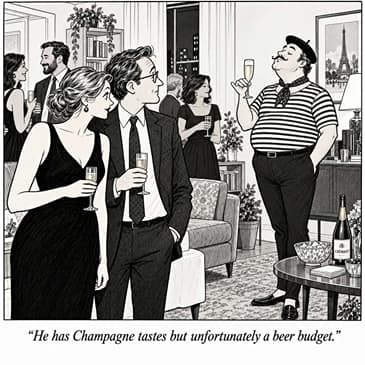
No matter how you feel about Champagne, it’s damn expensive. So, what if we told you that there is a French sparkling wine that hits like Champagne but doesn’t have nearly the same price? We think you’d probably thank us. And that’s why we’re talking about Crémant this week. You’re welcome. And not just any old Crémant (because there are several versions which we talk about in this episode), but specifically one of our favorites: Crémant de Loire made with the grape Chenin Blanc which is very unusual for a sparkling wine, and very delicious. If you have never heard of, or never tried, Crémant, then we need to talk. Seriously. Crémant is one of the world’s great sparkling wines, and what is so fun about it is that there are so many different varieties to choose from, and they are all very reasonably priced. We also want you to know that you do not need to drink sparkling wine from wine flutes. That is over. Just use a nice white wine glass, and you will be more than fine. Plus, you can have bigger pours. IKR?!? Wines reviewed in this episode: Gratien Meyer Crémant de Loire Brut, Langlois Crémant de Loire Brut Rosé
Send us a Text Message and we'll respond in our next episode!
Contact The Wine Pair Podcast - we’d love to hear from you!
Visit our website, leave a review, and reach out to us: https://thewinepairpodcast.com/
Follow and DM us on Instagram: https://www.instagram.com/thewinepairpodcast/
Send us an email: joe@thewinepairpodcast.com
Show Notes
Episode #238: Crémant de Loire: Champagne Taste on a Beer Budget! 00:00
________________________
KEY QUESTIONS
- What is the difference between Crémant and Champagne?
- Is Crémant a good alternative to Prosecco?
- What is Crémant de Loire?
- What does Crémant de Loire taste like?
- What food pairs with Crémant de Loire?
- Should you drink Crémant from a flute or a wine glass?
________________________
Episode Overview and First Thoughts on Loire Crémant 00:26
Hello fellow wine Monks! And welcome to The Wine Pair Podcast. I’m Joe, your sommelier of reasonably priced wine, and this is my wife and my wine pairing partner in crime, Carmela. And we are The Wine Pair!
If you're new to our podcast, here's what we do: Every week we buy wines under $25 with our own money, taste them, and give you our brutally honest opinion on whether they're worth buying. Nobody pays us to review specific wines, we don't accept free bottles from wineries, and we're not afraid to call out a bad wine when we taste one. Decanter Magazine calls us fun, irreverent, chatty, and entertaining - so if that sounds like your vibe, welcome to our tribe of wine lovers.
So, the name of the tribe this week comes from Hasini who suggested the name because, as we always say, if you want to find the history of modern wine, or beer, or alcohol from Europe, you gotta follow the monks. And that may be confusing because monks are part of a variety of Catholic religious orders who tend to live in monasteries and live pretty simple and sparse lives, but let’s face some facts. First, they often grow and made their own food, so rather than buy beer or wine, they made it, second, they made wine for religious purposes for the Catholic Mass, third, drinks that were fermented were less likely to be contaminated and more likely to last longer, and fourth, come on, they lived with a bunch of other dudes all day every day, so they needed something to have some fun with.
My voice, been sick, extra sexy
Anyway, today, we are talking about one of our very favorite wines in the whole world, one that we think not enough people know about or love, and that is the beautiful sparkling wine Crémant and specifically this week, Loire Crémant. Now, it may surprise you to find that there are different versions of Crémant based on the region they are from and the grapes they use, but before we talk about that, I did want to talk briefly about how Crémant and Champagne compare and contrast, because both are excellent sparkling wines from France, although there is some Crémant from outside of France, but we’ll get there in a minute.
- Both are made in the traditional method, so production is exactly the same where the secondary fermentation takes place in the bottle, and both have similar strict standards.
- Champagne can only be made in the Champagne area of northern France with grapes from specific vineyards, and Crémant can only come from eight protected regional appellations in France along with one in Luxembourg and one in Belgium.
- Champagne focuses on three primary grape varieties: Chardonnay, Pinot Noir, and Pinot Meunier. Crémant focuses on signature grapes of its home region, offering a much wider style spectrum, and we’ll cover that in a minute.
- Champagne requires as least 12 months on the lees, while Crémant requires a minimum of 9 months of lees aging
- Champagne is typically characterized by acidity, chalky minerality, and bready and yeasty flavors and aromas. Crémant tends to be brighter, softer, and more fruit-forward, and the flavor reflects the specific grapes used in different regions.
- Champagne is expensive, rarely below $35 or $40, while Crémant is considered one of the best-values in wine, and you can find good versions in the $20 range.
So, the short story is this: both are great sparkling wines that are made in the classic style, but you are going to get more variety and a cheaper price in Crémant than Champagne. And that’s why we are covering it in our podcast!
And now, let’s quickly review the different regions, styles, and major or primary grapes of Crémant, and yes, Carmela, there will be a test:
- Crémant de Loire: Primary grapes are Chenin Blanc and Cabernet Franc, and the style is fresh, crisp, with green apple, citrus, and brioche. If you have not had a sparkling Chenin Blanc, you are in for a treat.
- Crémant d'Alsace: Primary grape is Pinot Blanc (primary base) and Pinot Noir (100% for rosé), and the style is delicate, fresh, and fruity with orchard fruits and clean acidity
- Crémant de Bourgogne: Primary grapes are Chardonnay and Pinot Noir (minimum 30%), plus Gamay (up to 20%), and the style is rich, structured, and closest in character to Champagne.
- Crémant de Limoux: Primary grapes are Chardonnay and Chenin Blanc, blended with local Mauzac and Pinot Noir. The style is crisp with peach and floral notes and some toast.
- Crémant de Jura: Primary grapes are Chardonnay, Pinot Noir, and Trousseau, and the style is called crisp and energetic, with some stone fruit, stone, and nuttiness.
- Crémant de Bordeaux: The primary grapes are Sémillon, Sauvignon Blanc, and Muscadelle for whites; Merlot, Cabernet Franc, Cabernet Sauvignon, Malbec, Carmenère, and Petit Verdot for rosés. The style is fresh and aromatic, the whites have citrus and herbs, while rosés have crunchy red berry fruit.
- Crémant de Die: Primary grapes Clairette, blended with Aligoté and Muscat Blanc. The style is light, aromatic, gentle, and soft
- Crémant de Savoie: The primary grapes are Jacquère and Altesse, and the style is crisp and bright with flowers, pear, and apple.
- Crémant de Luxembourg: Primary grapes are Pinot Blanc, Chardonnay, Pinot Noir, and Riesling, among others, and the style is clean, crisp, and lively with fresh fruit flavors.
- Crémant de Wallonie from Belgium: Primary grapes are Chardonnay, Pinot Noir, Pinot Meunier, Pinot Blanc along with some local hybrids, and the style is crisp, acidy, with green apple, citrus, and flowers.
So, that is a lot, but you don’t have to memorize it. You can just come over to our show notes on our website and you’ve got them. Our goal is to do as many of the Crémant varieties that we can over the next several months, but this week, we are focusing, as we said, on Crémant de Loire which we love, and we have two Crémant de Loire wines to taste and review to let you know if they are worth running out and buying . . .
But first . . . we have to do our shameless plug.
Thank you for listening to us and for supporting our show, and know that we buy all of the wine we taste and review every week so that we can give you real and honest reviews. If you like what you’re hearing, please subscribe to our podcast and leave us a five star rating and review so we can grow listeners.
We also love to hear from you and we always respond so you can follow us on Instagram and Bluesky and TikTok at thewinepairpodcast. You can contact us on our website thewinepairpodcast.com, and you can sign up for our email newsletter there and you can also send us a note at joe@thewinepairpodcast.com and let us know about wines your want us to review or just shoot the breeze, we love chatting it up.
And, as we do every week, we’ll tell you someone we think you should recommend The Wine Pair Podcast to - because the best way for us to grow listeners is when you tell your family and friends about us - and this week, we want you to recommend us to anyone who has Champagne tastes but a beer budget and thinks that Prosecco is too sweet because Crémant may be the answer they have been looking for.
Topic: WTF is Loire Crémant? 11:21
Carmela, let’s find out just what the eff Crémant from Loire is, shall we?
Well, sparkling wine like the type we are used to today is a relatively new invention, and I say relatively. The kind of sparkling wine made in Champagne started around 1660, but interestingly enough, the earliest recorded sparkling wine was Blanquette de, you guessed it, Limoux in southern France in 1531, and it was created when winter cold paused fermentation and it resumed in the spring.
For Crémant de Loire, the history is even more recent. It began in 1811 when Belgian-born entrepreneur Jean-Baptiste Ackerman settled in Saumur, which is a small town on the Loire river, and the closest major city is Angers which is about 30 miles or 50 kilometers away. Ackerman noticed that the local still white wines naturally developed into sparkling wines through a secondary fermentation in the bottle. Ackerman had worked in the Champagne region for a year before he settled in Saumur, and so he brought with him a knowledge of the new ‘méthode champenoise’. But it took him a while to start making sparkling wine.
For a couple of decades he mostly focused on trading still wines and studying local grape varieties. In 1831, he began experimenting with adapting the Champagne technique to white Loire Valley grape varieties.After three years of tests and trials and refinement, he released his very first commercial batch of sparkling wine in 1834, and then in 1836 he produced first vintage wine. Ackerman presented his 1836 vintage to the Tasting Commission at the Angers Industrial Exhibition, and the jury awarded him a gold medal, recognizing him as the first producer to successfully apply the traditional method in the Loire Valley.
In 1840, he moved production into massive limestone caves along the Thouet and Loire rivers in Saint-Hilaire-Saint-Florent. And, Ackerman’s success led to the founding of other historic sparkling wine trading houses across Saumur and Touraine, including Bouvet-Ladubay,Gratien & Meyer, which is where one of our wines is from today, Langlois-Chateau which is where another of our wines comes from today, and Monmousseau in the mid-1800s.
For nearly a century, Loire sparkling wines competed directly with Champagne and were widely marketed across France and international export markets under names like "Saumur Champagne.” And Champagne, as you can imagine, didn’t like that. So Champagne producers sued, and using the name "Saumur Champagne" was officially banned in 1892. And, then later European regulations also prohibited non-Champagne producers from printing “méthode champenoise” on labels, requiring producers to use the term "méthode traditionnelle” instead. Which we see to this day.
Fast forward to the 1970’s, and precisely October 17, 1975, the anniversary of which is right around the corner and they just celebrated their 50th anniversary last year, the official “Crémant de Loire AOC” (Appellation d'Origine Contrôlée) was created, and it established a unified, premium sparkling wine designation across Anjou, Saumur, and Touraine.
With this decree came some strict production standards including 100% hand-harvesting in small perforated crates, limited juice extraction (maximum 100 liters per 150 kg of grapes), secondary bottle fermentation, and a minimum of 9 months on the lees and at least 12 months total bottle aging before release.
Crémant de Loire has different rules than Champagne in terms of grapes, and one of the things we love about it and makes it so different is that the local grape Chenin Blanc along with Cabernet Franc are the heroes in the wine, which creates a very different taste. They do also allow the classic Champagne grapes of Chardonnay and Pinot Noir, and producers can also use Grolleau, Pineau d'Aunis, and Orbois, but not Sauvignon Blanc.
Now, remember that all those Champagne producers were all pissy about Loire winemakers using the name Champagne? Well, it turns out in the 1970s these Champagne producers all of a sudden wanted to get in on the action, and famous Champagne houses like Bollinger bought Langlois-Chateau in 1973, and Taittinger bought Bouvet-Ladubay.
More recently, Crémant from Loire has exploded, nearly doubling over the past decade to more than 26 million bottles sold, making it account for about 11% of all wine produced in the Loire Valley by 2023. That’s a lot. And over half of that total is exported worldwide.
If you visit the Loire, you may find another sparkling wine similar to Crémant de Loire called Saumur Brut which also focuses heavily on Chenin Blanc. It is also an official AOC wine. However, because of the growth in popularity of Crémant de Loire, many producers have shifted away from it. I have not tried it, but the differences between the two wines are that Saumur Brut is supposed to be crisper and brighter, while Crémant de Loire is rounder and creamier with more bready notes. Even though less Saumur Brut is made, it is still about 25-30% of the sparkling wine made in the region vs. 60% for Crémant de Loire.
Along with its unique, more fruity taste than Champagne and its much lower price point, a few other things people love about Crémant de Loire are the fact that is really easy to pair with a wide variety of foods, including seafood and creamy sauces, and when you throw in the Rosé version, which leans on Cabernet France and Pinot Noir, you can pair it with salumi and even fruity desserts. And today, we are going to try both styles! By the way, we are going to do more types of Crémant in the future when we can, and I am trying to find both the white and Rosé styles so we can see which we like better.
One last random thing - we are getting out of the habit of using Champagne flutes for sparkling wine. They are fun and festive, but they are unnecessary. Plus, they’re too small
But that’s enough information. I think it’s time to learn a little more about the specific wines we are drinking today. Whaddya say?
Loire Crémant Wines We Chose for This Episode 20:05
As usual, the wines we have chosen for this episode are under $25, and they should be relatively easy to find because I bought them at wine.com. Crémant is getting easier and easier to find, and Crémant from Loire is maybe the most available along with Crémant from Alsace which is actually the largest selling. If you go to a wine shop or a store with a good wine section and a good sparkling or French wine section, you will definitely find it. And, as always, go to your local neighborhood wine shop and they will be happy to help you.
The first wine we are going to drink is the Gratien Meyer Crémant de Loire Brut, and this one is, like many sparkling wines, a non-vintage. And remember, that basically means they can blend wines from different years together, often including some wine from previous vintages, which helps them keep the style consistent from year to year. Then, after the second fermentation and aging on the lees, they disgorge the bottle and add the dosage, which is a little wine and sometimes sugar used to top it off and helps determine the final sweetness before they cork it. Anyway.
This one has an interesting blend. It’s 40% Chardonnay, 40% Chenin Blanc, 15% Cabernet Franc and 5% Pinot Noir, and it got a 94 from the Tasting Panel and a 90 from Wine Enthusiast. I did find a tech sheet for this wine, but I did find some confusing information about Gratien Meyer. Not to spend too much time on it, Gratien Meyer was family-owned until 2000, when it was sold to the German sparkling wine company Henkell & Co., which became Henkell Freixenet after acquiring a majority stake in Freixenet, the Spanish Cava maker in 2018. Today, Gratien Meyer is part of Henkell Freixenet and is represented in the U.S. by its subsidiary, Freixenet Mionetto USA, and Mionetto is a big Prosecco brand. And their portfolio is chock full of brands you will recognize, which is depressing, and why you see a lot of those brands in supermarkets now.
Anyway, the tech sheet says the soil is chalky limestone, and is good at holding heat from the day. As they are required to do, they hand harvest, and they say that 100% of the first pressing is used for bottling, and the first press, like with olive oil, is said to be the best juice. They do not use malolactic fermentation, and they age on the lees for 18 months, and then they age the wine overall for 3 years, which is much longer than the 1 year required. But that’s what we got for this wine, so let’s go to the next one.
The second wine we are going to drink today is the Langlois Crémant de Loire Brut Rosé, also non-vintage, and this one got a 90 from Wine Enthusiast. Because it is a Rosé, the grapes are different because, as we all should know right now, Rosé wines, as do all wines that are not white, they get their color from the grape skins, not the juice which is almost always clear except for some odd grapes. The blend for this wine is 70% Cabernet Franc and 30% Pinot Noir.
The tech sheet for this wine says the grapes are hand-harvested in small bins, as they should be, and then they are gently pressed. Also as expected, they only use the first-press juice. To get the rosé color, the juice spends about 12 to 15 hours in contact with the grape skins before fermentation in stainless steel. They also blend in some reserve wine, and then the wine spends at least 18 months aging on the lees, which again is longer than the minimum required for Crémant de Loire. The finished wine is 12.5% alcohol.
We should also note that the vineyards are farmed sustainably, and the estate is Terra Vitis certified, and has been since 1999. We have spoken about this before, but Terra Vitis is a French certification for sustainable winegrowing that looks at the whole operation including environmental practices, working conditions, and whether the winery is being run sustainably over the long term. As we mentioned earlier, the winery was purchased by the Bollinger Champagne house in 1973, and they still own it, although they shortened the name from Langlois-Chateau to simply Langlois.
But, I think that is enough information - let’s get to drinking! We’ll take a quick break and be right back.
LINKS TO SOURCES FOR THESE SPECIFIC WINES
- https://www.freixenetmionettousa.com/trade-pr-tools/brand/gratien-meyer/
- https://www.freixenetmionettousa.com/trade-pr-tools/gratien-meyer-Crémant-brut-technical-sheet-2/
- https://vintus.com/wp-content/uploads/2018/11/Langlois-Chateau-Cremant-de-Loire-Brut-Rose-Tech-Sheet-91-JD-1.pdf
Gratien Meyer Crémant de Loire Brut, Langlois Crémant de Loire Brut Rosé Wine Tasting, Pairing, and Review 25:54
Wine: Gratien Meyer Crémant de Loire Brut (Click here to find this wine on wine.com. We may be compensated if you purchase)
Region: France, Loire
Vintage: Non-vintage
Price: $19.97
Retailer: wine.com
Alcohol: 12.5%
Grapes: 40% Chardonnay, 40% Chenin Blanc, 15% Cabernet Franc and 5% Pinot Noir
Professional Rating: 94 TP, 90 WE Vivino
What we tasted and smelled in this Gratien Meyer Crémant de Loire Brut:
- Color: Toasted marshmallow, vanilla, light
- On the nose: Spice, clove, almond, nutmeg, yeast, Anjou pear
- In the mouth: Citrus, spiced pear, pear tart, par with lemon juice, simple, creamy, not great bubbles, crowd pleaser, stone on the end
Food to pair with this Gratien Meyer Crémant de Loire Brut: Flaky white fish, halibut, cod, plated dinner with new potatoes and asparagus and salmon, fish and chips, salty foods, cream sauce, spicy foods, bottle is asking for something fanciet
As a reminder on our rating scale, we rate on a scale of 1-10, with no half points, where 7 and above means that we would buy it, and 4 and below means that we are likely to pour it down the sink, and a 5 or 6 means we are likely to drink it and finish it, but we are probably not going to buy it.
Gratien Meyer Crémant de Loire Brut Wine Rating:
- Joe: 7/10
- Carmela: 7/10
Wine: Langlois Crémant de Loire Brut Rosé (Click here to find this wine on wine.com. We may be compensated if you purchase)
Region: France, Loire
Vintage: Non-vintage
Price: $22.99
Retailer: wine.com
Alcohol: 12.5%
Grapes: 70% Cabernet Franc, 30% Pinot Noir
Professional Rating: WE 90 Vivino
What we tasted and smelled in this Langlois Crémant de Loire Brut Rosé:
- Color: Coral pink. Pink!
- On the nose: Raspberry, crunchy red fruit, pomegranate, citrus, grapefruit, flowers, touch of spice
- In the mouth: Some sweetness, good bitter ending like a grapefruit, maraschino cherry, red Sour Patch
Food to pair with this Langlois Crémant de Loire Brut Rosé: Spicy foods, puttanesca, spicy salsa, tacos, Cajun fish taco, shredded pork, chili
Langlois Crémant de Loire Brut Rosé Wine Rating:
- Joe: 7/10
- Carmela: 8/10
Which one of these are you finishing tonight?
- Carmela: Langlois Crémant de Loire Brut Rosé
- Joe: Langlois Crémant de Loire Brut Rosé
The Test: Did we nail the taste profiles expected from Loire Crémant? 42:06
- Gratien Meyer Crémant de Loire Brut
- Winery: This Crémant de Loire Brut has a golden yellow color, with fine, long-lasting foam. The aromatics open with notes of citrus fruits, particularly orange and mandarin, accompanied by floral aromas. A second aromatic wave offers sweet pastry notes. A very fine balance is revealed in the mouth, reflecting an excellent maturity. Sustained length in the mouth, with notes of peach and apricot.
- WE: This is a fulsome Crémant de Loire that has a lot to offer. The sparkling wine opens with baked apple and pear, and a tinge of caramel and white peach. The palate mirrors the nose along with a splash of white cola, lemon-citrus peel and orange blossom.
- Langlois Crémant de Loire Brut Rosé
- Winery: Delicious hints of vine peach, with an aeriel elegance. Fresh, full-bodied and fruity on the palate, with a long finish
- WE: This rosé Crémant is lively and vibrant. The wine has a fresh nose of red apple, pencil shavings and dried white-flower blossom. Additional flavors of pear, red cherry, red raspberry and lemon peel emerge on the palate that has a vibrant, fun and layered acidity.
What is our verdict on Loire Crémant? 44:06
We enjoyed it. We need to drink more. We are sparkling wine fans, and Crémant is a great alternative to other sparkling choices, especially Prosecco
And now it is time to head over to our news desk so that we can cover our wine in the news this week segment.
Wine in the news this week: 3,000 bottles stolen in three hours in Piedmont: gang raids a Barolo institution 45:04
Our wine in the news this week comes from the editorial team at Reporter Gourmet, and the article is called “3,000 bottles stolen in three hours in Piedmont: gang raids a Barolo institution.” As always, the links to this article and all of the articles we use for research are in the show notes.
So here’s what happened. Last month, at a winery called Conterno Fantino in the town of Monforte d’Alba, which is right in the heart of Barolo country in Piedmont, four masked men walked in through the vineyards around midnight, and without smashing any doors or windows, which is suspicious, they got into the warehouse
Once they got into the warehouse, they fired up the forklifts and spent about three hours picking out the most valuable cases, starting with the winery’s top single vineyard Barolo, which is called Vigna Sorì Ginestra. In all, they took more than 3,000 bottles worth hundreds of thousands of euros, and they focused on the good stuff.
To add insult to injury, they loaded all of that wine into the winery’s own vans, and then, so they would not wake up the neighbors, they pushed the vans down the access road with the engines off. It was only when they got to the main road that they started them up and drove away. So, yes, they stole the wine, and they stole the getaway vehicles too.
Interestingly, the article points out that this looks a lot like a theft at the Banfi winery just a few months ago. And the police, who are going through the security camera footage, think this may have been a theft to order, meaning somebody ordered the theft. What they are going to do with the wine is anyone’s guess because they cannot sell it at any legitimate auction. Maybe it will just end up in some reach person’s cellar. Who knows?!?
It is also worth saying that Conterno Fantino is not some giant operation. It was founded in 1982 by Claudio Conterno and Guido Fantino, and they farm about 25 hectares, or about 60 acres, organically, so they have been a target because they are maybe not as sophisticated. But, in some ways, because they didn’t break in and because they did the theft so quickly, you really wonder if it was an inside job. Very sad.
Not sure what to say, Carmela. This is kind of a crappy story, right?!?
Listener Shoutouts 48:54
- We got lots of likes and comments on our reel on Instagram for Silvaner, including one from Frantastic3000 on Insta who said she really liked our episode. And, I’ve gotten a few German lessons on the pronunciation of the wine and the bottle.
Wines coming up in future episodes in case you want to drink along with us 49:25
- Valdiguie: Cruse Wine Co. Rancho Chimiles Vineyard Valdiguie 2023, Optik French Camp Valdiguie 2022
- Juliet boxed wine: Pinot Noir, Sauvignon Blanc
- Erbaluce: Cieck Erbaluce di Caluso 2024, Luigi Ferrando La Torrazza Erbaluce di Caluso 2024
- Limoux Cremant: Vanderpump Cremant di Limoux Brut, Faire La Fete Brut Rose
- Cote du Rhone: Domaine de la Janasse Cotes du Rhone Reserve 2022, E. Guigal Cotes du Rhone Rouge 2023
- Burgundy Cremant: Simonnet-Febvre Cremant de Bourgogne Brut, JCB No. 69 Brut Rose Cremant de Bourgogne
Outro and how to find The Wine Pair Podcast 49:52
Thank you for listening to us and for supporting our show, and remember, we buy all of our own wine and we do all of the writing and recording and editing to bring you a show every week because we absolutely love doing it, and our small little ask for you is that you please follow or subscribe to our podcast and also please leave us a nice rating and review to help us grow our listeners - and a huge thank you to all of you who have done so already!
You can also follow us on Instagram and Bluesky and TikTok at thewinepairpodcast. You can contact us on our website thewinepairpodcast.com, and you can sign up for our email newsletter there and you can also visit our “Shop Wine” section where you can find links to buy the wines that we rate as buys in each episode. I will also note that on our website, if you are curious about a wine we have covered in the past, we do have a pretty good search functionality, so you can use that find wines you want to know more about.
And we want to make content you care about and you like, so send us a note or DM us and give us some feedback or let us know if there are wines you want us to try or wine making areas of the world you are curious about - and we’ll take care of it! joe@thewinepairpodcast.com
Alright, with that, we are going to sign off, so thanks again, and we will see you next time. And, as we say, life is short, so stop drinking shitty wine.
________________________
FREQUENTLY ASKED QUESTIONS
Q. What is the difference between Crémant and Champagne?
A. Both get bubbles from a second fermentation in the bottle; the differences are place, grapes, aging and price. Champagne comes only from Champagne, mostly from Chardonnay, Pinot Noir and Pinot Meunier. Crémant comes from eight other French appellations and nearby countries, uses local grapes, needs less time on the lees (yeast sediment), tends to taste fruitier, and generally costs less.
Q. Is Crémant a good alternative to Prosecco?
A. Yes, especially for anyone who finds Prosecco too sweet. Crémant is made like Champagne, with a second fermentation in the bottle. A Crémant de Loire Brut at about $20 didn't taste like Prosecco, showing spiced pear and citrus, and a Crémant de Loire Brut Rosé had a touch of sweetness that the hosts didn't find overpowering.
Q. What is Crémant de Loire?
A. Crémant de Loire is a white or rosé sparkling wine from France's Loire Valley, made with a second fermentation in the bottle, the same method as Champagne. Its main grapes include Chenin Blanc and Cabernet Franc, alongside Chardonnay and Pinot Noir. The appellation dates to 1975 and requires hand harvesting and at least nine months on the lees (yeast sediment).
Q. What does Crémant de Loire taste like?
A. Fresh and fruit-forward, though white and rosé differ. A Chardonnay and Chenin Blanc Brut showed spiced pear, citrus and a creamy, simple palate with modest bubbles; both hosts rated it 7/10. A Cabernet Franc and Pinot Noir Brut Rosé brought raspberry, grapefruit and tart red fruit, a touch of sweetness and a bitter grapefruit finish (Joe 7/10, Carmela 8/10).
Q. What food pairs with Crémant de Loire?
A. It's a versatile food wine. A white Brut works with flaky white fish like halibut or cod, salmon with new potatoes and asparagus, fish and chips, salty foods and cream sauces. A Brut Rosé leans toward spicy food: Cajun fish tacos with slaw and white sauce, spicy salsa, puttanesca, shredded pork and chili.
Q. Should you drink Crémant from a flute or a wine glass?
A. A regular wine glass is the better choice. Flutes are fun and festive, but they're unnecessary and too small. A standard white wine glass works fine for Crémant or any sparkling wine, and it allows a bigger pour.
________________________
RESEARCH ARTICLES AND LINKS FOR THIS EPISODE
- https://www.vinsdeloire.fr/en/loire-wines/Crémant-loire/all-about-Crémant-loire
- https://www.decanter.com/magazine/sparkling-wines-249453/
- https://www.decanter.com/sponsored/Crémant-de-loire-celebrating-50-years-of-sparkle-566178/
- https://www.decanter.com/learn/advice/champagne-vs-Crémant-sparkling-wine-difference-437354/
- https://www.wineenthusiast.com/culture/wine/Crémant-france-affordable-sparkling-wine/
- https://www.the-buyer.net/opinion/Crémant-loire-saumur
- https://www.thedrinksbusiness.com/2024/08/why-are-sparkling-fans-seeking-out-loire-valley-fine-bulles/
- https://www.thedrinksbusiness.com/2025/09/gratien-meyer-bets-big-on-Crémant-future-with-long-term-vineyard-overhaul/
- https://harpers.co.uk/news/fullstory.php/aid/34864/Celebrating_50_years_of_Cr_E9mant_de_Loire.html
- https://sur-la-pointe.com/blog/2025/12/17/Crémants-from-the-loire-1-the-maisons/
- https://sur-la-pointe.com/blog/2026/01/14/Crémants-from-the-loire-2-the-growers/
- https://quentinsadler.wordpress.com/2017/06/20/the-loire-valley-delicious-sparkling-for-summer/
- https://quentinsadler.wordpress.com/2017/04/10/a-craving-for-Crémant-exciting-french-sparkling-wines/
- https://www.bonvinitas.com/en/wine-taste/increasingly-popular-Crémant-de-loire
- https://www.tastefrance.com/magazine/wine/discover-elegant-sparkling-wines-loire-valley
- https://calibremag.com/Crémant-sparkling-wine-making-magic-in-the-loire-valley/
- https://www.ackerman.fr/en/the-world-of-ackerman/our-history/
- https://www.wine-searcher.com/regions-Crémant+de+loire
- https://winefolly.com/deep-dive/Crémant-wine/
- https://winefolly.com/tips/tasting-challenge-Crémant/
- https://en.wikipedia.org/wiki/Loire_Valley_(wine)
- https://www.winemusing.com/Crémant-de-loire-it-is-time-to-sparkle/
- https://www.victoriadaskal.com/post/what-is-cr%C3%A9mant-de-loire-celebrating-50-years-of-france-s-great-value-sparkling-wine
- https://www.thekitchn.com/great-value-undiscovered-sparkling-wines-of-the-loire-valley-173399
- https://www.london-unattached.com/Crémant-de-loire/
- https://www.tastefrance.com/french-products/wine-spirits/Crémant-de-loire-pdo
- https://www.ot-saumur.fr/en/get-inspired/know-everything-about/to-each-his-own-aoc/controlled-designation-of-origin-Crémant-de-loire/
- https://www.meiningers-international.com/wine/insights/loire-sparkles
- http://jimsloire.blogspot.com/2015/02/les-5-du-vin-explore-loire-sparkling.html
- https://www.winekeller.com/blog/visit-to-bouvet-ladubay-saumur
- https://www.youtube.com/watch?v=40akIlHI0_o
- https://www.youtube.com/watch?v=a_WirXtBPW0
- https://www.youtube.com/watch?v=PWk-TsCSTtw
- https://www.youtube.com/watch?v=fqPT4wOrEeo
- https://www.thewinedoctor.com/weekend/fouassier_petnat_nv.shtml
________________________
Support The Wine Pair Podcast by heading to our website and shopping for the wines we give our highest ratings to in our Shop Wines section. Just click on this link - you pay the same price, and we may get a small amount of compensation.
You can also support us by clicking on this affiliate link to wine.com and find great wines under $20!
And, if you are looking for a great website builder for your podcast, click on this link to use the service we use and love: Beamly, formerly known as Podcastpage.io
________________________
FULL TRANSCRIPT
Joe: 00:00
Carmela, we love a good sparkling wine, don't we?
Carmela: 00:03
We so do.
Joe: 00:04
Now, what happens if you have champagne taste but a beer budget?
Carmela: 00:07
Then you buy the beer budget sparkling.
Joe: 00:10
Which we call Cremant. Woo! And this week we're gonna do Cremont de Loire. You don't know what those words mean? Nope. Then listen in because you won't find out and you're gonna be happy that you found out. Hello, fellow wine monks, and welcome to the Wine Pair Podcast. I'm Joe, your Simolier of Reasonably Priced Wine, and this is my wife and my wine pairing partner in Crime Krima.
Carmela: 00:36
Hi there!
Joe: 00:37
And we are the wine pair.
Carmela: 00:38
Okay, so now we're just becoming the monks.
Joe: 00:40
That's right. Well, we'll get to that in a second.
Carmela: 00:42
You can't beat him, join him.
Joe: 00:43
That's right. But if you're new to our podcast, here's what we do as a little introduction. Every week we buy wines under $25 with our own money. We taste them and give you our brutally honest opinion on whether they're worth buying or not. Nobody pays us to review You said that like you didn't know. Nobody pays us to review specific wines. We don't accept free bottles from wineries, and we're not afraid to call out a bad wine when we taste one. And Decanther magazine calls us fun, irreverent, chatty, and entertaining. So, if that sounds like your vibe, welcome to our tribe of wine monks.
Carmela: 01:12
Oh my gosh. What would the monks think?
Joe: 01:15
What would they think? Well, the name this week came to us from Hassini, who suggested the name because, as we always say, if you want to find the history of modern wine or beer or alcohol from Europe, you gotta follow the monk.
Carmela: 01:27
The monks. That's right. It's so true.
Joe: 01:29
And that may be confusing because monks are part of a variety of Catholic religious orders who tend to live in monasteries and live pretty simple and sparse lives.
Carmela: 01:37
It would be hard for us. It would be hard for us because a lot of them take a vow of silence.
Joe: 01:41
Yeah, that would be hard for you. But anyway, I don't know. Let's face a few facts about this, about why why they make wine and beer and all that kind of stuff.
Carmela: 01:48
First. But again, I think it would be hard for you too.
Joe: 01:52
You're just not gonna let me talk. Now I know what it feels like. Now I don't know what it feels like to be on the other side of the microphone and not be allowed to talk. No, it's fine. Okay, first, can I talk about these things? Yes. Because I spent a lot of time writing this and not giving you the script. Okay. Let's do it. Yes. Okay, first, they often grow and make their own food. So rather than buy beer wine, they just made it. Right? Why not? Second, they made wine for religious purposes, like from mass, right? So and then third, drinks that were fermented were less likely to be contaminated and more likely to last longer. But fourth, they lived in a place with a bunch of dudes. And like you said, they didn't talk a lot. So they needed something.
Carmela: 02:32
What do you mean, like something just to like glom onto?
Joe: 02:35
Just to take the edge off. I mean, it'd make me crazy after a while. Oh my god. I would go nuts you grown up. No, I just I'm saying being locked up in a in a house with a bunch of it's like a I feel like I'm back in college with a fraternity. Could you be a monk? That's why we had so much alcohol there.
Carmela: 02:51
Wow. Could you be a monk like if you had your like own place?
Joe: 02:55
Sure, sure. That's called a hermit. That's different. Okay. And I will also say one other thing. My voice is probably sounding a little extra sexy today. Wow. Because I'm getting over a cold. And so if I start to die. Yeah, if I start, wow, if I start hacking up a lung, you'll not want to be sexy. That's not sexy. Anyway, today we are talking about one of our very favorite wines in the whole world, one that we think not enough people know about or love, and that is the beautiful sparkling wine Cremont.
Speaker 2: 03:23
Uh-huh.
Joe: 03:23
And specifically this week, Loire Cremont. Now, it may surprise you to find that there are different versions of Cremont based on the region they are from and the grapes they use. But before we talk about that, because we're going to talk about that, I did want to talk briefly about how Cremant and Champagne compare and contrast because both are excellent sparkling wines from France. Although there is some Cremant from outside of France, and we'll get to that in a second. But anyway, here's some things, Carmella. Both are made in the traditional method, so production is exactly the same.
Speaker 5: 03:52
Oh my gosh.
Joe: 03:53
Where the secondary fermentation takes place in the bottle and both have very similar strict standards. Champagne can only be made in the champagne area of northern France with grapes from specific vineyards, and Cremant can only come from the eight protected regional appalachians in France, along with one in Luxembourg and one in Belgium, which we're going to get to in a minute here. Champagne focuses on three primary grapes. You need to know this: Chardonnay, Pinot Noir, and Pinot Mounier. Cremont focuses on the grapes of whatever region it's from, and so it has a wider style spectrum and a spectrum. Spectum, that's what I've been spitting up. It's not going to make it in, but it's actually kind of funny. Okay. Offering a much wider style spectrum, and we'll cover that in a minute. Champagne requires at least 12 months on the Lees. Cremant requires a minimum of nine months on the Lees. So it's close, but a little different. Champagne is typically characterized by acidity, chalky minerality, and bready and yeasty flavors and aromas, while Cremant tends to be brighter and softer and more fruit forward. Although, again, that can vary depending on the region and the grapes and all that fun stuff. And champagne is expensive.
Carmela: 05:12
That's what I'm thinking. It's hard. Yes, ma'am. Alternative. Yes, ma'am. Woo!
Joe: 05:19
So, unless you find that $20 champagne at Costco, which really is champagne, it's officially champagne. I'm making a lot of mistakes that are being edited out. It's rarely, you can't, I mean, it's hard to find champagne under like 40 bucks. And even then, you're like, whoa, I don't know if I should drink that. Cremont is considered one of the best values in wine, and you can find good versions in the $20 range, which we're gonna prove to you today.
Carmela: 05:41
I love that. We think we're gonna prove that.
Joe: 05:43
I know I love it too. So the short story is this for you and for them. So the short story is this, Carmela. Both are great sparkling wines that are made in the classic style, but you're gonna get more variety and a cheaper price in Cremant than Champagne, and that's why we're doing it in the podcast.
Carmela: 05:59
That's why, people. That is why we do this.
Joe: 06:01
That's why we exist. And Carmela sometimes wonders why we exist, but she keeps coming back every week, and I'm thinking. I guess so. Okay. And now let's quickly review the different region styles and major or primary grapes of Cremont. And yes, Carmella, there will be a test at the end, so start memorizing. The first is Cremant de Loire. The primary grapes are Chenin Blanc and Cabernet Franc, and the style is fresh and crisp with green apple and citrus and brioche. And if you haven't had a sparkling Chenin Blanc, you are in for a treat. We love it. You can hear Mabel in the background. Cremant de Alsace, the primary grape is Pinot Blanc and Pinot Noir, 100% of that for the rose, and the style is delicate and fresh and fruity. Cremant de Bourgogne, which is burgundy, that's the French way of saying it. The primary grapes are Chardonnay and Pinot Noir plus Gamay, and the style is structured and considered the closest to champagne, which makes sense. The next is Cremant de Lemux. The primary grapes are Chardonnay and Chenin Blanc, and the style is crisp with peach and floral notes. The next is Cremant de Jura, which is a hot, I don't know, some people think it's a real hot wine region. We tried some wines from there, and they were like, they're okay. But anyway, there is a crement there. The primary grapes are Chardonnay, Pinot Noir, and Trousseau, which makes a lot of sense. And the style is called energetic. Cremant de Bordeaux. The primary grapes are Semillon, Sauignon Blanc, and Mouscadel for whites. And then if you're gonna get a rose, you're gonna get some Merlot or Cabernet Franc or Cabernet Sauvignon, which is kind of fun. The style is fresh and aromatic, and the roses have crunchy red fruit flavors. There's Cremant de D, I think that's how you say it. It looks like dye if you're uh English speaker, but it's DA. The primary grapes are claret, and it's also blended with aligote, which we've done, and mouscade blanc, which we've also done. And the style is supposed to be light and aromatic and gentle and soft, like me.
Speaker 5: 07:57
Wow.
Joe: 07:57
Then there's Cremante de Savoie. The primary grapes are, and I don't know these grapes, Jacquer and Altesse, and that's supposed to be a very crisp and bright style. Then there's Cremant de Luxembourg. So they make it in Luxembourg. The primary grapes are Pinot Blanc, Chardonnay, Pinot Noir, and Riesling. And it's supposed to be clean and lively. And then the last one is Cremante de Wallonnay from Belgium. Did you know that they I know I said it, but did you know they made Cremont in Belgium? No, I didn't. Well, now you do. The primary grapes are Chardonnay, Pinot Noir, and Pinot Mounier, which sounds a lot like champagne and also Pinot Blanc. And they can add in some local grapes as well. And it's supposed to be really acid-y, green apple, citrus, and floral. So there it is. Carmella, now go through them all in order.
Carmela: 08:44
Okay, number one alphabetically. Okay. Give me about 30 years.
Joe: 08:48
Okay. But that, you know, look, here's the deal. I said this before, and Carmella made fun of me. You don't need to memorize the list. You can just go to the our website, thewinepairpodcast.com, look for this episode, and you'll get the whole list there.
Carmela: 09:00
I mean, Joe will have it ready for you. Yeah.
Joe: 09:02
In fact, if you email me, I'll just send you the list. How about that?
Carmela: 09:05
Oh my gosh. Just email me. That's like, I mean, a win right there for everyone.
Joe: 09:10
It is. And Carmella, you're gonna like this. But our goal, I guess it's your goal now too. Our goal is to do as many of the Cremant varieties that we can over the next several months.
Speaker 5: 09:21
Okay.
Joe: 09:21
We're doing a lot. We've I've got a whole bunch waiting in the cellar.
Carmela: 09:25
Oh my goodness. I'm excited about this.
Joe: 09:27
I'm I'm glad you're excited about it. I know, I know. We love it. But this week again, we are focusing on Cremant de Loire, which again we love. We have two Cremant de Loire wines to taste and review to let you know if they're worth running out and buying.
Carmela: 09:42
But first, you gotta do our shameless palal.
Joe: 09:45
That's right. So thank you. I kind of cut you off. Sorry about that. Thank you for listening to us and supporting our show. And we buy all the wine we taste and review every week so that we can give you real and honest reviews. And if you like what you're hearing, please subscribe to our podcast and leave us a five-star rating and review.
Carmela: 10:01
That'll do it.
Joe: 10:01
So we can yeah, that that makes them people are motivated.
Carmela: 10:05
They're running.
Joe: 10:05
Swearing motivates.
Carmela: 10:07
Right. I mean, obviously.
Joe: 10:09
Obviously. Okay. We also want to thank everybody who's done that. Not swear, but like subscribed and given us a nice rating and review. We also love to hear from you and we always respond. So you can follow us on Instagram at Blue Sky and TikTok at the WinePair Podcast. Contact us on our website, thewinepairpodcast.com. Sign up for our email newsletter there, which you just missed. But if you email me, I'll hand deliver it to your email inbox. Send us a note at Joe at the winepairpodcast.com and let us know if there's wines you want us to try, or just shoot the breeze.
Carmela: 10:35
Right.
Joe: 10:36
Are you a monk?
Carmela: 10:36
Oh maybe you're a monk. We want to know if there are monks listening. Are we representing them correctly? Are we, you know, we want to know.
Joe: 10:43
And this is no joke. We have a friend who's a monk. I'm not kidding. Right.
Carmela: 10:47
And he's a wonderful man. He's an amazing person. He drinks a lot of wine. No, I don't know. I don't know, you might.
Joe: 10:53
Well, he does at Mass, I think, because he's also a priest.
Carmela: 10:56
True.
Joe: 10:56
Uh, and as we do every week, we'll tell you someone we think you should recommend the wine pair podcast to because the best way for us to grow listeners is when you tell your family and friends about us. And this week, we want you to recommend us to anyone who has champagne tastes but a beer budget.
Carmela: 11:09
Oh, I love it.
Joe: 11:10
And also thinks that prosecco is too sweet because Cremont may be the answer they've been looking for.
Carmela: 11:15
That's right.
Joe: 11:17
This is what happens when Carmela gets distracted by Mabel. Mabel's right there. Carmela. Yes, honey. Let's find out. Just what the f Cremant de Loire is, shall we? Let's do it. Okay, well, sparkling wine, like the type we are used to today, is actually a relatively new invention in the world of wine. It's relative. The kind of sparkling wine made in Champagne started around 1660, but interestingly enough, the earliest recorded sparkling wine was Blanquet des, you guessed it, Lemu.
Carmela: 11:48
Oh, I knew it.
Joe: 11:49
I know. In southern France in 1531, and it was created when winter cold paused fermentation and then resumed in the spring when it warmed up. For Cremont de Loire, the history is even more recent. It began in 1811 when Belgian-born entrepreneur Jean-Baptiste Ackerman settled in Samour, which is a small town on the Loire River. The closest major city is Angers. It's about 30 miles or 50 kilometers away. And what Ackerman noticed was that the local still white wines naturally developed into sparkling wines through secondary fermentation in the bottle. Now, Ackerman Carmella had worked in the Champagne region for a year before he settled in Saamour. And so he brought with him a knowledge of the new Method Champenois. But it took him a while to start making sparkling wine. Because for a couple of decades, he mostly focused on trading still wines and studying local grape varieties. And in 1831, he began experimenting with adapting the champagne technique to white Loire Valley grape varieties. And then after three years of tests and trials and refinement, he released his very first commercial batch of sparkling wine in 1834. And in 1836, he produced his first vintage wine, which, if you know sparkling wine, that's a big deal. Ackerman presented his 1836 vintage to the tasting commission at the Angers Industrial Exhibition, and the jury awarded him a gold medal.
Carmela: 13:15
A gold star.
Joe: 13:16
A gold star and recognized him as the first producer to successfully apply the traditional method in the Loire Valley.
Speaker 3: 13:24
Nice.
Joe: 13:24
And then in 1840, he moved production into a into big limestone caves along the Loire and Thuet rivers in France. And then Ackerman's success led to the founding of other historic sparkling wine trading houses across Samour and terrain, including Bouvet La Boudet, Gratien and Meyer, which is one of the wines that we're drinking today, Langois Chateau, which is another of the wines we're gonna drink today. Nice. And Mon Mosso in the mid-1800s. For nearly a century, Loire sparkling wines competed directly with champagne and were marketed widely across France and international markets under the name Samour Champagne.
Speaker 5: 14:04
Oh wow.
Joe: 14:04
And champagne didn't like that.
Speaker 5: 14:05
I bet not.
Joe: 14:06
They were mad about it. So champagne producers sued.
Speaker 5: 14:10
Oh my.
Joe: 14:11
And so using the name Chamour Champagne was officially banned in 1892. And then later, European regulations also prohibited non-champagne producers from printing method champagne on their labels. It required producers to use the term method traditionelle instead. And we see that even today. So you know what? The champagne folks are awfully fussy.
Carmela: 14:36
Wow. Well, they have to call they had to they did compromise, right? But like that is that's just how it goes, though, I guess. If you have rules, what do you think? How do you feel about it?
Joe: 14:46
I I'm upset about it. No, what what I'm gonna say is this whole thing will come back in a minute. So just be ready. All right. So fast forward to the 1970s, and precisely October 17, 1975, the anniversary of which is right around the corner, the official Cremant de Loire AOC was created in 1975, and it established a unified premium sparkling wine designation across Anjou, Samour, and Touraine. And with this degree came some strict production standards. 100% hand harvesting. They have to use small perforated crates. I'm not I'm not making this stuff up. Limited juice extraction, so they can only use the best juice, secondary bottle fermentation, and a minimum of nine months on the lees, and at least 12 months total bottle aging before release. Now, as we kind of mentioned, Cremant de Loire has different rules than champagne in terms of the grapes. And again, one of the things that we love about it and makes it so different is that the local grape Chen Blanc along with Cabernet Franc are the heroes in this wine, and it creates a really different taste. They do also allow the classic champagne grapes of Chardonnay and Pinot Noir. And producers can also use Groillot, Pinot d'Anny, and au bois, but they cannot use Sauignon Blanc.
Carmela: 16:03
Oh wow. So that is off limits.
Joe: 16:06
You can't do it. You get in trouble.
Carmela: 16:08
What happened? Like a slap on the hand or a slap in the face.
Joe: 16:11
Wow. Yeah, they just give you a ha, you cannot do that. They just hit you in the face. It's totally true. Oh my god, absolutely.
Carmela: 16:18
We wanted to hear the facts here.
Joe: 16:19
Now, Carmela, remember all that champagne fussiness? Yes. And they were all pissy about Loire winemakers using the name. Well, it turns out in the 1970s, these champagne producers all of a sudden wanted to get in on the action. Oh. And famous champagne houses like Bollinger bought Langla Chateau in 1973, and Tattinger bought Bouvet La Dubay.
Carmela: 16:43
Oh my goodness.
Joe: 16:44
So they were all fussy about it, but then they wanted to be friends.
Carmela: 16:48
Right. That was a long time afterward, though. It was, but you know what? So it's a whole different group of people making that decision.
Joe: 16:55
I I guess. There may have been a really old person. I mean, so old though.
Carmela: 16:59
I don't think so. But that's really something. Okay, so then what happened?
Joe: 17:03
Well, more recently, Cremont from Loire has exploded. And I don't mean like out of the bottle, but it's grown a lot. Yeah. It's nearly doubled over the past decade to more than 26 million bottles sold, making it account for about 11% of all wine produced in the Loire Valley in 2023, and that's a lot. And over half of that total is exported worldwide. So a lot of people are starting to drink it. Right. If you visit the Loire, you may find another sparkling wine similar to Cremant called Samour Brute. It also focuses heavily on Chen and Blanc, and it's also an official AOC wine. But because of the growth and popularity of Cremant de Loire, many producers have shifted away from it. Now we haven't tried it, but the differences between the two wines are that Samour Brute is supposed to be crisper and brighter, while Cremant de Loire is rounder and creamier with more bready notes. Now, back to Cremant. Along with its unique, more fruity taste than champagne, and its much lower price point, a few other things people love about Cremant de Loire are the fact that it's really easy to pair with a wide variety of foods, including seafood, creamy sauces, and when you throw in the rose version, which leans on Cabernet Franc and Pinot Noir, you can pair it with salumi and even fruity desserts. Hmm. And today we're gonna try both styles, Carmella. Woo! The regular and the rose.
Carmela: 18:24
Okay. Are you excited about that? I am very excited about that.
Joe: 18:27
I knew you would be.
Carmela: 18:28
I hope we love it.
Joe: 18:29
I hope we love it too. And as I said, we're gonna do more and more Cremant in future episodes, and I'm gonna try and always get the regular, the you know, the white and the rose. Just because I know it's what you like.
Carmela: 18:41
That is right up my alley. You know me so well. Because you usually pick out whatever I'm gonna drink anyway.
Joe: 18:47
I do, I do. Now, one last random thing. We are getting out of the habit of using champagne flutes for sparkling wine, aren't we, Carmel?
Carmela: 18:55
Yeah, we really don't.
Joe: 18:56
They're fun and festive, but they're unnecessary. Plus, they're too small. So we are going to just use for those heavy pores. Exactly. So it's okay, people. We just want you to know, it's okay to use a regular wine glass for sparkling wine. Of course.
Carmela: 19:12
We won't judge you. You can use whatever you want. You could. Joe doesn't like the stemless. No, I don't. He's not fond of them.
Joe: 19:20
I'm not. Um there's a lot of reasons why that we can go into at some point, but not right now.
Carmela: 19:25
Well, we've probably talked about it in a mini sode, but but you have drank wine out of really small glasses, too. Red wine, typically.
Joe: 19:34
Yeah, it's the classic Italian wine bar wine class, which is like a fruit juice class. It's actually.
Carmela: 19:39
I don't know why you use those, but you just they're just tiny and you just have like a little basically a splash of wine.
Joe: 19:45
Because they make me feel like an old Italian man, which I kind of am already, anyway.
Carmela: 19:48
Here you feel like an old Italian man.
Joe: 19:50
Wow. Wow. Well, sometimes you like to feel an old Italian man. Wow. Anyway, yikes. Okay, anyway, Carmela, I think that's enough. I think that's enough. I think we should find out more about the wines we're drinking today. What do you say? I'm ready. Okay, as usual, the wines we have chosen for this episode are under $25. Again, champagne taste, but beer budget. And they should be relatively easy to find because I bought them at wine.com. And Cremant is getting easier and easier to find, and Cremant from Loire is maybe the most available along with Cremant from All Sauce. If you go to a wine shop or a store with a good wine section and a good sparkling or French wine section, you will definitely find it. And actually, producers domestically are making sparkling Chen and Blanc. It's not the same thing, but it's a really good wine. And that, again, is Cremant de Loire, is a lot of Chen and Blanc. And as always, go to your local neighborhood wine shop and they will be happy to help you. The first wine we're gonna drink is the Gratienne Meyer Cremant de Loire Brute. And this one is, like many sparkling wines, a non-vintage. And remember that basically means they can blend wines from different years together, often including some wine from previous vintages, which helps them keep the style consistent from year to year. And yes, Mabel's upset about that.
Carmela: 21:03
No, she's excited about it. Oh, she's excited about it.
Joe: 21:06
This wine has an interesting blend. It is 40% Chardonnay, 40% Chenon Blanc, 15% Cabernet Franc, and 5% Pinot Noir. Wow. So it's a lot of stuff. And it got a 94 rating from the tasting panel and a 90 from Wine Enthusiast. And I did find a text sheet for this wine, but I did find some confusing information about Gratien Meyer, and I don't want to spend too much time on it. But Gratien Meyer was family owned until 2000 when it was sold to the German sparkling wine company, Henkel Company, which became Henkel Frajinay after acquiring a major majority stake in Fresnay, the Spanish Kava winemaker, in 2018. And today, Gratien Meyer is part of Henkel Freganay and is represented in the US by its subsidiary, Fresjenet Mionetto USA. And Mionetto is a big prosecco brand.
Speaker 5: 21:54
Oh my god.
Joe: 21:55
So that's strange. It's so confusing. And the Fresgenet Mionetto USA portfolio is. Chock full of brands that you will recognize because they're in the stores. And it's kind of depressing, but I'm not going to tell you all about it. Just trust me. Because it would take too long. But it's depressing. Because sometimes it's sad to find out that all these wines were bought out by a big producer and now are all over the place. But it's okay. We're gonna, we we we're okay with that.
Carmela: 22:18
Right. That's just the yeah, the big ones taking over the little guys.
Joe: 22:23
That's it. Always happens.
Carmela: 22:24
Darn it.
Joe: 22:25
Okay, anyway, the tech sheet says the soil is chalky limestone and is good at holding heat from the day. What? Yeah, because it gets heated up. That limestone gets heated up, and then at night it's still kind of warm. And then as they're required to do, they hand harvest and they say that 100% of the first pressing is used for bottling. And the first press, like with olive oil, is said to be the best juice.
Speaker 5: 22:46
Uh-huh.
Joe: 22:47
They do not use malolactic fermentation, and they age on the lease for 18 months, and they age the wine overall for three years. Wow. So both are longer than the minimum requirements for Cremant. But that's what we got for this wine. So let's go to the next one. The second wine we're gonna drink today is the Langlois Cremant de Loire Brute Rose, also non-vintage, and this one got a 90 from Wine Enthusiast as well. Because it's a rose, the grapes are different because, as we all should know by now, rose wines, as do all wines that are not white, they get their color from the grape skins, not the juice.
Carmela: 23:20
Right.
Joe: 23:21
The blend for this wine is 70% Cabernet Franc and 30% Pinot Noir. So interesting. No Chenon Blanc in this one.
Carmela: 23:29
No.
Joe: 23:29
So this will be a very different wine.
Carmela: 23:31
For sure. I mean, I'm excited to try it out.
Joe: 23:34
I mean, I wonder how different they really will be. I I assume that we're really gonna be able to taste the difference, but we're gonna find out. The tech sheet for this one, and Mabel is really excited to try it out as well.
Carmela: 23:43
She wants a microphone.
Joe: 23:44
She does. I know. I gotta get her a doggy one.
Carmela: 23:47
She you know what? She just untied herself.
Joe: 23:49
She just untied herself. We have her tied up on her and she's gonna start chewing the wires. Electrocuters.
Carmela: 23:54
She can get out of just about anything these days.
Joe: 23:57
This is actually true.
Carmela: 23:58
We cannot trust her.
Joe: 23:59
We got uh oh, she just grabbed her treat.
Carmela: 24:02
Oh my gosh.
Joe: 24:03
Okay, we're gonna pause for a second and tie Mabel back up. Okay, don't worry. Mabel is now tied up. That sounds worse than it is. It's just that we have her leash tied on something so she can't get loose, and she's playing with her toys. We'll see how long it lasts. It probably won't last very long. The text sheet for this wine says the grapes are hand-harvested in small bins as they should be. They're gently pressed. They also use the first press juice to get the rose color. The juice spends about 12 to 15 hours in contact with the grape skins before fermentation in stainless steel. They also blend in some reserve wine, and then the wine spends at least 18 months aging on the leaves, again, longer than the minimum required.
Speaker 5: 24:39
Right.
Joe: 24:39
And the finished wine is 12.5% alcohol. I don't know why I included that, but I just did. I usually talk about that in the other section, but it's fine. We should also note that the vineyards are farm sustainably in the estate. Yes, Mabel.
Carmela: 24:51
She's not in pain.
Joe: 24:52
No, she's happy.
Carmela: 24:53
She's actually just either really thirsty for some wine or she just wants to wine.
Joe: 25:02
Mm-hmm. The estate is Terra Vitis certified and has been since 1999. And we've spoken about this before, but TerraVitis is a French certification for sustainable wine growing that looks at the whole operation, including environmental practices, working conditions, and whether the winery is being run sustainably over the long term. And then, as we mentioned earlier, the winery was purchased by the Bollinger Champagne House in 1973, and they still own it, although they shortened the name from Langois Chateau to simply Langlois. But you know what, Carmela? I think Mabel thinks that's enough information. I think it's time to start drinking.
Carmela: 25:38
I think it's time for her dinner.
Joe: 25:40
I think it's time for her dinner.
Carmela: 25:41
She needs to eat, and we're gonna get to drink.
Joe: 25:43
And we need to drink. So if you have a Cremont de Loire or any Cremont or any sparkling wine or whatever, just drink along with us. And Mabel's freaking out, so we'll be right back. Okay, we are back and we're ready to try our first wine. This is the Gratien Meyer Cremont de Loire Brute. It's from Loire France, non-vintage, $19.97 at wine.com. So not that bad. 12.5% alcohol, 40% Chardonnay, 40% Chen and Blanc, 15% Cabernet Franc, and 5% Pinot Noir, a 94 rating from the tasting panel, a 90 from wine enthusiast. But Carmela, actually, you were looking at the bottle. What do you think of the bottle?
Carmela: 26:20
It's pretty. I mean, it's kind of fancy, like a little bit overdone. You don't need all that fancy stuff, but it does look like kind of royal.
Joe: 26:28
Yeah, it's nice. It's pretty looking.
Carmela: 26:30
Yeah, it's almost like it's got a crust on the front of it.
Joe: 26:33
So, you know what? If hopefully this is a good wine, but for the price, a really nice gift wine to bring to a dinner party or something like that.
Carmela: 26:40
For sure.
Joe: 26:41
Okay, let's talk about the color.
Carmela: 26:42
Oh, but it's pretty light.
Joe: 26:43
It's super light.
Carmela: 26:44
I would say it's almost like marshmallowy or something. Yeah, marshmallow or vanilla.
Joe: 26:51
Vanilla. Vanilla's good. Vanilla's good.
Carmela: 26:54
But marshmallow, I kind of like it. It's not, yeah.
Joe: 26:56
It's hardly yellow.
Carmela: 26:57
It's like a burnt marshmallow. Like not a burnt, like your how do you like your marshmallow?
Joe: 27:02
I don't like it super burnt.
Carmela: 27:03
Yeah. So I I think this is kind of like how you want your I would want my marshmallow to look. Toasted? Yeah. Oh, okay. So pretty.
Joe: 27:10
Okay, well, let's smell it and see what we think. This makes us cough, but right, right.
Carmela: 27:14
It's nice. It's mild. I wouldn't say it's like overdone.
Joe: 27:18
No, but I always get spice on it, like a little bit of clove or something.
Carmela: 27:23
Ooh.
Joe: 27:23
Don't you get a little clove?
Carmela: 27:25
Yeah, yeah. A little bit. I mean, that's pretty intense though. Uh, you know, I would almost say I like clove. I feel like it's a little more, I mean, it's a little nutty kind of too. Almondy. I like that. Nutmeg-y. Um you get any bread?
Joe: 27:39
I'm not getting a lot of like bread or yeast on it. Do you know what?
Carmela: 27:41
The first sniff when I was coughing, I was getting a little edited out. Oh, it did. Yeah, I was starting to cough when I because you know, that effervescence going up your nose makes me cough. Anyway, but um I the first sniff was definitely you got yeast.
Joe: 28:00
Yeast.
Carmela: 28:01
And now I don't have as much anymore.
Joe: 28:03
I don't I don't think so either. I'm getting I am getting clove or cinnamon or something, and a little bit of pear. I think pear.
Carmela: 28:10
Okay, I like that. Because I was gonna say it's not like a granny smith. No. I was thinking like it's it's creamy. Is it honey crisp or is it, you know, because it you know, it's not tart, but I think you're right about the pear. What are the pears?
Joe: 28:24
Are they anjou pears that are kind of creamy? Yes, yeah, that's what it that's what it's and it kind of smells creamy.
Carmela: 28:30
But anjou are gonna be really good when they're just the right kind of. I mean, okay, we don't need to get into like describing the pears. I can go. Let's do it. Let's do it. No, Bosque pears get very creamy, but they almost sort of get squishy.
Joe: 28:45
Yeah. I'm totally with you.
Carmela: 28:48
I think they're more anjou.
Joe: 28:49
Okay, thanks. Thanks for the validation.
Carmela: 28:52
I don't even know why you went down that road.
Joe: 28:53
I don't know either, but I love it.
Carmela: 28:55
But pear is definitely what I'm getting now, too.
Joe: 28:57
Yeah. Okay, well, let's taste it and see what we think.
Carmela: 29:00
Okay.
unknown: 29:01
Ooh.
Joe: 29:01
It's more citrusy than I thought, but I'm totally getting pear. I'm sorry, I'm getting pear.
Carmela: 29:06
I'm getting like spiced pear.
Joe: 29:09
Exactly.
Carmela: 29:10
You know, but I'm like a pear tart. Like a pear tart. And I can see little cloves punctured into those. Do you know what I'm saying? Yeah. Yeah. Um, yes, but I also tasting that pear that you don't want to brown up. And so you put some lemon juice on it.
Joe: 29:27
Yes, exactly. Yes, yes, exactly.
Carmela: 29:30
Like moms do for their children when they're going to school with a pack of pears or apples.
Joe: 29:34
Well, I don't know if all moms do that, but my mom did that. Your mom did that. Right. And Mabel is she's going to chew the wires again. Yeah, I'm totally with you. I wouldn't say it's like the most complex wine, but it's nice.
Carmela: 29:46
It's very nice.
Joe: 29:47
It's got a nice mouthfeel. It's kind of creamy. Yeah. You get that from the Lee's. It's simple. And, you know, it's, I I wouldn't say like, you know, they talk about the mousse. You know, the bubbles are not awesome. I have to say, the bubbles are not, they're good, but they're not like awesome. They're not like champagne bubbles, I don't think. That's that's my opinion.
Carmela: 30:05
I think they're a little tamped down. I agree. I think you're right. It's not super effervescent.
Joe: 30:09
No.
Carmela: 30:10
But I mean, but I did start coughing. Like it does have that of the characteristic of the bubbles, but no, they're pretty thin.
Joe: 30:16
I agree.
Carmela: 30:17
Pretty thin. Um, and I think you're right. It's not super complex, but I think it would be a crowd pleaser.
Joe: 30:23
Oh, I definitely think so.
Carmela: 30:24
Um, I think a lot of people would like this a lot, but and it's just kind of simple.
Joe: 30:29
I agree. I agree. And on the end, I think it has a little stone. There's a little stone or something on it on the end. Okay, what food would you pair with this Gratienmeyer Cremon de la Wa route?
Carmela: 30:38
Well, I do think that it's pretty versatile because it's not overbearing.
Joe: 30:43
Yeah.
Carmela: 30:43
So I do think you could do a flaky fish with this or something like that. Oh, you do. Yeah, I do. I mean, I think I kind of envisioning this um like a real nice plated dinner because it's kind of a fancy bottle. So, you know, you could do some little nude potatoes.
Speaker 3: 30:58
Wow. And you're getting the full meal.
Carmela: 31:01
Yes, something flaky. I mean, you could just laminate. I was thinking, do you know I was just about to say asparagus? No, I didn't. I had my plate on the page.
Joe: 31:08
We've been married for a long time though.
Carmela: 31:09
Oh, I was I was that's so weird because I was just thinking I could see that.
Joe: 31:15
Because you gotta have the green vegetable on the plate, too.
Carmela: 31:18
Right. And so the asparagus, little asparagus, this is how we think people behind the. And this is what makes us excited. Is that weird? That's weird.
Speaker 3: 31:24
We're weird.
Carmela: 31:25
The asparagus spears and some it's you could have salmon. You could do like a little, you know, flaky cod with it. I just think it would be a nice, it's such a nice bottle that you want to have a nice plate of dinner with this.
Joe: 31:39
I like it. I like it. I'm going down a different path. I'm thinking I'm thinking like fish and chips, something salty. Of course, I love my spicy foods with it. I think it'd be really good. But actually, I think this would be good with like a cream sauce.
Carmela: 31:53
Like I think the bottle is asking for something fancier than you.
Joe: 31:59
Okay, okay.
Carmela: 31:59
I think it's calling for something a little more formal.
Joe: 32:02
So you just kind of like I'm not saying those.
Carmela: 32:04
I'm just saying I can't, I can't.
Joe: 32:06
You're saying I'm wrong.
Carmela: 32:07
No, nope, I'm not, because you're entitled to your own opinion, Joe Melee. Wow. But um Wow.
Joe: 32:14
That's when you know I'm in trouble.
Carmela: 32:16
But don't you? It's just it's just screaming like Mabel screaming for something like fancy.
Joe: 32:22
Okay, I'm gonna let that, I'm gonna just we're gonna say it's a fancy tasting wine, but okay. I like I like the direction. And uh, you know what, people, what you gotta know is when your SO, that means significant other, when your SO is like convinced about something or very like adamant about something, just back the f off. Just say yes and shut your mouth.
Carmela: 32:42
Oh no, that's not true. No, it's totally. You've got to be willing to compromise.
Joe: 32:45
No, sometimes you don't.
Carmela: 32:46
Sometimes I don't.
Joe: 32:47
Sometimes when you want those asparagus spears, man, get out of the way.
Carmela: 32:51
Right, because you don't want me to turn and use it on you. Wow. No.
Joe: 32:54
All right, we're gonna rate this wine. As a reminder, on a rating scale, we rate on a scale of one to ten, we don't give half points. Seven and above means that we would buy it. Four below means we're gonna pour it down the sink, and a five or a six means we'll drink it and we'll finish it, and thanks for for serving it to us, but we're not gonna buy it. So, what rating would you give this wine?
Carmela: 33:10
Well, okay, not to be so long-winded tonight, but I'm gonna give it a seven. I mean, really, what is it's not purely on this, but what is forcing me in that direction? Again, the bottle. You like the bottle. I think well, I don't know if I like it, but I just feel like there is a um occasion for this wine.
Joe: 33:29
Okay. I'm not sure I would like give it to somebody and be like a Thursday night in your in your podcasting or something.
Carmela: 33:36
Yeah. Yep. That's the occasion. No, you don't have to have an excuse to have sparkling hair.
Joe: 33:43
No, you don't.
Carmela: 33:44
But I do think that, and I'm not saying you would show up with this and be like, this is the most, you're gonna be blown away, but it's a great price point and it's sparkling and it's versatile, and it comes in a fancy bottle. So if you're trying to have a fancy night, I think you this would be a great bottle to buy.
Joe: 34:02
Yeah, ladies and gentlemen, she is convicted tonight.
Carmela: 34:05
I don't know why.
Joe: 34:06
So just I'm what I'm gonna learn is shut the f up.
Carmela: 34:09
No, what are you gonna give it?
Joe: 34:10
Seven. Oh you know, I think it's a generous seven because I think we have had way better sparkling Chen and Blanc, we've had better Cremante de Loire, but it's nice, it's nice. Nobody's gonna complain. Everybody's gonna go, oh my god, what is that? Because it's just different. It doesn't taste like a prosecco, it doesn't taste like a normal sparkling wine with the classic sparkling wine grapes. It tastes different, and I think people will really be intrigued by that kind of spicy pear flavor.
Carmela: 34:37
And I hate to keep going back to this label. I know it's not about the label, but you might fool a few people. You might fool people into thinking that it's a kind of a pricey wine.
Joe: 34:46
Yeah, no, totally. That's why I think it'd be, you know, just to tell your friends that you spent a lot on it. They won't know. They don't know anything.
Carmela: 34:52
I mean, maybe they will.
Joe: 34:53
It does say brute sparkling wine on it, so well, you know, you just say it's champagne and just tell them to F off.
unknown: 34:59
Yeah.
Joe: 34:59
Okay, and on that note, we're gonna take a break and try our second wine. Okay, we're back. We're ready to try our second wine. And just a little PSA here. What I think it sometimes it's hard to get a cork out of a sparkling wine bottle. Turn the bottle, not the cork. Hold the cork, turn the bottle, okay?
Carmela: 35:19
That's a mini sew waiting to happen.
Joe: 35:21
Exactly. And don't use a sword. That's just for show offs and weirder. Yeah, that the whole there's a whole meme thing about it. Like, don't do it.
unknown: 35:27
Yeah.
Joe: 35:28
Okay, Carmela, this wine is the Langlois Cromont de Loire Brute Rose. It's from Loire France. It's a non-vintage. $22.99. So again, both under $25. That's pretty good. Wine.com is where we bought it. 12.5% alcohol, 70% Cabernet Franc, 30% Pinot Noir. And so no white wines in this at all. And wine enthusiasts gave it a 90. But let's talk about the bottle on this one.
Carmela: 35:52
I mean, it's fine.
Joe: 35:53
It's not as nice.
Carmela: 35:54
No, no. I mean, it's sort of like I don't know. I don't really love the when the if I like the neck when it looks like that.
Joe: 36:00
What do you mean, looks like what?
Carmela: 36:01
I don't know. Like with this, it's just you don't like the foil. It's too corny.
Joe: 36:05
Oh, you think you ooh, you find it corny, like try a tryhard.
Carmela: 36:08
Yeah, I think it's like a tryhard. Yeah, I mean, it's fine. There's nothing wrong with it, but it looks so fancy up top, and then it's I don't know.
Joe: 36:15
Fancy on top.
Carmela: 36:16
Not so party in the back, I guess. Yeah, I don't know. What do you think of it?
Joe: 36:20
It's it's exactly what you said. To me, this the first one was like, ooh, somebody brought a fancy wine. This one it's like, uh, do where'd you get that? At the grocery store? But where else are you gonna get it? Oh, wine.com or at your local wine shop.
Carmela: 36:34
Got it, got it.
Joe: 36:34
Okay, let's talk about the color. It's nice. It's it's pink, it's coral pink. It's pinky pinky pink.
Carmela: 36:41
I like it. Yeah, it's super pink. It's a rose.
Joe: 36:43
Super pink. But it's pink.
Carmela: 36:45
Super pink. Okay, no, really. It's it's but it's nice. I think it's I just yeah, I think it it's a rose, but it's not like fake pink.
Joe: 36:54
Okay, I like it.
Carmela: 36:55
You know what I mean?
Joe: 36:56
Yes, they didn't put food coloring in it.
Carmela: 36:58
Yes.
Joe: 36:58
Okay, let's let's smell it and see what we think.
Carmela: 37:01
This one may give open up those airways. Maybe this is what you needed all week.
Joe: 37:07
You're right. Okay, what do you smell in love? Ooh.
Carmela: 37:10
You need a little raspberry.
Joe: 37:12
Yes. Are you getting it?
Carmela: 37:14
Yeah.
Joe: 37:15
Little citrus. Also, is getting some rose or flowers on it. Uh oh, uh oh. I know that's what I'm saying. What kind of citrus are you getting? It's it's not quite lemony, uh, but it's not quite maybe a lime, a little bit of lime. I was getting a little grapefruit. Grapefruit's good. I like grapefruit. Yeah, I think grapefruit it might be the might be the best one.
Speaker 5: 37:34
Uh-huh.
Joe: 37:35
Yeah, crunchy red fruits. I think the raspberry is you said raspberry.
Carmela: 37:39
Raspberry and pomegranate, even a little bit. Doesn't smell quite like I mean, it smells like a chilled red wine.
Joe: 37:46
It does in some ways more than which it kind of is, other than less skin contact.
Carmela: 37:51
That's true. Skin to skin.
Joe: 37:53
It's got a little spice maybe, but not as much as the last one. It's citrusy, a little citrusy. I like the I like the grapefruit. I think that's a good one. Okay, let's taste it and see what we think. You know, it's interesting, it's brute, and so was the last one. Kind of has some sweetness to it, don't you think?
Carmela: 38:08
Well, it does. But nice.
Joe: 38:11
Really nice. It's got a nice bitter ending. I like the bitter ending, and that's the grapefruit.
Carmela: 38:16
It doesn't, yeah, I think you're right. And it doesn't have the sweetness like a prosecco.
Joe: 38:21
No, no.
Carmela: 38:22
It's not like overpowering.
Joe: 38:24
It's like, you know, when you have European candies, and sometimes they're just not like Italian baked goods, and they're just not that sweet. Right. They're kind of sweet-ish.
Carmela: 38:32
Not sweetish, but they're kind of not sweet-ish. Yeah, but they're nice. Like they're something you can kind of have all day.
Joe: 38:39
Like a soyadel. Yes.
Carmela: 38:41
But this doesn't taste like a soyadel.
Joe: 38:43
No, it doesn't.
Carmela: 38:44
But I can't really, I gotta drink another sip.
Joe: 38:46
I am getting some. Sorry, I cut in there. I'm definitely getting grapefruit, but I am getting this almost marchino cherry or maschino cherry, however you say it, like little raspberry, little something tart red fruit. I am getting.
Carmela: 38:59
It's a little bit, now this is going down one of those funny paths, but it's a little sour patch-ish.
Joe: 39:05
Oh, I fully agree with that.
Carmela: 39:07
You know, like a red sour patch. I don't know if the flavors are actually different in Sour Patch, but yeah, one's red and one's blue, and one, yeah. And it has a little bit of that really kind of sour beginning that you're just getting just that first hint of sweetness.
Joe: 39:22
Totally.
Carmela: 39:23
But not sugar sweet.
Joe: 39:25
No, it's funny. It's not, I mean, look, it has some sweetness on it, but it's m- is more of that tart. I agree with you.
Carmela: 39:32
What else?
Joe: 39:33
No, I think that's we did it. I think that's it. Let's talk about food to parent. This is to me, I'll just go first because I'm rude.
Carmela: 39:40
Do it.
Joe: 39:41
No. I think totally spicy foods.
Carmela: 39:44
Yes, I agree.
Joe: 39:45
What else would you do with this?
Carmela: 39:46
I mean, you could even do like a spicy sauce with this, like a putonesca. Oh, oh, really. I mean, I know that seems a little heavy for this in some ways, but no, I think any type of spicy food would be really nice. Like even like a spicy salsa.
Joe: 40:00
Ooh, a salsa.
Carmela: 40:02
You know?
Joe: 40:02
I like it.
Carmela: 40:03
Like fish tacos. Oh, I'm sorry. Like occasion fish taco would be really good.
Joe: 40:10
I think tacos in general would be really good. Like a good burrito, a good street taco, birya, you know, like really good, like spicy uh Mexican food would be really good, I think, with this.
Carmela: 40:20
And you know what else you would want on it? You would want that cool white sauce.
Joe: 40:25
Yeah.
Carmela: 40:25
Because if you have a little something spicy with that white sauce, I think the Cajun fish taco would be really good with this, with a with like a little slaw and a little white sauce, too. Okay. I like that. I don't know. What do you what else?
Joe: 40:37
I'm not a fish person, so I was going more towards meat, but I think you could do some meats with this. I don't think you'd do a big juicy steak, but I think spicy meat dishes would do really well. Like a shredded pork. Totally, totally. I think it would go really well. Okay, well, let's rate this wine. What would you give this wine, Carmella?
Carmela: 40:54
One other thing. Now that we're going into salt, okay. You could do chili with this.
Joe: 41:00
That look, that this is my vibe. I think it's a little more spicy food vibe.
Carmela: 41:04
I think so. Yeah. Okay.
Joe: 41:05
Well, what what rating are you gonna give it?
Carmela: 41:07
You know, I like this one better. I know we're not necessarily comparing the two so much because one's a rose, one's not.
Joe: 41:13
Right, they're different.
Carmela: 41:14
Yeah, but I I'm I'm having a little bit of a hard time. I kind of I'm sort of leaning towards an eight. Okay. I like it. I think so. I don't know. What are you thinking?
Joe: 41:23
This well, this one is a solid seven for me. The first one was a weak seven, almost like almost not a seven, seven. I I'm almost at an eight with this one, but it's just it's there's something about it that doesn't quite get me to the eight. So I'm gonna give it a seven, but I totally am with you. Like, I think between the two of us, right, we're a seven and a half, and there you go.
Carmela: 41:41
That's right. Perfect.
Joe: 41:42
Okay, and which of these are you finishing tonight?
Carmela: 41:44
I'm going with this last one, the rose.
Joe: 41:47
Yeah, the Lang Nois. I think I am too. And it's funny, I you and I, you know, we used to make fun of rose, and but it was actually sparkling rose that changed our minds.
Carmela: 41:56
Oh my gosh, it's so true. And now we've we actually order it at restaurants. We pay the glass price for rose.
Joe: 42:04
I love it. Rose, brute rose, awesome. Okay, well, let's talk about the taste profiles and if we nailed them from a Loire Cremant, let's start with the regular one, the Cremant de Loire Brute. The winery says this Cremant de Loire Brute has a golden yellow color and fine long-lasting foam. We did not get long-lasting foam.
Carmela: 42:23
Aromatics. Neither of these are actually that bubbly.
Joe: 42:26
No, but this one is more so for sure. This one is more so for sure. The aromatics open with notes of citrus fruits, particularly orange and mandarin, accompanied by floral aromas. So we got both of those. A second aromatic wave offers sweet pastry notes. So you got a little bit of that. A very fine balance is revealed in the mouth, reflecting an excellent maturity. Sustained length of mouth with notes of peach and apricot. We did not get that. Oh, no. Wine enthusiasts said this is a fulsome Cremant de Loire that has a lot to offer. The sparkling wine opens with baked apple and pear.
Carmela: 42:58
Okay.
Joe: 42:58
I agree with you.
Carmela: 42:59
Baked apple and pear. I love that with a little cloves, you know, stuck in it.
Joe: 43:03
Yeah, a tinge of caramel and white peach. The palate mirrors the nose along with a splash of white cola. What the hell is white cola? I don't know. I don't know what white cola is. Lemon, citrus peel, and orange blossom.
Speaker 3: 43:14
Okay.
Joe: 43:15
And then Langlois Cremant de Loire Brute Rose. The winer says delicious hints of vine peach with an aerial elegance, fresh, full-bodied, bodied, and fruity on the palate. Anyway, wine enthusiast says this rose crement is lively and vibrant. The wine has a fresh nose of red apple. Pencil shavings, huh? And dried white flower blossom.
Speaker 3: 43:38
Wow.
Joe: 43:38
Additional flavors of pear, red cherry, we were getting that. Red raspberry and lemon peel emerge on the palate that has a vibrant fun and layered acidity.
Carmela: 43:46
I like the lemon peel.
Joe: 43:47
Yeah, we towards the second part of their tasting is more of what we were describing. The red raspberry, the lemon, that kind of the citrus, that kind of stuff. But you know what's funny is neither of them were talking about spiciness.
Carmela: 44:00
No.
Joe: 44:00
And we definitely were getting baking spices.
Carmela: 44:03
Well, especially on the first one, actually.
Joe: 44:05
Yeah. Yeah. So I think that's kind of interesting. All right. So what is your verdict on Lois Cromont?
Carmela: 44:10
I'm enjoying it. I mean, come on, we gave over seven, both of them. So yeah, I think we're gonna need to be drinking more of this.
Joe: 44:17
Yeah, well, I mean, we are sparkling wine fans and we are Cremant friends, even though fans, even though sometimes we forget it because it's it's so approachable. It's a great Tuesday night wine or any night of the week wine. But I just feel like Prosecco has overtaken everybody's taste buds and or or just their mind space. And I just think try Cremant. You will not be sorry, you'll be shocked about why you haven't had it yet.
Carmela: 44:44
Right. Think outside the box.
Joe: 44:46
Think outside the bottle.
Carmela: 44:48
Think outside the bottle. You just said that. I did just say that.
Joe: 44:53
Thank you.
Carmela: 44:53
Are you gonna coin that?
Joe: 44:54
I think it's already been coined. Oh, probably. I could have made a lot of money, but I missed it out. Okay, now it's time to head over to our news desk so we can cover our wine in the news this week segment. Wine in the news this week. Our wine in the news this week comes from the editorial team at the Reporter Gourmet. And the article is called, and your dad's not gonna like this one, 3,000 Bottles Stolen in Three Hours in Piedmont. Gang Raids a Barolo Institution.
Carmela: 45:26
Oh man, have you forwarded this to him?
Joe: 45:28
No, but he's gonna be upset. As always, links to this article and all the articles we use for research you can find on our website in this episode. So here's what happened. Last month, at a winery called Conterno Fantino in the town of Monforte d'Alba, which is right in the heart of Barolo Country in Piedmont, four masked men walked in through the vineyards around midnight and without smashing any doors or windows, which is a sus. They got into the warehouse.
Carmela: 45:56
Once they got it an inside job. That's what I think.
Joe: 46:00
That's what I'm insinuating. Once they got into the warehouse, they fired up the four cliffs and spent about three hours picking out the most valuable cases, starting with the winery's top single vineyard Barolo.
Carmela: 46:11
No alarm went off or 3,000 bottles in three hours.
Joe: 46:16
Give me a break.
Carmela: 46:17
Three hours, like that's a long time to be thieving.
Joe: 46:20
Yep. And this is worth this wine was is worth thousands and thousands of euros, and they focused only on the good stuff. To add insult to injury, they loaded all that wine into the winery's own vans. And so how did they get the keys? Well, I this is all part of maybe why it's an inside job. In order to not wake up the neighbors, they pushed the vans down the access road with the engines off. And when they got to the main road, they started them up and drove away. So yes, they stole the wine and they stole the getaway vehicles too.
Carmela: 46:49
Well, that was stupid though, because if somebody seeds it, they're gonna know. But it was at midnight, it was in the middle of the night. I know, but like around town.
Joe: 46:55
You're right, you're right. Around town, you're right.
Carmela: 46:57
I mean, you know, if you're gonna be a thief, it's like I say, if you can't do wrong right, you might as do might as well do right right.
Joe: 47:03
I really I you haven't used that one in a long time and I missed it. I'm glad you brought it back.
Carmela: 47:07
Well, these people, I don't know.
Joe: 47:09
Dumb. Okay, but listen. Dumb thieves, dumb thieves. If you can't do right, wrong, don't do it wrong.
Carmela: 47:14
Anyway, you can't do wrong right.
Joe: 47:17
Then don't do wrong.
Carmela: 47:18
Do right right.
Joe: 47:20
Okay. Right. Now the article points out that this looks a lot like the theft at the Bonfee winery just a few months ago. And the police who are going through the security camera footage think this may have been theft to order, meaning somebody ordered the theft. What are what they're gonna do with the wine is anybody's guess, because they can't sell it at a legitimate auction. Maybe it will just end up in some rich person's cellar. What do you think?
Carmela: 47:45
Automatic cellar.
Joe: 47:46
There you go. It's also worth saying that Conterno Fantino is not a giant operation. It was founded in 1982 by Claudio Conterno and Guido Fantino, and they farm only about 25 hectares or about 60 acres organically. So they it might have been a target because they maybe are not so sophisticated, but in some ways, because they didn't break in and because they did the theft so quickly, you really wonder if it was an inside job. Super sad. Super sad. It's kind of a crappy story. Well, I guess if you've got a lot of good Barolo, you know, you can just get over it. No.
Carmela: 48:21
No.
Joe: 48:22
I mean, honestly, okay, so there's a question. We always ask a question. I could not bring myself to drink stolen wine.
Carmela: 48:28
Wouldn't you just feel horrible? Oh my god, and this is just a wine crime. There's so many crimes that we won't even get into, but but I don't even know if I went down that road. Yeah, but yeah, guys, come on. You really enjoy that now.
Joe: 48:41
Right. Nobody's gonna enjoy this. You ruined it for everybody.
Carmela: 48:44
Right.
Joe: 48:44
Thanks, this is why we can't have nice things.
Carmela: 48:46
What are you gonna say to people when all of a sudden you just bring up all the swine appears in your house?
Joe: 48:52
Rude. That's all I'm gonna say. Rude. Okay, let's do we only have one listener shout out. What? We had a whole bunch last week. Where are you people? Come on out, come on out. You get a hold of us. They're doing their thing. Now we got a lot of likes and comments on our reel on Instagram for Sylvaner or Sylvaner or whatever the hell it is, including one from Fantastic3000 on Instagram, who said she really liked the episode, and I've gotten a few German lessons, by the way, Carmela, on the pronunciation of the wine in the bottle, because I just didn't get it.
Carmela: 49:19
That's okay, you're a lifelong learner.
Joe: 49:20
So I'm not German either. I know I look it, but I am not.
Carmela: 49:24
Do you look German?
Joe: 49:25
No, I don't. Here's some wines coming up in future episodes in case you want to drink along with us. And if you go to our show notes, you can get links to the wines, the specific vintages, all that good stuff. But we're gonna do value, we're gonna do Juliet boxed wine, the Pinot Noir, and the Savillon Blanc, we're gonna do Erbaluce, we're gonna do Limou Cremant, we're gonna do Cote d'Arone, and we're gonna do Cremante de Bogogna or Burgundy.
Speaker 5: 49:47
Okay.
Joe: 49:47
So just get ready, folks. You gotta buy some of these wines and drink along with us and then tell us what you think. But with that, we're gonna thank you for listening to us and supporting our show. And remember, we buy all of our own wine and we do all the writing and recording and editing to bring you a show every week because we love doing it. And our small, tiny little ask is that you please follow or subscribe to our podcast and also leave us a really nice five-star rating review to help us grow our listeners. And a huge thank you to all of you who have done that already. You can also follow us on Instagram and Blue Sky and TikTok at the White Bear Podcast. You can contact us on our website, thewinepairpodcast.com, sign up for our email newsletter there. You can also visit our shop wine section where you can find links to buy the wines that we rate as buys in each episode, and there were two of them today. And we always want to make content that you care about and you like, so send us a note or DM us, give us some feedback, let us know if there's wines you want us to try or winemaking areas of the world that you're curious about, and we'll take care of it. Joe with the winepairpodcast.com. But with that, we're gonna sign off. So thank you once again. We'll see you next time. Hopefully, I don't have my sexy voice, I have my regular voice by that time. And as we like to say, life is short, so stop drinking shitty wine. Bye-bye. Bye.