
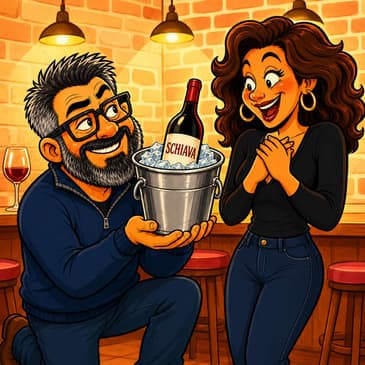
Chillable red wines are a thing right now, and we think we may have found the perfect chillable red wine for you to not only enjoy but wow your hipster friends, family, and coworkers with. In fact, this wine is becoming a darling of in-the-know sommeliers! Schiava comes from the Alto Adige region of Italy, and it has everything you are looking for in a chillable red wine: crunchy red fruit flavors, light body, low tannins, and moderate alcohol. And while the wine is sometimes called “weightless” don’t confuse that with being bland or boring, because it is anything but that. Look, you are not going to drink this wine with a big steak, but there’s more to life than big steaks, right?!? Sometimes also called Trollinger and Vernatsch, this is the perfect wine for a summer afternoon, for appetizers and charcuterie, poultry, spicy and sweet barbecue, and, yes, even fish. Red wine and fish?!? Crazy, but true. Often called the white wine drinker’s red wine, Schiava is a wine you need to know, especially if you want to be counted among the trendy. Or not. Wines reviewed in this episode: 2024 Alois Lageder Schiava, 2022 Elena Walch Schiava
Send us a Text Message and we'll respond in our next episode!
Contact The Wine Pair Podcast - we’d love to hear from you!
Visit our website, leave a review, and reach out to us: https://thewinepairpodcast.com/
Follow and DM us on Instagram: https://www.instagram.com/thewinepairpodcast/
Send us an email: joe@thewinepairpodcast.com
Show Notes
Episode #232: Italian Wine Adventure #26: Schiava! Sommeliers Love This Chillable Red! 00:00
________________________
KEY QUESTIONS
- What is Schiava wine?
- What does Schiava wine taste like?
- Why do sommeliers love Schiava?
- How cold should you serve Schiava?
- Is Schiava similar to Pinot Noir?
- What food pairs well with Schiava?
- Is Schiava wine worth trying?
________________________
Episode Overview and First Thoughts on Schiava 00:26
Hello fellow wine fans! And welcome to The Wine Pair Podcast. I’m Joe, your sommelier of reasonably priced wine, and this is my wife and my wine pairing partner in crime, Carmela. And we are The Wine Pair!
If you're new to our podcast, here's what we do: Every week we buy wines under $25 with our own money, taste them, and give you our brutally honest opinion on whether they're worth buying. Nobody pays us to review specific wines, we don't accept free bottles from wineries, and we're not afraid to call out a bad wine when we taste one. Decanter Magazine calls us fun, irreverent, chatty, and entertaining - so if that sounds like your vibe, welcome to our tribe of wine lovers.
Carmela, we are heading back to Italy as we track the waning weeks of summer because we have what I will call, for this Italian Wine Adventure, and “it” wine. What do you think I mean by an “it” wine?
According to the interwebs, “an "it" wine is a trendy, highly sought-after bottle or grape variety that everyone in the food and wine world is currently talking about, ordering, and posting on social media. It represents a sudden peak in cultural popularity.” So, that’s what I mean.
The “it” wine we today have is called Shiava, so if you have not heard of it, maybe that just means you are not in tune with the zeitgeist. I am also doing this wine in honor of our daughter who is going on a trip to where this wine is from - The Dolomites.
I should also note that this wine goes by several names, including Trollinger and Vernatsch. So, don’t get confused by that. Put it in your brainbox, and we’ll come back to it later.
In this case, Schiava is an “it” wine because chillable, light red wines are all the rage. It is falling in the same realm as other wines we have covered including Gamay aka Beaujolais, Frappato which we covered not so long ago in a previous Italian Wine Adventure, some Sangiovese, Grignolino, Zweigelt, and Pinot Noir. We even talked about this concept of chilled red wines in our last episode as being part of the new wine trend called blouge, although that is a slightly different style of wine.
As we have mentioned many times, we like a chilled red wine, and we do follow the 20/20 rule in which you put red wines in the fridge 20 minutes before serving, and take whites out of the fridge 20 minutes before serving, but this is a different thing. In this case, you actually want to actually chill the wine, similar to how you would chill a white wine.
Now, this chilled wine trend is a bit of a younger wine drinker thing, but not completely. There have been a few things going on in the world of wine for a few years now that we should be paying attention to that are helping to push this chilled red wine phase:
- The overall wine market is shrinking, but lighter reds are one of the few pockets of growth. Lighter reds, by the by, are the ones that can be chilled most successfully
- Gamay is one of the clearest examples of that. Sales are climbing, and it is younger drinkers driving that trend. They are starting to reject the usual bigger reds like Cabernet and Merlot for something lighter.
- The American wine palate in general is moving away from the typical big Cabs and buttery Chards: whites and rosé are growing in popularity, inexpensive but high quality sparkling wines are popular, and, people are experimenting with off-the-beaten-path grapes and regions - which is right up our alley
- Low and no-alcohol wine has grown in every major market tracked over the last five years, some by more than 20 percent. While this is not directly related to chilled red wines, red wines that are chillable tend to be lower in alcohol than the bigger red wines
So, look, the bottom line is this: the wine world seems to be moving toward lighter, easier-drinking styles, and Schiava fits that shift perfectly. So, basically, us doing this episode along with all of our lighter, chillable red wine episodes like Frappato and Grignolino and Cinsault and Valpolicella show that we are hip and cool and on the cutting edge, and you listening to this episode, that means you are hip and cool and on the cutting edge, so, what the eff?!? Let’s effing go!
And, on that note, we have two Schiava wines that we are going to taste and review today that are currently chilling in the fridge to see if either or both of them you should run out and buy before summer is over . . .
But first . . . we have to do our shameless plug.
Thank you for listening to us and for supporting our show, and know that we buy all of the wine we taste and review every week so that we can give you real and honest reviews. If you like what you’re hearing, please subscribe to our podcast and leave us a five star rating and review so we can grow listeners.
We also love to hear from you and we always respond so you can follow us on Instagram and Bluesky and TikTok at thewinepairpodcast. You can contact us on our website thewinepairpodcast.com, and you can sign up for our email newsletter there and you can also send us a note at joe@thewinepairpodcast.com and let us know about wines your want us to review or just shoot the breeze, we love chatting it up.
And, as we do every week, we’ll tell you someone we think you should recommend The Wine Pair Podcast to - because the best way for us to grow listeners is when you tell your family and friends about us - and this week, we want you to recommend us to anyone who wants to be counted among the cool people because after listening to this episode, they can wow their hipster friends, coworkers, or family members with this chillable red with a strange name the next time they meet with them! People will be amazed!
Topic: WTF is Schiava? 09:12
Carmela, let’s find out just what the eff Schiava is, shall we?
As we mentioned before, Schiava is just one of a few names for this wine. Again, one of the other names is Vernatsch, meaning “local” in German, and is related to the Italian word Vernaccia and the English word Vernacular. The other name, Trollinger, is a rough dialect for a Tirolinger or someone from Tyrol, which is the area the wine originates from.
And, to make things more complicated, "Schiava" is not a single grape variety, but rather a group of genetically distinct clones including Schiava Gentile, Schiava Grossa, Schiava Grigia, and Tschaggele.
Carmela, let’s talk a bit about history. It turns out they have been making wine in the Alto Adige region, which is also known as South Tyrol, since at least 500 BC. The first written records of Schiava grape in northern Italy come from the 13th century, but it is believed to be a grape with a history that goes back to the Roman times.
The name Schiava translates to slave, and the meaning of it is likely tied to how the vines were trained. In the Roman times, the vines were bound to support structures like pergola rather than being allowed to grow wild.
Up until the 1970s, this was a very dominant wine in the Alto Adige region, and it made up about 70% of all grape vines grown there. However, during the mid-20th century, in a story that is all too common, it became a mass-produced workhorse grape, and was used to churn out cheap grocery store wine for the German market - remember, this is a region that has gone back and forth between Germanic people and Italian people for centuries. Anyway, that overproduction led to the grape getting a very bad reputation, even so far as being called a “garbage grape,” and as tastes changed, growers began uprooting Schiava in favor of Pinot Grigio, Chardonnay, and Sauvignon Blanc. Today, Schiava's footprint in Alto Adige has shrunk to only about 10% of plantings.
Ironically, the fact that they started removing some of the lower quality vines probably saved the grape because growers were left with really good hillside sites with older vines that naturally yielded lower, more concentrated crops. Today, winemakers are reviving the wine in a big way, bringing back the pergola training system, maturing the wine in neutral oak casks (remember, neutral means used, and they do not impart oak flavor), and creating light-bodied wines that are fresh, elegant, and sometimes described as weightless.
As you would expect, this is a wine that is meant to be drunk young, within the first 5 years, although there are versions that will age up to 15 years. The grapes are thin-skinned, low tannin, and medium acidity wines. They also tend to be lower alcohol wines, typically in the 12% range. Perfect for chilling. A lot of these attributes are because the grapes are grown in predominantly cool, high-altitude alpine regions. That means a slower ripening because the vines experience a slower growing season, which naturally limits the amount of sugar in the grapes, which, obviously, impacts the alcohol level.
As we mentioned, this wine is becoming an “it” wine, but in Württemberg Germany where it is known as Trollinger, it is and has been a super popular wine, is the most widely planted red wine grape in the region, and all the Trollinger they make there rarely makes it out. And, in Alto Adige in Italy, although they did pull up a lot of vines, it is still the most planted red wine grape in the region. And, outside of those regions, it is becoming a favorite of Sommeliers, becoming known as the white wine drinker’s red wine, the Italian version of Pinot Noir or Gamay. Sommeliers also like it because it can serve as a good appetizer wine before the heavy reds come out, and it is supposed to be a very versatile red wine, even pairing with richer fish.
So, I think you might really like this wine, Carmela!
But that’s enough information. I think it’s time to learn a little more about the specific wines we are drinking today. Whaddya say?
Schiava Wines We Chose for This Episode 14:48
As usual, the wines we have chosen for this episode are under $25, and they should be relatively easy to find because I bought them at wine.com. Now, I would not expect Schiava to be super easy to find at your average grocery store or mass market wine shop. To find it, you should go to specialty wine shops, natural wine shops, and, of course, your local wine store because even if they don’t have it, they will surely be able to find it for you.
The first wine we are going to drink today is the 2024 Alois Lageder Schiava, and this one, as does the other we are drinking tonight, comes from the Alto Adige region of Italy. The winery practices both organic and biodynamic farming, and we have mentioned this before, but some people love the biodynamic practices and some think it is full of hoo-haa, but it does indicate very natural wine making. Alois Lageder is said to be one of the pioneers of biodynamic farming in wine. The winery actually collaborates with local cow and sheep farmers and has their animals come in the fall and winter to create some natural fertilizer and weed control.
The winery does use the traditional pergola vine training system, which I have mentioned several times and you are probably wondering what that means, but it is what I remember seeing in my grandfather’s back yard as a little kid. Vines grow up a post and across a beam, and you sort of walk through a grape vine tunnel. The winery also says they use malolactic fermentation, which is interesting because that tamps down on the acidity and I would not expect them to do that, but maybe the acidity is too intense, and they say they do that for 6 months in concrete - which is porous like wood, but imparts no flavor. They also say they macerate in stainless steel, but they don’t say for how long. They also say to drink the wine young - in the first 1-3 years.
The next wine we are going to drink is the 2022 Elena Walch Schiava, and Elena Walch is a very well known producer from this area, and we have had her wines before in our Müller-Thurgau episode.
The winery says they use temperature controlled fermentation in stainless steel tanks with 6 days of skin contact, followed by the maturation in traditional large oak casks. So, they use oak, but they are large and likely neutral. They also say the wine grows in calcareous soils at medium altitude, where the grapes can benefit most from the Mediterranean climate with warm summer days combined with cool mountain nights. Calcareous soils have a lot of calcium in them, and these are good for creating water stress in grapes.
There is a great article that I have a link to in the show notes about Elena Walch and Schiava that includes an interview with her daughter Karoline. Karoline calls Schiava “a very honest wine” and “a social wine.” She says her family drinks it often, that it “brings people together” and is something “you don’t think about too much,” while still being a good-quality red wine. She adds that “not every wine needs to be where you do a lot of thinking and analyzing” and sums it up by saying: “Schiava is what it is.” As the kids would say, it’s not that deep. Maybe that’s why it is so popular.
But, I think that is enough information - let’s get to drinking! We’ll take a quick break and be right back. And, if you have these wines or similar wines, drink along with us to get some participation points, which you can trade-in for free stickers. You just need to send me an email with your mailing address, and I will get those “I drink with The Wine Pair Podcast” stickers over to you!
LINKS TO SOURCES FOR THESE SPECIFIC WINES
- https://aloislageder.eu/wines/classical-grape-varieties/vernatsch-schiava
- https://www.elenawalch.com/en-GB/product/Schiava
- https://www.grapecollective.com/elena-walchs-schiava-a-derided-red-grape-gets-its-due/
2024 Alois Lageder Schiava, 2022 Elena Walch Schiava Wine Tasting, Pairing, and Review 20:17
Wine: Alois Lageder Schiava (Click here to find this wine on wine.com. We may be compensated if you purchase)
Region: Italy, Alto Adige
Vintage: 2024
Price: $21.97
Retailer: wine.com
Alcohol: 11%
Grapes: Schiava
Professional Rating: Vivino 4.0
What we tasted and smelled in this Alois Lageder Schiava:
- Color: Cranberry juice
- On the nose: Aromatic, crunchy red fruit, minerality, steel, yeast, stone, raspberry, cranberry, pomegranate, strawberry, watermelon, tart cherry
- In the mouth: Light, tart, a bit thin, gulpable, cranberry, flint and steel on the end, a bit of tannin on the end, really good cold, refreshing, pomegranate
Food to pair with this Alois Lageder Schiava: charcuterie board, appetizers, puff pastries with spinach and cheese, picnic wine, fried fish, sushi
As a reminder on our rating scale, we rate on a scale of 1-10, with no half points, where 7 and above means that we would buy it, and 4 and below means that we are likely to pour it down the sink, and a 5 or 6 means we are likely to drink it and finish it, but we are probably not going to buy it.
Alois Lageder Schiava Wine Rating:
- Joe: 7/10
- Carmela: 8/10
Wine: Elena Walch Schiava (Click here to find this wine on wine.com. We may be compensated if you purchase)
Region: Italy, Alto Adige
Vintage: 2022
Price: $23.97
Retailer: wine.com
Alcohol: 13%
Grapes: Schiava
Professional Rating: Vivino
What we tasted and smelled in this Elena Walch Schiava:
- Color: Cherry red, a little pink, red plum, cranberry sauce
- On the nose: Fruity, cherry, cherry juice
- In the mouth: Tangy, medium mouthfeel, a bit of flint and sea spray at the end, crunchy red fruit, underripe cherry, red plum right out of the fridge, cranberry, pomegranate
Food to pair with this Elena Walch Schiava: Stuffed chicken, Thanksgiving wine, lighter meals, sweet smoky and spicy barbecue, creamy pasta dishes like Alfredo
Elena Walch Schiava Wine Rating:
- Joe: 7/10
- Carmela: 8/10
Which one of these are you finishing tonight?
- Carmela: Elena Walch Schiava
- Joe: Alois Lageder Schiava
The Test: Did we nail the taste profiles expected from Schiava? 34:01
- General
- aromas feature red cherry, wild strawberry, red raspberry, red currant, and pomegranate, layered with fragrant notes of violet, rose petals, honeysuckle, and mountain flowers
- The "Candy" Note: A unique characteristic of cotton candy, bubblegum, wine gums, or lemonhead candy
- Savory nuances of autumn leaves, tilled soil, mint, wild herbs, graphite, or a touch of woodsmoke
- light-bodied, delicate, and "floaty" on the tongue, very low, soft, and silky tannins, vibrant, mouthwatering acidity, sometimes called crunchy
- The Signature Finish of bitter almond, amaretto, or marzipan, often display a distinct, clean saline or mineral streak on the finish
- Alois Lageder Schiava
- Winery: Ruby-red with a purple shimmer. Subtly pronounced on the nose, fresh and fruity, with floral (violet) notes and white pepper. Light-to-medium bodied, well-balanced, soft, and dry on the palate.
- K&L: The nose is wonderfully pure and aromatic, with delicate notes of wild strawberry, red cherry, and rose petal, accented by a hint of white pepper and alpine herbs. On the palate, it’s light-bodied and graceful, with silky, gentle tannins and a vibrant, mouthwatering acidity that makes it incredibly refreshing. The finish is clean, zesty, and savory. A perfect, versatile red best served with a slight chill.
- Elena Walch Schiava
- Winery: Bright ruby in colour with a delicate hint of cherry on the nose. On the palate, it is harmonious and elegant due to naturally mild acidity and tannin with a pleasant bitter almond flavor on the finish. An elegant, fruity red wine with good lengths.
- Wine on Sale: On the nose, it presents an aromatic bouquet of red berries, floral notes, and a hint of almond. The palate is greeted with flavors of juicy strawberries, cherries, and a touch of spice, balanced by bright acidity and soft tannins, making it an excellent choice for a variety of light dishes or enjoyed on its own.
What is our verdict on Schiava? 36:09
Love it. Refreshing, pretty in the glass. Standalone as well as an appetizer wine.
And now it is time to head over to our news desk so that we can cover our wine in the news this week segment.
Wine in the news this week: Andreola: the quiet exit from Prosecco 36:48
Our wine in the news this week comes from James Bayley writing for The Drinks Business, and the article is called "Andreola: the quiet exit from Prosecco." Links are in the show notes as always.
Carmela, a man named Stefano Pola runs one of the most respected sparkling wine companies in Valdobbiadene, Italy, which is actual Prosecco home turf, and for over a decade he has been quietly taking the word Prosecco off his own labels. He started doing it in 2007 and today you will not find the word Prosecco anywhere on an Andreola bottle. Which sounds a little crazy, but there is a reason.
Which is surprising because Prosecco could be the single most recognizable sparkling wine on the planet. His reasoning is simple. Prosecco has become famous as a category that he feels has been flooded with cheap, mass-produced sparkling wine (which, I agree with). Unlike those mass produced wines, his own grapes come from steep hillside plots that basically have to be picked by hand because no machinery can operate on the hills. So, Stefano is betting on the name Valdobbiadene DOCG, which means a lot to only a small group of real Prosecco aficionados.
So, you may ask, what does that name Valdobbiadene DOCG represent? It just so happens that Valdobbiadene DOCG is the original and considered to be the best of the best Prosecco zone, where people were growing this wine long before the category ever went global. Once demand for Prosecco took off, Italy created a much bigger, flatter zone called Prosecco DOC back in 2009 just to keep up. The original Valdobbiadene DOCG is small, and remember DOCG is the highest wine designation in Italy, and the area has much lower yield limits and higher quality standards than DOC Prosecco. It even became a UNESCO World Heritage Site in 2019. So Pola’s point of view is that he is trying to stand for the best of the best sparkling wine from the region.
Not everyone in the region thinks this is smart. Some of the older producers, the ones who actually built Prosecco into a global name in the first place, see what Pola is doing as almost a betrayal. They worry that by removing the Prosecco name from what they make, they will cheapen and harm Prosecco wine itself.
Honestly, I kind of get it. My personal feeling is that most Prosecco is played out, and that a lot of what is out there is cheap, mass produced, and not very good. And, in the midst of that concern, there is some really high quality wine being made in the DOCG region that most people ignore when they are making their Aperol or Campari Spritz. Both sides have valid points, but, ultimately, it sounds like what happens often - greed gets in the way of quality sometimes.
So, what is your take, Carmela. Is it, again, just not that deep?
Listener Shoutouts 41:18
- Corinne - sent us a picture of the palace of the popes in Avignon and said she had chateauneuf du pape and Gigondas there!
- Timmy - Enjoyed the CdP pod! I figured it would not be your cup of tea. Typically not mine, either, for all the reasons you mentioned (mainly, BIG). But, if you can find this guy I recommend it. It’s from the northern part of the Southern Rhone, and grown at some altitude. It shows the best of CdP character without the massive structure.
- Adrienne loved Mabel
- Dries sent a nice note about the picture with Mabel
- Linda send a nice note about Mabel
Wines coming up in future episodes in case you want to drink along with us 42:14
- Gamay - Beaujolais, Morgon: 2023 Domaine Gaget Cote du Py Morgon, 2024 Domaine Yohan Lardy Moulin-a-Vent Cru Beaujolais Les Michelons
- Decoy wines: 2023 Decoy California Cabernet Sauvignon, 2025 Decoy Sauvignon Blanc
- Algianico Rosé: 2024 Feudi di San Gregorio San Greg Rosato, 2024 San Salvatore Vetere Rosato
- Loire Crémant: Gratien Meyer Cremant de Loire Brut, Langlois Cremant de Loire Brut Rose
Outro and how to find The Wine Pair Podcast 42:43
Thank you for listening to us and for supporting our show, and remember, we buy all of our own wine and we do all of the writing and recording and editing to bring you a show every week because we absolutely love doing it, and our small little ask for you is that you please follow or subscribe to our podcast and also please leave us a nice rating and review to help us grow our listeners - and a huge thank you to all of you who have done so already!
You can also follow us on Instagram and Bluesky and TikTok at thewinepairpodcast. You can contact us on our website thewinepairpodcast.com, and you can sign up for our email newsletter there and you can also visit our “Shop Wine” section where you can find links to buy the wines that we rate as buys in each episode. I will also note that on our website, if you are curious about a wine we have covered in the past, we do have a pretty good search functionality, so you can use that find wines you want to know more about.
And we want to make content you care about and you like, so send us a note or DM us and give us some feedback or let us know if there are wines you want us to try or wine making areas of the world you are curious about - and we’ll take care of it! joe@thewinepairpodcast.com
Alright, with that, we are going to sign off, so thanks again, and we will see you next time. And, as we say, life is short, so stop drinking shitty wine.
________________________
FREQUENTLY ASKED QUESTIONS
Q. What is Schiava wine?
A. Schiava is a light-bodied red wine grape from Italy's Alto Adige region, also known as Vernatsch in German-speaking areas and Trollinger in Germany. It's actually a group of genetically distinct clones rather than one single variety, with written records dating to the 13th century and roots believed to reach back to Roman times.
Q. What does Schiava wine taste like?
A. Schiava is a light, tart red wine with bright cranberry, tart cherry, and pomegranate flavors, plus a touch of flinty, mineral character on the finish. It has low tannin, medium acidity, and a crisp, refreshing quality that makes it easy to drink on its own or alongside food.
Q. Why do sommeliers love Schiava?
A. Sommeliers have started calling Schiava the white wine drinker's red wine because it's light, low in tannin, and best served fully chilled. It works as a lighter appetizer pour before heavier reds and pairs well even with richer fish, which most red wines can't do. That versatility is exactly why it's become a current favorite among wine pros.
Q. How cold should you serve Schiava?
A. Schiava should be served fully chilled, more like a white wine than a typical red. That's different from the usual rule of just a quick 20 minutes in the fridge before pouring reds. Getting it properly cold brings out its crisp, refreshing character, and it's part of why lighter reds like this one are becoming so popular right now.
Q. Is Schiava similar to Pinot Noir?
A. Yes, Schiava is often compared to Pinot Noir or Gamay because of its light body, low tannin, and bright red fruit character. It's sometimes called the white wine drinker's red wine, since it can be chilled and works well as a lighter alternative before moving on to heavier reds.
Q. What food pairs well with Schiava?
A. Schiava pairs well with a wide range of foods thanks to its light body and bright acidity. It works with charcuterie boards, fried fish, and sushi, but also holds up to richer dishes like stuffed chicken, creamy Alfredo pasta, and even sweet, smoky barbecue. It's versatile enough for a picnic or a holiday table.
Q. Is Schiava wine worth trying?
A. Yes. Schiava has become a favorite among sommeliers as a light, chillable red, especially for drinkers who usually stick to whites. It fits the broader shift toward lighter, lower-alcohol reds, currently one of the few growth areas in the wine market.
________________________
RESEARCH ARTICLES AND LINKS FOR THIS EPISODE
- https://pleasethepalate.com/schiava-a-beautiful-light-red-wine/
- https://thecorkscrewconcierge.com/2022/07/schiava-perfect-summer-red-wine/
- https://www.grapecollective.com/elena-walchs-schiava-a-derided-red-grape-gets-its-due/
- https://www.foodandwine.com/schiava-wine-8691870
- https://www.grapecollective.com/schiava-the-alpine-red-you-should-be-drinking/
- https://wineparadigm.com/schiava-vernatsch-trollinger/
- https://en.wikipedia.org/wiki/Trollinger
- https://www.wine-searcher.com/grape-936-schiava
- https://italianwinecentral.com/variety/schiava/
- https://www.openingabottle.com/first-taste-guide-to-alto-adige-schiava/
- https://link.springer.com/article/10.1007/s001220051636
- https://www.frontiersin.org/journals/plant-science/articles/10.3389/fpls.2020.605934/full
- https://www.wine-searcher.com/regions-alto+adige+santa+maddalena
- https://altoadige.guides.winefolly.com/wines/schiava/
- https://altoadige.guides.winefolly.com/history/
- https://www.doctorwine.wine/tastings/hurray-for-the-schiava-of-course-we-mean-the-vernatsch/?lang=en
- https://www.thedrinksbusiness.com/2023/09/why-pergola-vine-training-is-on-the-rise/
- https://www.thedrinksbusiness.com/2023/09/alto-adige-six-wine-trends-to-watch-out-for/
- https://wideworldofwine.co/2021/02/16/pergola-taught/
- https://worldoffinewine.com/news-features/schiava-lagrein-red-spirit-alto-adige
- https://www.pastemagazine.com/drink/schiava/native-grapes-schiava-alto-adige
- https://www.thedrinksbusiness.com/2024/07/vernatsch-alto-adiges-contemporary-red/
- https://www.grapeguru.de/en/wissen/weinregionen/wuerttemberg
- https://www.winesofgermany.com/our-wine/grape-varieties/grape-variety/96/trollinger
- https://en.wikipedia.org/wiki/W%C3%BCrttemberg_(wine_region)
- https://winefolly.com/deep-dive/cotton-candy-wine-schiava/
- http://forceberry.blogspot.com/2016/08/trollinger.html
- https://www.youtube.com/watch?v=SUFj5MZOLf8
- https://www.youtube.com/watch?v=f_h-J2EoZug
- https://www.youtube.com/watch?v=2NR8q_mGmYU
- https://www.youtube.com/watch?v=SmOxoRKNn2c
- https://www.youtube.com/watch?v=NE1nXKJG1vw
- https://www.youtube.com/watch?v=K8tnAmkpj1c
- https://www.bbc.com/news/articles/c5yzjlgr7zlo
- https://growthmarketreports.com/report/gamay-wine-market
- https://www.ohbev.com/blog/us-wine-market-2024---trends-and-opportunities-and-beyond
- https://www.theiwsr.com/insight/no-and-low-alcohol-wine-surfs-moderation-trend/
________________________
Support The Wine Pair Podcast by heading to our website and shopping for the wines we give our highest ratings to in our Shop Wines section. Just click on this link - you pay the same price, and we may get a small amount of compensation.
You can also support us by clicking on this affiliate link to wine.com and find great wines under $20!
And, if you are looking for a great website builder for your podcast, click on this link to use the service we use and love: Beamly, formerly known as Podcastpage.io
________________________
FULL TRANSCRIPT
Joe: 00:00
Carmela, you know, chilled red wines are all the rage.
Carmela: 00:04
Oh my god, they are.
Joe: 00:05
We like a good chilled red wine, don't we?
Carmela: 00:07
Yes, we do.
Joe: 00:08
Well, we found one today that may be the next it wine, the wine that you need to find out what it is.
Carmela: 00:15
Love it.
Joe: 00:15
It's called Schiava, and listen to learn more, but we think you're gonna like it.
Speaker 1: 00:20
Yep.
Joe: 00:21
Hello, fellow wine fans, and welcome to the wine pair podcast. I'm Joe, your smoyer of a reasonably priced wine, and this is my wife and my wine pairing partner in Crime Carmela. Hi there. And we are the wine pair. Hooray! If you're new with Mabel, if you're new to our podcast, here's what we do. Every week we buy wines under $25 with our own money. We taste them and give you our brutally honest opinion on whether they're worth buying or not. Nobody pays us to review specific wines. We don't accept free bottles from wineries, and we're not afraid. Nope. And we're not, although Carmelo would like me to, and we're not afraid to call out a bad wine when we taste one. And Decanter magazine calls us fun, irreverent, chatty, and entertaining. So if that sounds like your vibe, welcome to our tribe of wine lovers. And yes, we are. Mabel is our our Yorkie puppy, and she is with us again. Right, right.
Carmela: 01:09
She's gonna she's gonna be rating and reviewing too.
Joe: 01:12
She gets her own little puppy version of the wine. Right. Okay, Carmella, we are heading back to Italy as we track the waning weeks of summer. Are you a little sad because summer is almost over?
Carmela: 01:23
Well, you know, I'm a season girl. Like I like all the seasons.
Joe: 01:26
You do, you do.
Carmela: 01:27
But I used to really not like when summer came to an end because I was one of those really like sappy moms that was sad to see my kids go back to school.
Joe: 01:35
Yeah. But when you were a kid, you liked going back to school, I'm sure.
Carmela: 01:38
Yeah, I did. I liked going back to school as a kid. But I didn't like, but I never told my kids that. But anyway, I was just one of them. Anyway, I love it, but I probably had to have a glass of wine or two that night, first day of school.
Joe: 01:49
Probably. And if you hear banging, it's Mabel. Right. And so we are on another Italian wine adventure, and this week we are doing an it wine. Do you know what I mean by an it wine, Carmilla?
Carmela: 01:59
It's like it's the thing, one to look out for.
Joe: 02:02
Oh my gosh, you're so good. Yeah. Well, according to the interwebs, it's totally right. An it wine is a trendy, highly sought-after bottle or grape variety that everyone in the food and wine. That's right. And they're they're currently talking about it and they're ordering it and they're posting it on social media, and it's like a sudden peak in popularity. So that's what we mean by an it wine. And the it wine we have today is called Schiava. Ah. So if you have not heard of it, maybe that just means you're not in tune with the zeitgeist.
Carmela: 02:31
Oh, wow.
Joe: 02:32
I'm also doing this wine in honor of our daughter, Carmela. Oh. Because she's going on a trip to where this wine is from, the Dolomitz. No way. Or the Dolomiti, as they say.
Carmela: 02:41
I mean, no way I knew she's going to trip it. I just didn't know you chose that wine. That's right.
Joe: 02:46
I should also note that this wine goes by several names. We'll bring this up again, but it's also known as Trollinger and Vernache. So don't get confused by that. Put it in your brain box.
Carmela: 02:55
That doesn't sound very Italian.
Joe: 02:57
Well, we'll talk about that a little bit too, but put it in your brain box and we'll come back to it later.
Carmela: 03:02
And I love that Mabel's redecorating our house right now, everybody.
Joe: 03:05
We're just really worried that she's gonna pee. Okay. Uh and by the way, she did have a UTI. That's too much information. Okay, in this case, Schiava is an it wine because it is a chillable light red wine, and those are all the rage. It's falling into the same realm as other wines we've covered, including Gamay, aka Beaujoulais, Frappato, which we covered not so long ago in a previous Italian wine adventure, some some of the Sangiovese, Grignolino, Sweigel, and Pinot Noir. We even talked about this concept of a chilled red wine in our last episode as being kind of part of this new wine trend called Bluge.
Carmela: 03:42
Oh, that's right.
Joe: 03:43
Yeah, but Bluge Bluge is a little different, but it's similar in that it's kind of a red-ish wine that red what's red and white wine combined, but there's they serve it chilled. Oh. Now, as we've mentioned many times, we like a chilled red wine, don't we, Carmelo? We do. And we do follow the 2020 rule, right? Which is put your reds in the fridge 20 minutes before you serve them, take your whites out of the fridge 20 minutes before you serve them. But this is a different thing.
Carmela: 04:07
Okay.
Joe: 04:07
In this case, you actually want to chill the red wine similar to how you would chill a white wine.
Carmela: 04:12
Okay, so we want it cold.
Joe: 04:14
We want crispy cold. We want it crispy cold. Now, this chilled wine trend is a bit of a younger wine drinker thing, but you know, that's we consider ourselves kind of younger wine drinking. It's yeah. So there have been a few things going on in the world of wine for a few years now that we should be paying attention to that are helping to push this chilled red wine phase. The overall wine market, Carmela, sadly, is shrinking. But lighter reds are one of the few pockets of growth. Oh. So lighter reds, by and by, are the ones that can be chilled most successfully. You probably figured that out by now. Gamay is one of the clearest examples of this lighter red wine growth. Sales are climbing despite wine sales overall going down, and it and it is younger drinkers that are driving the trend. And they're starting to reject those bigger red wines like Cabernet and Merlot for something lighter. The American wine palette in general is kind of moving away from the typical big cabs and buttery shards. So, like white wines and roses are growing in popularity, inexpensive but high quality sparkling wines are popular, and people are experimenting with off the beaten path grapes and regions, which is right up our alley. And the light chillable red wine trend fits right into that. And also, low and no alcohol wine has been growing as a big piece of the market. Now, I'm not super psyched about that, but while it's not directly about chilled red wines, red wines that are chillable tend to be lower in alcohol than bigger red wines. So that's why I brought it up. Okay.
Carmela: 05:42
Okay, got it.
Joe: 05:43
Don't look at me like I'm crazy.
Carmela: 05:45
Well, that's kind of hard to do.
Joe: 05:47
So look, here it is, Carmelo. The bottom line is this the wine world seems to be moving toward, and we're happy about this, lighter, easier drinking styles, and schiava fits that shift perfectly. By the way, the spelling of schiava, it might you might think it's chiava, but it's s-c-h I A V A. And in Italian, C-H-I is Chi. You got it. Schiava. Okay, thank you. And so basically, us doing this episode along with all of our lighter, chillable red wine episodes like Frappato and Grignolino and Sanso and Val Policella show that we're hip and cool.
Carmela: 06:21
Wow, is that what we're striving for here?
Joe: 06:23
Yeah, we're on the cutting edge.
Carmela: 06:24
Oh my goodness.
Joe: 06:25
That's what the wine world. And you listening out there in listening land, because you're listening to us, that means you're hip and cool and on the cutting edge.
Speaker 1: 06:34
Oh my.
Joe: 06:34
So let's fing go.
Speaker 1: 06:36
Wow.
Joe: 06:36
All right. And on that note, we have two Schiava wines that we're gonna taste and review today that are currently chilling in the fridge. Nice. And to see we're gonna see if either or both of them are wines that you should run out and buy before the summer is over, because we've got about a month left as we record this.
Carmela: 06:51
You can do a chillable wine when it's not summer.
Joe: 06:54
You're right.
Carmela: 06:54
Right. But first, put parameters on it.
Joe: 06:57
Let's not put parameters on it.
Carmela: 06:58
But first you gotta do our shameless play.
Joe: 07:01
That's right, Carmela loves saying that. Thank you for listening to us. She finally admitted after many years of doing the podcast that she doesn't love saying that much.
Carmela: 07:08
No, I just said it's sort of a dumb, like, I don't know. Well, that's it's a little dumb. I would say, hey, let us know what you think, but no, actually, don't let us know.
Joe: 07:17
Don't because there's some things we don't want to know.
Carmela: 07:19
Right. At this point, yes, we could change it, but after five years of It's the only thing in the script she actually knows. Right. I'm afraid you're like hear that and they're like, oh, there she goes again. That's the same old dumb line.
Joe: 07:31
Yeah, no, it's not her line. It's actually I wrote it, so it's not her fault. Okay, but anyway, thank you for listening to us and supporting our show and know that we buy all the wine we taste and review every week so that we can give you real and honest reviews. And if you like what you're hearing, we'd love it if you would subscribe to our podcast and leave us a five-star rating review so we can grow listeners. We also love to hear from you. We always respond. Follow us on Instagram and Blue Sky and TikTok at the WinePair Podcast. Contact us on our website, thewinepairpodcast.com, sign up for our email newsletter there, and send us a note at Joe at the WinePair Podcast.com and let us know what you're doing. Let us know if you hate that line or you love that line. Let us know how we're gonna be able to do that.
Carmela: 08:09
I don't even want that feedback.
Joe: 08:11
I know, or if you want to see pictures of Mabel who's where is she right? She's on Carmela's lap.
Carmela: 08:15
Yeah, I think she's settling down.
Joe: 08:17
But we she is. We we love hearing from you, and as we do every week, we'll tell you someone we think you should recommend the wine pair podcast to. Because frankly, the best way for us to grow listeners is when you tell your family and friends about us. And this week we want you to recommend us to anyone who wants to be counted among the cool people because after listening to this episode, they can wow their hipster friends, co-workers, or cool family members with this chillable red wine with a strange name the next time they meet them, and people will go, Oh my god, you're so cool.
Carmela: 08:45
You guys, you don't need to be that way. You're cool just the way you are. Wow, that's so Carmel. And let's just like recognize that I'm holding a pig ear right now.
Joe: 08:54
She is holding a pig ear in her right hand.
Carmela: 08:56
I mean, like, not even a fake one.
Joe: 08:57
No, a real dried-out pig. This is gross.
Carmela: 09:00
Yeah, maybe those of you with dogs, maybe you know.
Joe: 09:02
Maybe you know.
Carmela: 09:03
Anyway. If you know, you know anyway.
Joe: 09:05
And if you don't know, don't bother. Okay, Carmella, let's find out just what the f Schiava is, shall we?
Speaker 1: 09:10
Let's.
Joe: 09:11
Okay, as we mentioned before, schiava is just one of a few names for this wine. And again, one of the other names is vernacch, meaning local in German. And it's related to the Italian word vernaccia and by extension the English word vernacular. So that's kind of interesting. And the other name, Trollinger or Trollingger, is a rough dialect name for a Tirolinger or somebody from Tirol, the Tyrull area where this wine originates from. And to make things more complicated, Schiava is not just a single grape variety, but rather a group of genetically distinct clones, including Schiava Gentile, Schiava Grossa, Schiava Gligia, and Shegele.
Speaker 1: 09:51
Oh.
Joe: 09:51
Don't don't ask me where that was. Shegele. Okay. Carmella, let's talk a little bit about history.
Carmela: 09:57
Okay, let's do it.
Joe: 09:58
Okay, it turns out they've been making wine in the Alto Adige region, which is where this is from, also known as South Tyrol, since at least 500 BC.
Carmela: 10:06
Oh, wow. That's a long time. Really? I mean, I don't remember back then.
Joe: 10:09
I don't either. The first written records of the Schiava grape in northern Italy come from the 13th century, but it's believed to be a grape with a history that goes back to at least the Roman times. And the name Schiava, this is an awesome, it translates to slave. And the meaning of it is likely tied to how the vines were trained. So in Roman times, the vines were bound to support structures like pergola rather than being allowed to grow wild. So it's the fact that they were, they had to follow the wood or trestles or whatever they were attached to. Got it. We'll come back to that later as well. Okay. Now, this is interesting. Up until the 1970s, this was a very dominant wine in the Alto Adige region and made up about 70% of all grape vines grown there. 70%. However, during the mid-20th century, and this is a story that is very common, it became a mass-produced workhorse grape. It was used to churn out cheap grocery store wine for the German market. And remember, we've talked about this before, but this is a region that has gone back and forth between the Germanic people and Italian people for centuries. Anyway, that overproduction led to the grape getting a very bad reputation, even so far as being called a garbage grape. Oh wow, that's not good. That's not a nice thing.
Speaker 1: 11:27
No.
Joe: 11:27
And as tastes changed, growers began uprooting Schiava in favor of grapes like Pinot Grigio, Chardonnay, and Savillon Blanc. And so today, Schiava's footprint in Alto Adige has shrunk to only about 10%. Wow. So from 70 to 10%. Big. Ironically, the fact that they started removing some of the lower quality vines probably saved the grape overall because the growers were left with really good hillside sites with older vines that naturally yielded lower, more concentrated, better grapes. So today winemakers are reviving the wine in a big way, bringing back the pergola training system, maturing the wine in neutral oak casks. Remember, neutral means that the oak has been used, and so it doesn't really impart an oak flavor, but it allows a little oxygen in. And they're creating light-bodied wines that are fresh, sometimes called elegant, and sometimes described as weightless.
Carmela: 12:23
Oh, wow.
Joe: 12:24
So that's kind of nice.
Carmela: 12:25
Interesting. You don't hear that very often.
Joe: 12:27
You don't. As you would expect, this is a wine that's meant to be drunk young within the first five years, although there are versions that will age up to 15 years. The grapes are thin-skinned, low tannin, medium acidity wines. They also tend to be lower alcohol wines, typically in the 12% range. So perfect for chilling. And a lot of these attributes are because the grapes are grown in high altitude, cool alpine regions. And that means they're slower ripening grapes because the vines experience a slower growing season, and that naturally limits the amount of sugar in the grapes, which then obviously creates less alcohol because sugar is what becomes alcohol. Right. So when you have cooler wine regions, you tend to get lower alcohol wines because in hot areas, that's where the grapes get a lot of sugar. Right. As we mentioned, this wine is becoming an it wine. But but Carmella, in Witzenberg, Germany, I think that's how you say it. Wurzenberg.
Speaker 1: 13:21
Wow, that's pretty good, Joe.
Joe: 13:23
Don't ask me to spell it. Where it's known as Trollinger or Trolinger. If you guys know, let me know. I don't know. It is and has been a super popular wine. It's the most widely planted red wine grape in that region. And all the Trolinger they make there rarely makes it out. Because they're like, we like it, we want to keep it.
Speaker 1: 13:40
Right.
Joe: 13:41
And in Alto Adige in Italy, although they did pull up a lot of the vines, it's still the most planted red wine grape in the region. So that's kind of interesting. And outside those regions, it's becoming a favorite of Smolliers. It's becoming known as the white wine drinker's red wine.
Carmela: 13:58
Oh, really? That is very interesting.
Joe: 14:01
Yeah.
Carmela: 14:01
And I'm gonna like this thing.
Joe: 14:03
I think you will. It's also known sometimes as the kind of Italian version of Pinot Noir or Game. And Simoliers like it because they can serve it with appetizers. They can serve it as a lighter red wine before the big red wines come out.
Carmela: 14:16
It doesn't have to be just for dinner.
Joe: 14:18
Yeah, and in fact, it's said to be very versatile with food and even work with richer fish.
Speaker 1: 14:22
Oh, wow.
Joe: 14:23
So I think you're really gonna like this wine. But I think that's enough information, Carmela. I I think it's time to find out more about the specific wines we're drinking today. What do you say?
Speaker 1: 14:32
I'm ready.
Joe: 14:33
Okay. Mabel, what do you say? Nothing. She's she's yeah, she's like, get on with it, Dad. Right, right. Dad, I'm dad to her.
Speaker 1: 14:41
Right.
Joe: 14:42
As usual, the wines we have chosen for this episode are under $25, and they should be relatively easy to find because I bought them at wine.com. Now, I wouldn't expect Schiava to be super easy to find at your average grocery store or your mass market wine shop. To find it, you should go to a specialty wine shop, a natural wine shop. So I think you'll find this in natural wine shops. Yeah. And of course, go to your local wine store because if they don't have it on hand, they will find it for you. I guarantee it.
Carmela: 15:10
Right. It'll be a good project for them.
Joe: 15:12
Exactly. The first wine we're going to drink today is the 2024, and I'm going to have a little bit of trouble with these names. Alloi, it's A-L-O-I-S, Lager Schiava. And this one, as does the other one we're drinking tonight, come from the Alto Adige region of Italy. So remember, the names of these wines and the winemakers often are not going to sound Italian. They're going to sound more German. And this is a perfect example. The winery practices both organic and biodynamic farming. And as we've mentioned before, some people love biodynamic practices and some think it's full of hoo-haw.
Speaker 1: 15:48
Oh.
Joe: 15:49
But it does indicate very natural winemaking. In fact, Alois Lajadare, I'm saying it totally wrong, is said to be one of the pioneers of biodynamic farming in wine. And the winery actually collaborates with local cow and sheep farmers, and as their animals come into the winery during the fall and winter to create some natural fertilizer, if you know what we mean, and weed control. You know what you know what we mean.
Carmela: 16:14
I know.
Joe: 16:14
Okay. The winery does use the traditional pergola vine training system. Remember, I said we're going to come back to that? Yes. So you're probably wondering, what does that mean?
Carmela: 16:25
What does that mean, Joe?
Joe: 16:26
Well, it's what I remember seeing in my grandmother and grandfather's backyard when I was a little kid. It's when vines grow up across a post and across a beam and you sort of walk through a garden vine tunnel.
Carmela: 16:37
Oh, so pretty. You know what I mean? Who had one in your family?
Joe: 16:40
My mom's parents had one in the backyard. I remember that. I totally remember that. Even though I wasn't very old when they we stopped going to that house. I totally remember that. The winery also says they use malolactic fermentation, which I find very interesting because, again, that tamps down on the acidity, and I wouldn't expect them to do that. But maybe the acidity in the grapes that they grow is a little bit too intense. And then they say they do that for six months in concrete, which is remember, concrete is porous like wood, but it doesn't impart any flavors. It's neutral. Right. They also say they macerate in stainless steel, which can be dangerous and you can get hurt doing that. And but they wouldn't say for how long because they're probably embarrassed about it.
Speaker 1: 17:20
Oh my goodness.
Joe: 17:21
They also say to drink the wine young in the first one to three years. So we gon' do that. The next wine we're gonna drink is the 2022 Elena Walsh Schiava. And Elena Walsh is a very well-known producer from this area, and we've had her wines before on our Mule Thug episode, which again is from Italy, both the wine and Walsh, and they don't sound Italian. Not at all. Not at all. If you know anything about northern Italy, really northern Italy, a lot of German, German language influence. The winery says they use temperature-controlled fermentation and stainless steel tanks with six days of skin contact, followed by the maturation in traditional large oak casks. So they use oak, but they are large and likely neutral. So when they're big, they're not going to impart, if they impart any oak flavor, it's very small. It's mostly again to get a little oxygen into the wine. They also say the wine grows in calcareous soils at medium altitude where the grapes can benefit most from the Mediterranean climate and warm summer days combined with cool mountain nights. And in case you're curious, calcareous soils have a lot of calcium in them, and that means they're good for creating water stress and grapes. Remember, water stress is good for making great wine grapes.
Carmela: 18:35
Right.
Joe: 18:36
And there's an article that I have a link to in the show notes about Elena Walsh and Schiava that includes an interview with her daughter Caroline. So this is really interesting. Caroline calls Schiava a very honest wine and a social wine. So this sounds perfect. Like for young people, right? Exactly. You know, that kind of thing.
Speaker 1: 18:54
You want to feel young again, just break the bottle open. That's right. Cool kid that's young.
Joe: 19:00
Feel young, even if you're not young. And then Caroline says her family drinks the wine often, that it brings people together, and it's something you don't have to think too much about while still being a good quality red wine. She adds that not every wine needs to be where you do a lot of thinking and analyzing, and sums it up by saying, Schiava is what it is. And as the kids would say, Carmela, the way I would interpret that is it's not that deep. It's not that deep.
Carmela: 19:25
It's not that deep. I love that. It's not that deep.
Joe: 19:29
She didn't say that, I said that.
Carmela: 19:30
I know.
Joe: 19:30
Okay. I know. But I think that's why it's becoming popular. Because you know, it's just like, let's drink some fun wine. Right.
Carmela: 19:36
Okay. Again, let's not take it too seriously.
Joe: 19:39
Exactly. And so on that note, let's try this wine. I'm super excited to try this wine. So if you have a Schiava or a light red wine that you've chilled or any wine, whatever, drink along with it.
Speaker 1: 19:50
Or if you're drinking a bottle of wine, drink with us.
Joe: 19:52
If not, if you're driving or on your bicycle or anything like that, and don't give it to your dog, but if you haven't, drink along with us.
Carmela: 20:01
Grab them a piggy ear.
Joe: 20:02
That's right. And see if you agree with our tasting notes, and we'll be all right back. Okay, we're back and we're ready to try our first wine. This is the 2024 Always Legendaire Schiava. It's from Alto Adige in Italy. Again, it's the 2024 vintage. $21.97 at wine.com. Only 11% alcohol. So really low alcohol, 100% schiava. I couldn't find a professional rating, but Vivino has a 4.0, which is actually pretty high. But let's talk a little bit, Carmelo, about the bottle and the and the color.
Carmela: 20:41
Well, I just right away thought that the bottle was just sort of sharp. Like it's just like pretty.
Joe: 20:46
I think it's very cool. It's kind of like hip.
Carmela: 20:48
Right, but it's also just sort of like um a little, I mean, it's like a little understated, right?
Joe: 20:54
I I agree.
Carmela: 20:55
Um, but kind of uh just classic.
Joe: 20:58
Yeah.
Carmela: 20:58
I like it.
Joe: 20:59
It's kind of my style, a little bit like under, you know, it's kind of like pla a little plain and cool and yeah, yeah, but very pretty.
Carmela: 21:05
And it's just like the artwork on it is simple, and I just think it looks really nice.
Joe: 21:09
Yeah, now let's talk about the color of this wine.
Carmela: 21:12
Very light. It's like cranberry juice.
Joe: 21:14
It almost looks like a Tavel, like a rose, like a really, you know, like a dark rose.
Carmela: 21:19
Yeah, yeah. It's really pretty.
Joe: 21:21
I think cranberry is exactly the right, you know, color for it. Okay, well, let's smell it and see what we think.
Carmela: 21:27
You like it.
Joe: 21:28
Super aromatic. Crunchy.
Carmela: 21:30
Something strong on it though, that is a little bit I don't know.
Joe: 21:34
I think it's got minerality. I think it's got minerality like that.
Carmela: 21:37
It almost has a yeasty smell to it for me.
Joe: 21:41
I was thinking more like steel or stone, but I'm I'm with you. I'm getting a crunchy red fruit.
Carmela: 21:46
Yes, I would say so. I mean raspberry, there's a little bit of raspberry on it.
Joe: 21:50
Cranberry too, you know, pomegranate maybe.
Carmela: 21:53
Okay. Mm-hmm.
Joe: 21:54
What do you think? What else? Strawberry?
Carmela: 21:57
Yeah, straw, or even I mean, just maybe a hint of like water. Watermelon too.
Joe: 22:01
Okay, yeah, it's almost got a little bit of rose kind of vibe going on. Maybe a tiny bit of like super like tart cherry or marchino cherry on.
Carmela: 22:10
Okay, yeah.
Joe: 22:11
Or maschino, however, you're supposed to say it. All right, well, I'm super curious, so let's taste it and see what we think. Okay. Okay. It's much more tart than I than I thought it was gonna be. What do you mean?
Carmela: 22:22
It's light, though. It's very light. Super light. I mean, it's pretty thin, actually. Like you could ha ha ha, you could just gulp this down. It's a little dangerous. Even though 11% that's probably saving you because it is almost like a I don't want to say like a seltzer water, but it has just like this hint of flavor to it. And it's not fizzy, it's not really, but it has that just like you know, just a really hint of and it is kind of cranberry. I'm getting cranberry.
Joe: 22:50
I agree. Totally cranberry. Oh, sorry. Oh, she's uh she's biting the carpet. Oh boy. It is totally cranberry. I'm getting flint, you know, like stone and steel on the end. It's like really minerally.
Carmela: 23:02
Yes.
Joe: 23:03
And it actually has a little bit of tannin, like it's not super a lot of tannin, but you can you can taste the tannin on it. Might be because it's super cold, too.
Carmela: 23:10
Yeah, yeah. I like it cold though. Yeah, I know it's supposed to be drunk this way, but there's a drink.
Joe: 23:17
Drink drinking, drinking.
Carmela: 23:19
I really like drinking it this way. No, I'm not even making it.
Joe: 23:23
But I mean, don't you think this is okay? First of all, I think our daughter would love this wine.
Carmela: 23:27
She would love it. Everything about it, it just looks so pretty in the glass.
Joe: 23:32
Yeah.
Carmela: 23:32
And it's kind of refreshing. Yeah. Um, but yeah, I'm cranberry, pomegranate, even. I'm getting pomegranate.
Joe: 23:38
It's fun. It's not that deep. No, it's not. It's a it, I I like I mean, like, look, if you're looking for a serious red wine to have with steak, that this ain't it. This ain't it, right? Oh, we're squeaking. We're squeaking. But if you're looking for something fun, a picnic, a you know, late night wine just to like hang out, like this is a great wine.
Carmela: 23:59
Oh, yeah. No, and you could have this could be a standalone, but I do think it would be awesome appetizer.
Joe: 24:04
So let's talk about the food.
Carmela: 24:06
So you think an appetizer I think a charcuterie board, like a really like a full-fledged one where you have like your cheese, your meats, your veg, your crackers, fruit, like a full on, you could just have that for dinner with that. Like I just love, I think this would be a great. And I think also like it would be so good with like little puff pastries, you know, like little filled ones with spinach or cheese. I think you could do that with this wine.
Joe: 24:30
What do you think of fish? Would you have fish with this?
Carmela: 24:32
Sure. I would. I could do the fish for sure. I mean, I think it actually would be really good with like a fried fish.
Joe: 24:39
Like chips. But I was also thinking sushi. Oh, sure. I think it'd be good, like a little spiciness, like a little bit of wasabi in there. I think it'd be really nice.
Carmela: 24:49
That'd be really good, yeah.
Joe: 24:50
Like sushi rolls, I think you know, it would be really nice. Oh boy, what's she doing?
Carmela: 24:54
She's redecorating the house.
Joe: 24:55
Okay. All right. Well, let's rate this wine. As a reminder on a rating scale, we rate it on a scale of one to ten. We don't give half points. Seven and above means I hope you guys can hear that. Seven and above means we'd buy it. Four below means we'd pour it down sink. And five or six, she is literally ripping up the carpet.
Carmela: 25:12
You guys, she's three and a half pounds.
Joe: 25:14
Almost four pounds.
Carmela: 25:15
Almost four pounds, actually. And she is basically moving the carpet around right now as we speak. I mean, it's a rug. It's a rug.
Joe: 25:22
Yeah, so she's not pulling up the carpet, but and then a five or a six means we're gonna we're gonna drink it. We like it, we're gonna drink it, but we're not gonna buy it. So, Carmela, what rating are you gonna give this one?
Carmela: 25:34
You know, I'm I'm gonna give it an eight.
Joe: 25:36
Oh, you really like it. I really do. You really like it.
Carmela: 25:39
It's different, like it's different and it's fun. And I'm just I I'm just rating it on how I'm feeling about it right now.
Joe: 25:46
I love it. I love it. I'm gonna give it a seven. I really like it, so I'd buy it for sure. I think it's super light. Like to me, it, you know, anyway, it doesn't matter. You love it, and I love that. And it is a white wine drinker's red wine, don't you think?
Carmela: 25:59
For sure, for sure. It's just not aggressive.
Joe: 26:01
You have this by the pool.
Carmela: 26:03
Um, yeah, the pool that we have.
Joe: 26:05
That's true. Sorry, you're gonna say it's not aggressive. We don't want to pool. I don't want to pool.
Carmela: 26:10
No, but anyway, um, I mean, those of you who have pools, good, we'll come over. It's fine.
Joe: 26:14
Let us yeah, make sure it's clean, but we'll we'll come over. Yeah, but you're saying it's not aggressive. He's saying it's not aggressive.
Carmela: 26:23
The problem is that we have terrible drainage, okay.
Joe: 26:27
I'm trying to move the podcast forward.
Carmela: 26:30
Okay. Anyway, so what were you asking?
Joe: 26:32
You were saying it's not aggressive when I cut you off.
Carmela: 26:34
It's yeah, okay. So it's it's not aggressive. It's just sort of like I have a feeling that you should keep us away from your children.
Joe: 26:41
Oh my god, they wouldn't even know it had alcohol in it.
Carmela: 26:43
It's really that good. It's good. Yeah. So anyway.
Joe: 26:47
All right. We're we are gonna take a break and we're gonna try our next wine.
Carmela: 26:50
We're gonna try and settle our dog.
Joe: 26:53
Yes. Okay, we are back and we're ready to try our next wine. This is the Elena Walsh Schiava. It's also from Alto Adige in Italy. This is the 2022 vintage. It was $23.97 at wine.com. It's 13% alcohol. So higher, much higher in alcohol. 100% schiava, no professional ratings or vivino that I could find. But the one thing I'll say, I don't like the bottle quite as much.
Carmela: 27:17
No, it's just sort of plain. I don't know what it's supposed to be.
Joe: 27:20
It's very plain.
Carmela: 27:21
But are they supposed to be mountains or hills? I think they are.
Joe: 27:23
Yep, I definitely think that's what it is.
Carmela: 27:25
It's a little bit being too serious.
Joe: 27:26
Maybe it is. Maybe it's like, hey, lighten up a little bit. And this wine, while it's not a dark red wine, it is darker. It is darker red.
Carmela: 27:34
Again, I have less in my glass, and it's pretty light.
Joe: 27:38
It's light, but it's almost more cherry. To me, this is more like a cherry red.
Carmela: 27:43
Yeah, I would agree. It's almost, I mean, mine is almost pinky.
Joe: 27:47
Mm-hmm. Pinky. It is, but but like the last one looked like it could have been if you had guessed, well, that looks like a rose. This one does not. This looks like a light red wine.
Carmela: 27:56
Yeah.
Joe: 27:57
Okay, let's smell it and see what we think.
Carmela: 27:59
Okay, so this is a little fruitier to me, actually.
Joe: 28:02
Agree.
Carmela: 28:03
You know, I'm not getting that little bit of brioche or yeast I was getting on that last bottle. Um, so yeah, I'm getting a little more, I think I'm getting a little more cherry on it. Even like a little bit of a, you know, like a red, like a like a darker cherry.
Joe: 28:18
Yeah, I agree with you. It is it's also not as lifted, like it's not coming out of the glass quite as much as the other one.
Carmela: 28:24
A little more subdued, probably, huh?
Joe: 28:26
Yeah, and maybe it's too cold. I don't know. It's yeah, definitely cherry. It's got cherry juice. Like, remember, I always used to say my aunt would make cherry juice in in Canada. And this is what it would smell like this.
Carmela: 28:37
Yeah, so you pulled this, you pulled them straight from the fridge.
Joe: 28:40
Actually, this one has been out for about 15 minutes. Okay. I pulled it out when I pulled out the other.
Carmela: 28:46
Yeah, I don't think it smells too cold. I mean, that's what you were thinking. That's it.
Joe: 28:50
I just think sometimes when things are cold, when wines are cold, that the It's harder to get the aroma.
Carmela: 28:55
I get it. Yeah, no, I agree, but I don't I I just think that I don't think it's gonna have as big of a bouquet as the other one.
Joe: 29:01
No, it it doesn't. Okay, well, and and it doesn't have like that steely or flinty, you were saying yeasty kind of mineral. I was saying mineral end to it, but let's taste it and see what we think.
Speaker 1: 29:11
Okay.
Carmela: 29:13
Ooh, tangy again.
Joe: 29:15
Yeah, but it's good. That's a good wine.
Carmela: 29:17
It has it's a bigger mouthfeel.
Joe: 29:19
Yeah, it's a little bit more it's got that kind of flinty, acid y end to it that I'm getting, like almost like sea spray or something, but it's it's fruitier, but it's more of a tart, like crunchy red fruit. So if it's cherry, it's like an under-ripe cherry.
Carmela: 29:36
Or plum, even.
Joe: 29:37
I like it.
Carmela: 29:38
I was eating red plums this week, and it has it's definitely like red plum.
Joe: 29:43
Okay, I love that. And out of the fridge, right? Like a red plum that's come out of the fridge.
Carmela: 29:49
Yeah. And this is what it's and actually the color is kind of like that too. Okay, wait, you were saying tart, and you said something after tart.
Joe: 29:58
I was gonna say, like, this reminds me again of like a little bit of cranberry, maybe a dried cranberry, you know, where they're tart sometimes. And I also think maybe a little bit again of pomegranate.
unknown: 30:08
Oh, okay.
Joe: 30:09
I don't know if you agree. Yeah, I know I do. I think all of those.
Carmela: 30:12
You know, you kind of chew on those pomegranate seeds, just kind of they pop in your mouth and they have the same look too. The color, I mean, looks like these plums and pomegranates and those lighter fruits.
Joe: 30:23
Yeah, so I agree. It's really good. It's very good. What what food would you have with this?
Carmela: 30:29
I mean, a lot of the same. But I think you could do, I think you could do chicken. For some reason, I'm thinking of like you could do like a stuffed chicken dish. You know, I mean, you could do you know, red meat with this, but again, I think you might want to err on doing a lighter meal with this.
Joe: 30:44
I think, since you're asking me, I think it's a great Thanksgiving wine. Oh, it's pretty, it would look really nice on the table. It almost looks like the can cranberry you know, sauce. And it would, I think the acidity in it would go great with like gravy and those kinds of foods.
Speaker 1: 31:04
Yeah, true.
Joe: 31:04
But also like turkey, like a lighter, you were talking about like chicken. I think it's similar in that vein. Mm-hmm. I don't think either of these are wines that I would have with anything serious red meat, and maybe like a sweet, smoky, spicy barbecue. That'd probably be the only place that I would maybe do red, like a red meat.
Carmela: 31:24
Yeah, though that would be really nice with this. But I'm also like I'm thinking of pasta dishes, and I this might sound a little weird, but I think you could do like a creamy sauce with that.
Joe: 31:33
I do too. Because I think the acid would cut through the fat.
Carmela: 31:36
Right, you could do a real garlicky like Alfredo with this. I agree with you. Kind of yummy.
Joe: 31:41
Yeah, I agree with you.
Carmela: 31:42
Chilled like this too, would be really good.
Joe: 31:45
Really nice. Okay, let's rate this wine. What uh what what rating would you give this wine?
Carmela: 31:49
You know what? I'm gonna give it an eight. You like it? I like this style.
Joe: 31:53
I like that you like this style. I love finding wines that you, you know, red wines that you like. And I do think you you tend to, well, of course you like lighter reds, but I think you like this chilled red wine vibe.
Carmela: 32:04
Well, the thing is, yes, I do. And I I was at a restaurant having just a glass of wine. I would have I this I would trade in some of the whites that I drink for this.
Joe: 32:12
Oh, yeah, I agree. Don't you think? Yeah, I mean, we love a good white wine, but I think if you wanted maybe something a little bit this has more body and complexity to it. And so I think this would be really fun if you were out with the gals, you know, like have this one.
Carmela: 32:26
No, girls nice!
Joe: 32:26
Don't you think this would be a fun wine to have?
Carmela: 32:28
I mean out with the guys too.
Joe: 32:29
What what guys?
Carmela: 32:31
Well, like you guys. Like you and you guys. Are you out with a guy sometimes? Sometimes we have guy night.
Joe: 32:37
I didn't say what I don't we don't have guy night. Okay, get your minds out of the way.
Carmela: 32:43
We're trying to be cool here, but we actually don't have guy night. Usually it's just Joe and Carmella.
Joe: 32:48
And Mabel. Now Mabel.
Carmela: 32:51
That's not true. We we have dinner parties and things like that.
Joe: 32:54
We do.
Carmela: 32:54
So is that what they call them now? Dinner parties. They call them anymore.
Joe: 32:58
I don't I know I'm not cool enough to know.
Carmela: 33:00
I don't even know what they call. Well, our daughter was having a party tonight, and it was just like called a back to school night party.
Joe: 33:06
But they're not going back to school.
Carmela: 33:07
But nobody's going back to school. No. So figure me that.
Joe: 33:11
Riddle me that. Can I try to say what my rating is?
Carmela: 33:14
Oh no, yes.
Joe: 33:15
I'm having a really hard time with this. I'm gonna go with the seven, but I can go with an eight. I like it a lot.
Carmela: 33:21
You go with your gut.
Joe: 33:22
I think I I reserve the right to change my mind, but I I like it. Like I got seven, I buy it.
Carmela: 33:28
If he wakes up in the middle of the night and is like, I change my mind. We will report on that.
Joe: 33:32
I just like the first one a lot, too. I don't, so I don't know. So, which of these are you gonna finish tonight? Well, that's really tough. I think I'm gonna go with the second one. You know, I think I'm gonna go with the first one. Okay. It's so funny that I think that I anyway, it doesn't matter.
Carmela: 33:46
He's being a little bit of a wine snob here tonight.
Joe: 33:48
No, no, not at all because the first one is the lighter of the two.
Carmela: 33:51
Yeah, yeah, no.
Joe: 33:52
I'm glad you like these. Okay, well, let's talk about the taste profiles expected from Schiava. Aromas feature red cherry, wild strawberry. I like that. Red raspberry, red currant, pomegranate, layered with fragrant notes of violet, rose petals, honeysuckle, and mountain flowers. It has a unique candy note. Cotton candy, bubblegum, wine gums, or lemon head. I didn't get it. Oh.
Carmela: 34:12
Did you get that? No, but I like that because it is, they are a little more playful. Candy. Yeah.
Joe: 34:17
Yeah. Nuances of autumn leaves, tilled soil, mint, wild herbs, graphite, or a touch of I know, a touch of wood smoke. They're light-bodied, they're floaty on the tongue. I think that's true. Very low, soft, silky tannins, sometimes called crunchy, and there's a signature finish of bitter almond, amaretto, or marzipan. Oh, okay. Okay. And a clean saline or mineral streak on the finish.
Carmela: 34:40
Nice.
Joe: 34:41
I was definitely getting that.
Carmela: 34:42
Yes, you were.
Joe: 34:42
The Alowas Legender. I again, I'm sorry, I'm saying this wrong. The winery says ruby red with a purple shimmer. I didn't have any purple in it at all. Subtly pronounced on the nose, fresh and fruity with violet notes and white pepper, light to medium bodied, well-balanced, soft and dry on the palate. I mean, we had a different experience. KL wine merchant says the nose is wonderfully pure and aromatic, totally aromatic. Delicate notes of wild strawberry, red cherry, and rose petal, a hint of white pepper and alpine herbs. I don't think we were getting pepper or herbs. On the palate, light bodied, graceful, silky, gentle tannins, mouth watering acidity, finishes clean, zesty, and savory. Huh. A perfect, versatile red, best served with a slight chill. We didn't have a slight chill, we had a big chill. And the Elena Walsh, the winery says bright ruby in color, delicate hint of cherry on the nose. We were getting that on the palate. Elegant, naturally mild acidity, pleasant bitter almond flavor on the finish. And the and a website called Wine on Sale on the Nose. It presents an aromatic bouquet of red berries, floral notes, and a hint of almond. They're getting a lot of these. Almond?
Speaker 1: 35:47
Yeah.
Joe: 35:47
I don't I don't think we were getting that, but we were getting that kind of bitterness. Palette is greeted with flavors of juicy strawberries, cherries, and a touch of spice. I do think there was a touch of spice. Balanced by bright acidity, soft tannins. So there you go.
Carmela: 36:01
Okay, well.
Joe: 36:02
Okay, what's the verdict?
Carmela: 36:04
I so love it. You love it. Yeah, I really do. It's just it's refreshing, it's pretty in the glass. I think the taste goes really well with like, you know, I just like a standalone glass of wine, or I just love that it's versatile enough to be an appetizer wine. You know, an appetizer wet red wine.
Joe: 36:22
You know, it's funny is to that point, wine on sale said it's an excellent choice for a variety of light dishes or enjoyed on its own.
Carmela: 36:28
Love that's exactly what you said.
Joe: 36:30
Then the one that wrote that. You may have. That might have been me. It could have. And now it's time to head over to our news desk so that we can cover our wine in the news this week segment. Our wine in the news this week comes from James Bailey writing for the drinks business, and the article is called Andreola, The Quiet Exit from Prosecco. And links are in the show notes, as always. But again, our daughter is gonna go to the Prosecco region near the Dolomite, so this again it fits well with that trip.
Carmela: 36:59
I love that you were you did you plan that because of her?
Joe: 37:02
Maybe. Okay. But probably not. Okay, Carmela, a man named Stefano Pola runs one of the most respected sparkling wine companies and Valdo Biadienne, Italy, which is actually Prosecco Home Turf. And for over a decade, he's been quietly taking the word prosecco off of his labels. My goodness. So he started doing it in 2007, and today you will not find the word prosecco.
Carmela: 37:30
Amazing. People are just boycotting it, huh?
Joe: 37:33
Well, no, he is specifically. And on the Andreola bottle, he doesn't have prosecco on it anymore. He's kind of bucking up. It's a good question. It sounds crazy, but there's a reason for it. Now, prosecco could be the single most recognizable sparkling wine on the planet, right? I mean, everybody's drinking it, right? But his reasoning is simple. Prosecco has become famous as a category that he feels has been flooded with cheap, mass-produced sparkling wine, which I tend to agree with actually. And unlike those mass-produced prosecco wines, his own grapes come from steep hillside plots that basically have to be picked by hand because no machinery can operate on the hills. So Stefano is betting on the name Valdo Biadene DOCG, which means a lot only to a small group of real Prosecco aficionados. Got it. So you may ask, what does the name Valdo Biadene DOCG represent, Carmela?
Carmela: 38:28
What does it represent, Joe?
Joe: 38:29
Well, it just so happens that that DOCG is the original and considered to be the best of the best Prosecco, where people were growing this wine long before the category ever went global. Now, once demand for Prosecco took off, Italy created a much bigger zone called Prosecco DOC back in 2009, just to kind of keep up. But the original Valdo Biadene DOCG is a small area. And remember, DOCG is the highest designation of wine in Italy, and the area has much lower yields and higher quality standards than the standard DOC Prosecco. It even became a UNESCO World Heritage Site in 2019. So Polo's point of view, this winemaker's point of view, is that he's trying to stand for the best of the best sparkling wine from the region. Okay.
Carmela: 39:19
Okay. He's really standing up for Prosecco.
Joe: 39:22
That's what he is. But not everybody in the Prosecco region, even the Valdo Biadene region, thinks this is smart. Some of the older producers, the ones who actually built Prosecco into a global name in the first place, they see what he's doing as almost a betrayal.
Carmela: 39:36
Oh see, you gotta look at it, you know, in a different light.
Joe: 39:40
Both sides. You gotta look at both sides.
Carmela: 39:42
Two sides to every pancake.
Joe: 39:44
That's right. They worry that by removing prosecco from the bottle, they will cheapen and harm Prosecco itself.
Speaker 1: 39:50
Ah, okay.
Joe: 39:51
So I I get it. You know, my personal feeling is that most prosecco is kind of played out. I've said this before. Like I think it's become too popular, and I and I think what that means is there's some crappy prosecco that's out on the market. But in the midst of that, there is some really high-quality wine being made in the region that most people ignored, especially this Valdo Biadene. And most people, when they're having their Aperol or Kampari spritz, they're not using that higher end prosecco. And like you said, both sides have a valid point, but ultimately it sounds like what happens very often, and that is it's about money.
Carmela: 40:25
Well, sure. It's about money. Well, on both on everybody's side, right? People want yeah, you can get prosecco for pretty inexpensive. People want to be want it to be accessible too.
Joe: 40:34
It doesn't have to be that deep, right? Right. So what do you think? What do you think about what he's doing? And do you agree with that?
Carmela: 40:39
I mean right away I was like, what? But then I was starting to understand that I think he's putting his foot down and trying to make a point and actually save Prosecco. But I can see I just can see both sides. And I don't know. I mean, I don't it could be a dead-end for this guy. Part of me is like, I don't know, but doesn't matter. Right.
Joe: 40:57
Yeah, I agree. I agree with you. Like, I get it, both sides. It's okay. Yeah, do what you want to do. That's what I say. Right. Okay, we have some listener shout-outs to get to. Corinne sent us a picture of the Palace of the Popes in Avignon Carmela. Amazing. And she was went there and she's was in the region, and she said she had Chateau Neuf de Pop and she had Gigondas so perfect with our last episode. So thank you, Corinne, for sending that. And uh Timmy said he enjoyed the pod on CDP, which is Chateau Neuf-de-Pop. Right. And he said, like us, not typically these big red wines are his cup of tea. And then he sent us some wine from the Southern Rhone that he really likes. So thank you for doing that, Timmy. We always love to hear from you. Adrian sent us a nice note about Mabel. A few other people sent us nice notes about Mabel and seeing the picture and our story with Carmela. Drias sent us a nice note about it, as did Linda.
Speaker 1: 41:47
Wow.
Joe: 41:48
So that was really nice.
Speaker 1: 41:49
Mabel, you have fans.
Joe: 41:50
You have fans, Mabel. And we we as always, we really appreciate you reaching out and letting us know and and just, you know, shooting the breeze with us. We enjoyed it. And wines coming up in future episodes in case you want to drink along with us. You can find the links to these wines, the exact names and the vintages, etc., in our show notes. But we're gonna do Gamay, we're gonna do decoy wines, a bigger wine. You know, we like to do those every once in a while, a mass-produced wine to see what we think. Alianico Rose, Loire Cremant, some British bubbly, and I've got some other wines on the way as well. But again, go to our show notes if you want to get these wines and drink along with us. We always think that's fun if you want to do that with us. But thank you for listening to us and supporting our show. And remember, we buy all of our own wine and we do all the writing and recording and editing to bring you a show every week because we absolutely love doing it. And our small little ask for you is that you please follow or subscribe to our podcast, leave us a nice rating review, and tell your family and friends about us so we can grow listeners. And thank you to everybody who's done that. We really do appreciate that. You can also follow us on Instagram and Blue Sky and TikTok at the WinePair Podcast, contact us on our website, thewinepairpodcast.com, sign up for our email newsletter there, visit our shop wine section where you can find links to buy the wines that we rate as buys in each episode, and send us a note at Joe at the winepairpodcast.com or DMS and let us know if there's wines you want us to try or wine areas of the world that you'd like us to do an episode about, and just let us know how you're doing, and we love to hear from you. But with that, we're gonna sign off. So thank you once again. We'll see you next time. And as we like to say, life is short, so stop drinking shitty wine. Bye bye. Bye.