
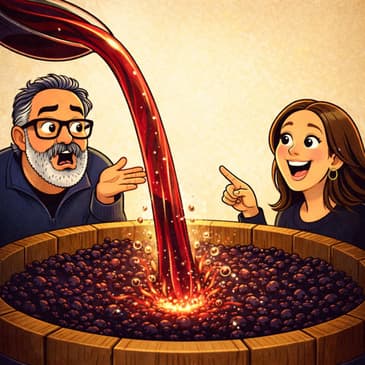
Valpolicella Ripasso is one of the most fascinating wines we have ever had. It’s not just the flavor, which slaps, but also the process and history behind it. We don’t want to spoil it before you listen, but the Ripasso method is a totally unique approach to wine making that aspiring wine nerds absolutely need to know! Hailing from the beautiful area around Verona, Italy (yes, the place where Romeo and Juliet hung out), Valpolicella is known for not just one, but four different styles of red wine which we dig into because each has an important place in the production of Valpolicella Ripasso. The result of the amazing process of Ripasso is a wine that is both complex and food friendly, rich yet acidic, and an underappreciated wine that punches well above it’s weight in terms of value to price. They don’t call it baby Amarone for nothing. And, if you don’t know what that means, you need to listen so you can learn more about these unbelievable wines. And, as an extra bonus, in our Wine in the News This Week section we discuss how wine was at the center of the Supreme Court decision to strike down the Trump Administration’s tariffs. Bet you didn’t know that. Do yourself a favor and dive in! Wines reviewed in this episode: 2018 Guerrieri Rizzardi Pojega Ripasso della Valpolicella, 2019 Michele Castellani San Michele Valpolicella Ripasso Classico Superiore
Send us a Text Message and we'll respond in our next episode!
Contact The Wine Pair Podcast - we’d love to hear from you!
Visit our website, leave a review, and reach out to us: https://thewinepairpodcast.com/
Follow and DM us on Instagram: https://www.instagram.com/thewinepairpodcast/
Send us an email: joe@thewinepairpodcast.com
Show Notes
Episode #207: Italian Wine Adventure #23: Valpolicella Ripasso — The Best Under-$25 Italian Red You're Not Drinking
_________________________________________________________
KEY INSIGHTS & FREQUENTLY ASKED QUESTIONS
Q: What is Valpolicella Ripasso and why is it called "Baby Amarone"?
A: Valpolicella Ripasso is a richly textured Italian red wine made by re-fermenting Valpolicella base wine over the leftover pomace (grape skins and seeds) from Amarone production. This second fermentation boosts its body, alcohol, and complexity — giving it Amarone-like depth at a fraction of the price, hence the nickname.
Q: What is the Ripasso method and how does it work?
A: The Ripasso method is a second-fermentation technique where Valpolicella wine is poured directly over Amarone pomace, steeping for 3–15 days. The sugar-rich Corvina skins trigger renewed fermentation, adding tannins, dried fruit complexity, and structure. The wine is then aged in Slavonian or French oak for 6–24 months before release.
Q: How is Valpolicella Ripasso different from regular Valpolicella and Amarone?
A: Think of it as the middle child of the Valpolicella family. Regular Valpolicella is light, bright, and cherry-forward. Amarone is rich, powerful, and expensive. Ripasso sits squarely between them — more body and complexity than basic Valpolicella, but more affordable and food-friendly than Amarone, typically running $20–$30.
Q: What grapes are used in Valpolicella Ripasso?
A: Valpolicella Ripasso is primarily built on Corvina, which must make up 45–90% of the blend. Corvinone (a close Corvina relative) can substitute for up to half the Corvina requirement. Rondinella and Molinara round out the traditional blend, though some producers — like Guerrieri Rizzardi — add small amounts of Merlot for added softness.
Q: What foods pair best with Valpolicella Ripasso?
A: Valpolicella Ripasso is a food-pairing powerhouse thanks to its balance of richness and acidity. Its dark fruit, dried cherry, and spice notes make it an ideal match for pasta with ragù, risotto, pasta fagioli, grilled meats, hard aged cheeses, and salumi — essentially the entire canon of Northern Italian comfort food.
________________________________________________________________________________________________
Introduction 00:00
Episode Overview and First Thoughts on Valpolicella Ripasso 01:24
Hello fellow Side Vinders! And welcome to The Wine Pair Podcast. I’m Joe, your sommelier of reasonably priced wine, and this is my wife and my wine pairing partner in crime, Carmela. And we are The Wine Pair!
If you're new to our podcast, here's what we do: Every week we buy wines under $25 with our own money, taste them, and give you our totally honest opinion on whether they're worth buying. Nobody pays us to review specific wines, we don't accept free bottles from wineries, and we're not afraid to call out a bad wine when we taste one. Decanter Magazine calls us fun, irreverent, chatty, and entertaining - so if that sounds like your vibe, welcome to our tribe of wine lovers.
Carmela, we are going back to Italy, and this time we are heading to the beautiful area around the city of Verona that we really loved. And, yes, we are talking about the same Verona that shows up in Shakespeare’s Romeo and Juliet. What an amazing city. I still think about the opera we saw with our kids in a fully intact 2000 year old arena.
The wine we are drinking and reviewing today is called Valpolicella Ripasso, sometimes called baby Amarone, and for some of you that means a lot and for some that doesn’t mean anything YET, and we are going to spend some time talking about the wines from the region like Amarone before we talk about what Ripasso means and the very specific, unique, and really fascinating technique they use to make the wine. It’s kind of crazy.
And, for a quick Italian pronunciation lesson, because this really irks me when people get it wrong, and Americans get it wrong all the time, when you see a word in Italian with the letter c followed by an i or an e, the c is pronounced CH like in check or cheese. So, the word is Valpoicella not Valpoli-sell-ah. This is the same principle as the pronunciation of focaccia. Not fo-ca-see-ah And, on a similar note, when you see a word in Italian where the letter c is followed by an h, the combination of ch is pronounced as a hard K sound like in cook or clean. So, all of you who pronounce the word bruschetta as brew-shetta are pronouncing it wrong. And you are making me mad.
Alright, back to the wine Valpolicalle Ripasso. Before we talk about how Valpolicella Ripasso is made and why it is so unique, let’s just do a quick overview of the red wines they make in the Valpolicella area because, along with there being a quiz at the end of the episode, it will actually be helpful when we talk about Ripasso. (there will not be a quiz, but you will need to know this stuff)
The basic wine in the area is, yes, also called Valpolicella, and, in case you are wondering, in the way back machine, we did an episode on Valpolicella. Plain old Valpolicella, and yes, that is a different wine than the wine we are having today. It was our third Italian Wine Adventure, so you can check that out if you are interested because that is a wine that may appeal to you if you are a Pinot Noir or Gamay lover. If you go to our website, you can easily do a search and find it. https://thewinepairpodcast.com/episode/italian-wine-adventure-3-valpolicella-a-red-wine-blend-you-should-know-light-easy-drinking-red-wine-a-red-wine-alternative-for-gamay-beaujolais-and-pinot-noir-lovers
Regular old Valpolicella is the most basic, light, and accessible wine of the region, and it is a lively, fragrant table wine with sour cherry and herb flavors, and it is sometimes even served slightly chilled. If the grapes are grown in the original, historical heart of the region, it is labeled as Classico.
Then, there is Valpolicella Superiore which is a step up in quality and structure from the basic Valpolicella. To earn the "Superiore" label, the wine must be aged for at least one year and reach at least 12% alcohol, and the aging process lowers the acidity and gives the wine more depth, roundness, and complexity.
This next wine is Amarone della Valpolicella, often just known as Amarone, and it is the most important one to remember when we get to Valpolicella Ripasso. So remember it dammit! It is a DOCG wine, the highest designation in Italy, and you find the designation on those little paper stickers at the top of wine bottles from Italy. Amarone is the region's most prestigious, powerful, and full-bodied dry red wine. It is made using a very traditional method called appassimento, where the best grapes are left to dry for several months before fermentation. This basically makes the grapes into semi-raisins, concentrating their sugars and flavors to produce a rich, highly alcoholic (often 15-16%), and complex wine. It is worth trying if you have never had it, and it is usually pretty expensive.
Then, there is a dessert wine called Recioto della Valpolicella which is also a DOCG wine, and I should note, in case you are wondering, that Valpolicella, Valpolicella Superiore, and Valpolicella Ripasso are all DOC wines, so the next designation down. Anyway, Recioto di Amarone is a sweet dessert wine that actually predates Amarone. It is made using the same appassimento method as Amarone, but the winemakers deliberately stop the fermentation process before all the sugar can convert into alcohol. The result is a sweet, what some call velvety wine with rich flavors of dried maraschino cherries and spices, and it is supposed to be a great pairing for chocolate, blue cheese, or desserts.
I mention all of this because, first, as aspiring wine nerds, you need to know this shit, and, as I mentioned, this information will be really important when we learn about Valpolicella Ripasso in a few minutes. And, we have two Valpolicella Ripasso wines that we are going to taste and review to see if they are worthy of your time and energy and if you should go out and buy them . . .
But first . . . we have to do our shameless plug.
Thank you for listening to us and for supporting our show, and just know that we buy all of the wine we taste and review every week so that we can give you real and honest reviews. If you like what you’re hearing, please subscribe to our podcast and leave us a five star rating and review so we can grow listeners.
We also love to hear from you and we always respond so you can follow us on Instagram at thewinepairpodcast, and on Bluesky. You can contact us on our website thewinepairpodcast.com, and you can sign up for our email newsletter there (comes out on the first of every month) and you can also send us a note at joe@thewinepairpodcast.com and let us know about wines your want us to review or just shoot the breeze, we love chatting it up.
And, as we do every week, we’ll tell you someone we think you should recommend The Wine Pair Podcast to - because the best way for us to grow listeners is when you tell your family and friends about us - and this week, we want you to recommend us to anyone who is looking for a little more excitement in their life because this wine may just be the spice they need.
Topic: WTF is Valpolicella Ripasso? 09:54
Ok, Carmela, it’s time to find out just what the eff Valpolicella Ripasso is, don’t you think?
Like a lot of places in Italy and Europe, they have been making wine in the Valpolicella region for a very long time. Viticulture in the region dates back to at least the time of the ancient Greeks. That’s right, I said Greeks. The tradition of making wine from partially dried grapes that we have been talking about from this region was historically referred to as the "Greco" or "Greek style.”
By the time the Romans came along, this method of making wine from what are nearly raisins was well established to produce sweet and highly regarded wines called Reticum, which are the ancestors of today's Recioto.
After the Roman Empire fell, wine in the area really was managed by monasteries and feudal estates, but even during this quieter period, records show that people were still drying grapes to make wine, so the early roots of Recioto never went away.
By the 11th and 12th centuries the name Valpolicella started to appear in documents, and when the Republic of Venice took control in the 1400s, things became more stable and more commercial. Noble families built country estates, and the sweet dried-grape wines became something associated with wealth and special occasions. In the 1600s and 1700s, farming texts describe the same basic grapes used in the region today.
The 1800s brought big cultural and political changes, and wine changes too, and dry red wines in the style of modern Valpolicella became more common alongside sweet Recioto. It was at this time that the Ripasso method was born. Farmers were forced to give the best half of their grape harvest to wealthy landowners, who used these best dried grapes to make Recioto. Left with inferior grapes, the farmers produced weak, kind of crappy table wines. To rescue their crappy wine, they invented the Ripasso method, basically steeping their weak wine like tea over the Recioto leftovers (called pomace- remember that).
So, now we are getting to it. First of all, the word Ripasso in Italian means repassed, or to go over again and that is a really important thing to drop into your brain box. Ripasso is the technique that creates the unique structure and flavor for Valpolicella Ripasso.
Before we get to Valpolicella Ripasso, we have to talk about Amarone. Remember I said it was really important to remember? Remember? Well, now we are going to talk about why. And, by the way, Valpolicella Ripasso is often called “baby Amarone.” And that is another important clue to what Valpolicella Ripasso is.
To make Amarone, winemakers pick the best bunches of grapes during harvest and leave them in well-ventilated rooms or lofts to dry for three to four months. Sound familiar?. As they rest, the grapes lose more than a third of their water and shrivel up into half-raisins. This shrinking process concentrates the sugars, flavors, and tannins inside the fruit. When these dried grapes are finally crushed and fermented, they produce a rich, full-bodied wine with a high alcohol content and deep, complex flavors. What’s most important for our story is that the leftovers from the appassimento process are called pomace - remember?, and pomace is the grape skins, seeds, stems, and other vine detritus that remain after the fermented juice has been drained or pressed out.
So, let’s see how this connects to making Valpolicella Ripasso.
To make regular Valpolicella, winemakers create a still wine using grapes from the region. So, note that like a lot of European wines, Valpolicella is the name of the wine and wine region, but not the grape. In this case, Valpolicella is a blend of grapes, and the most important grape is called Corvina, and the wine is required to be 45% to 90% Corvina. There is another grape called Corvinone, and it is a relative of Corvina, and it can be used as a substitute for up to 50% of the Corvina requirement. Other important grapes that you might see in the blend are Rondinella and Molinara, although a wider variety of grapes in small amounts are allowed.
Some of the wine made into Valpolicella is bottled as is and sold, but others are made into Valpolicella Ripasso. Remember that pomace that is left over after making Amarone? Well, winemakers take this pomace, put it into tanks or other vessels, and pour (or "re-pass" - get it, Ripasso) the wine directly over the pomace. It’s like making tea. Because the leftover skins still contain unfermented sugars, tannins, and other stuff, combining them with the base wine triggers a second fermentation. This steeping process, where the wine is combined with the pomace, usually lasts anywhere from 3 to 15 days. Then, the wine is aged in oak barrels for at least 6 months, but sometimes for up to 24 months, and this adds a lot of complexity, flavors of dried fruit, and richness that a regular Valpolicella does not have. It is not as rich as an Amarone, but it is a rich wine that is supposed to be versatile with food because it still has a lot of acidity, and goes great with foods like pasta with ragù sauces, risotto, pasta fagioli, and grilled meats as well as hard cheeses and salumi.
On a side note, there is a winery that is very famous from this region that you will likely run into now that you are aware of these wines, called Masi, and they have a well-known wine that was the first Valpolicello Ripasso wine to be released in the late 1950s called Campofiorin, and in fact Masi had trademarked the term Ripasso, but they lost a lawsuit and in 2006 the term was open for others to use as long as they followed the correct process and quality. Interestingly, the Campofiorin is no longer technically a Ripasso, but is instead called a Supervenetian that is known as a Rosso del Veronese IGT (not a Valpolicella DOC). The Campofiorin is actually a reasonably priced wine, and the Masi Amarone is more in the $80 range.
But that’s enough information. I think it’s time to learn a little more about the specific wines we are drinking today. Whaddya say?
Valpolicella Ripasso Wines We Chose for This Episode 20:38
As usual, the wines we have chosen for this episode are under $25, and they should be relatively easy to find because I bought them at wine.com. You should be able to find Valpolicella Ripasso anywhere they have a decent selection of Italian wines, but you will have to search around if you are at your local grocery store to see if they have it. You may be more likely to run into the Masi Campofiorin. And, as always, go to your local wine shop and ask the owner if they can help you and they will be happy to.
The first wine we are going to drink is the 2018 Guerrieri Rizzardi Pojega Ripasso della Valpolicella, and it is a blend of 45% Corvina, 30% Corvinone, 15% Rondinella, and 10% Merlot. So, you can see in this case how they are using small amounts of other types of grapes to make the blend.
According to the tech sheet, the grapes are hand picked and hand sorted, and then they destem the grapes and ferment them for 10 days at 25°c - 28°C or about 77 degrees Fahrenheit in stainless steel temperature controlled tanks. 77 degrees is a little unusual because that is pretty warm but not atypical for a Valpolicella Ripasso. The temperature is said to help the wine quickly extract the tannin and flavors without negatively impacting the fruity Corvina grapes.
After this first fermentation, there is malolactic fermentation to tamp down on some of the acidity, and then the secondary fermentation technique of “Ripasso” happens, and the wine is aged for 12 months in Slavonian and French oak. This is a dry wine with nearly 0 residual sugar and high alcohol at 14% or higher. It can actually be served slightly chilled, and can age for 2-6 years.
The Rizzardi family estate was established in 1649, and is in the Classico zone. Again, just know that in Italian wine, Classico means the vineyard the wine comes from is considered the oldest and most representative. I am not going to go into the long history of the Rizzardi family, but the Rizzardi and Guerrieri families who combined in the late 1700s, have been making wine for a long-ass time in the area.
The next wine we are going to drink is the 2019 Michele Castellani San Michele Valpolicella Ripasso Classico Superiore, and this wine has a lot of good reviews including a 90 from Wine Spectator and Vinous, and a 92 from sucky James Suckling. This wine is a blend of
60% Corvina, 30% Rondinella, 10% Molinara, so a more traditional blend than the first one, but a good indication that you are going to get a lot of potential differences between different wines.
The winery is also in the Classico area, just northwest of the town of Verona. The winery says that the soil is clay and limestone and that they also crush, destem, and ferment at temperatures between 75-82°F. They say the “second fermentation is carried out on the pressed skins and pomace from Castellani's best amarones” and then they age the wine for at least 2 years, with 18 month in mid-size Slavonian oak barrels and French wooden casks and the remainder in bottle before release. So a lot of aging on this wine.
There wasn’t a ton else to find out about this wine, so we are going to get to drinking. If you have a Valopolicella Ripasso, please drink along with us, and by the way, we share at the end of every episode the next wines we are drinking so you can drink around with us.
Host Read Ad for Women in Wine Festival 25:58
And before we get to the tasting, we want to take a quick break to tell you about something we think is a great event. and you can get discounted tickets to it!
It’s the Women in Wine Festival, presented by No Wine Left Behind, happening March 8th at Le Dû Wines in New York City.
It’s being billed as the first completely blind wine tasting festival, all multiple choice, so you don’t have to be an expert to participate. It’s Judgment of Paris–style matchups:Bordeaux versus New Jersey, Napa versus China, and the audience votes on the winner. The top wine gets picked up by the shop, so your vote actually counts!
They’re also bringing in Violet Grgich as a panel speaker, which is a nice direct callback to the original 1976 Paris tasting.
Every bottle at the event is made by women and poured by women, often by the winemakers themselves. Our listeners get 50 percent off either session with the code TheWinePairPodcast.
Just search Women in Wine Festival Le Dû Wines Eventbrite, use the link we put in our show notes, or send me a note and I’ll send it to you.
https://www.eventbrite.com/e/women-in-wine-festival-presented-by-no-wine-left-behind-tickets-1981201587280
LINKS TO SOURCES FOR THESE SPECIFIC WINES
- https://www.elixirwinegroup.com/product/guerrieri-rizzardi-pojega-ripasso
- https://www.vineconnections.com/italy/michele-castellani/valpolicella-classico-superiore-ripasso-san-michele/2019/
2018 Guerrieri Rizzardi Pojega Ripasso della Valpolicella, 2019 Michele Castellani San Michele Valpolicella Ripasso Classico Superiore Wine Tasting, Pairing, and Review 27:23
Wine: Guerrieri Rizzardi Pojega Ripasso della Valpolicella (Click here to find this wine on wine.com. We may be compensated if you purchase)
Region: Italy, Veneto
Year: 2018
Price: $21.97
Retailer: wine.com
Alcohol: 14%
Grapes: 45% Corvina, 30% Corvinone, 15% Rondinella, 10% Merlot
Professional Rating: Vivino 3.8
What we tasted and smelled in this Guerrieri Rizzardi Pojega Ripasso della Valpolicella:
- Color: Red purple to brown on the edges, maroon, maybe a little aged
- On the nose: Very aromatic, blue fruits, blueberries, plum, blackberry, stewed fruits, rich, blueberry pie, dark ripe cherry, matchstick, embers, leather jacket
- In the mouth: Might be a little on the old side, tart cherry, good acidity, tart blueberry, raspberry, black olive, medium body, herbs, oregano, arugula, earthy, peppery
Food to pair with this Guerrieri Rizzardi Pojega Ripasso della Valpolicella: Great bolognese sauce wine, ragu, pepperoni pizza, rich tomato sauce, pizza with arugula on it, arugula salad with shaved parm, blue cheese burger, filet mignon with blue cheese, steak with gremolata
As a reminder on our rating scale, we rate on a scale of 1-10, with no half points, where 7 and above means that we would buy it, and 4 and below means that we are likely to pour it down the sink, and a 5 or 6 means we are likely to drink it and finish it, but we are probably not going to buy it.
Guerrieri Rizzardi Pojega Ripasso della Valpolicella Wine Rating:
- Joe: 9/10
- Carmela: 7/10
Wine: Michele Castellani San Michele Valpolicella Ripasso Classico Superiore (Click here to find this wine on wine.com. We may be compensated if you purchase)
Region: Italy, Veneto
Year: 2019
Price: $24.97
Retailer: wine.com
Alcohol: 14%
Grapes: 60% Corvina, 30% Rondinella, 10% Molinara
Professional Rating: JS 92, WS 90, V 90 Vivino
What we tasted and smelled in this Michele Castellani San Michele Valpolicella Ripasso Classico Superiore:
- Color: Ruby red
- On the nose: Molasses, smoke, spice, patchouli, incense, spicy blackberry jam, Fig Newton, dried fruit, prune, dried fig, dried raisins, medicine, eucalyptus
- In the mouth: Medium strong tannins, crunchy tart red fruit on the front, rich spicy peppery patchouli mid-palate, like a mulled wine, flavor tapers off at the end, may be past its prime in terms of age
Food to pair with this Michele Castellani San Michele Valpolicella Ripasso Classico Superiore: Good with food because of the acid, pasta, eggplant or chicken parmigiana, meaty lasagna, grilled pizza, red sauces
Michele Castellani San Michele Valpolicella Ripasso Classico Superiore Wine Rating:
- Joe: 7/10
- Carmela: 7/10
Which one of these are you finishing tonight?
- Carmela: Guerrieri Rizzardi Pojega Ripasso della Valpolicella
- Joe: Guerrieri Rizzardi Pojega Ripasso della Valpolicella
The Test: Did we nail the taste profiles expected from Valpolicella Ripasso? 42:09
- General
- Medium to full-bodied, black fruits like sour cherry, sweet black cherry, plum, blackberry, blackcurrant, and wild strawberry. Dried fruits, cinnamon, clove, black pepper, paprika, chocolate, vanilla. Leather, tobacco, cedar, earth, bay leaf, balsamic. Firm but smooth tannins
- Guerrieri Rizzardi Pojega Ripasso della Valpolicella
- Winery: A Ripasso with depth and concentration yet maintaining its signature freshness. Plenty of dark berried fruit and subtle sweet spices
- Could not find others
- Michele Castellani San Michele Valpolicella Ripasso Classico Superiore
- Winery: Complex and intense, with aromas of blackberries, fruit in syrup, notes of leather, cedar, and spices. Slightly tannic with a spicy and persistent finish.
- JS: A tightly packed nose of plums, cherries and incense, following through to an equally compact, medium-bodied plate with intense flavor and tight, firm tannin.
- WS: A polished red that layers creamy tannins with aromas and flavors of fig cake, sun-dried black cherry, eucalyptus and black olive. Medium-bodied and well-knit, with hints of espresso and licorice lingering on the lightly chewy finish.
- V: an alluring bouquet of sweet roses and bright cherries complemented by a hint of candied orange. It’s round and supple yet energetic, with ripe red fruits nicely balanced by a core of brisk acidity. Earth tones and savory spice add contrast through the finish as the San Michele tapers off with a lovely inner tension.
What is the verdict on Valpolicella Ripasso? 44:31
We really like it, need to be drinking it more, it’s on the list now, a Sunday night dinner wine, a great balance of elegance and homey-wine, great blend of tart fruit
And now it is time to head over to our new desk so that we can cover our wine in the news this week segment.
Wine in the news this week: U.S. Supreme Court Strikes Down Trump Tariffs on Imported Wine 45:28
- winespectator.com/articles/supreme-court-strikes-down-trump-tariffs-on-imported-wine
- cnn.com/2026/02/21/business/vos-selections-trump-tariffs-lawsuit-risk-takers
- npr.org/2026/02/20/nx-s1-5720877/a-u-s-based-wine-importer-reacts-to-his-supreme-court-victory-against-trumps-tariffs
Our wine in the news this week comes from author Mitch Frank from the Wine Spectator and is entitled “U.S. Supreme Court Strikes Down Trump Tariffs on Imported Wine,” and I've got links to both articles in the show notes if you want to dig deeper.
Most of you already know about the fact that the Supreme Court ruled against the Trump Administration's tariffs, but we are going to talk about how wine was at the center of the lawsuit that was the heart of the case.
About a year ago, the federal government imposed sweeping emergency tariffs on imported goods from most countries, and wine was impacted in a big way. When you factor in the full supply chain from importer to distributor to retailer, some estimates had retail prices going up 50% or more on imported wines. For us and our podcast that's literally built around finding great wine under $25, that's not great news.
What may be lost in this story is that it wasn’t the big guys who raised the lawsuit. It was a guy named Victor Schwartz who runs a small wine importing company in New York called VOS Selections who was really feeling the pinch of the tariffs. His company brings in wine and spirits from 16 countries including France, Italy, and South Africa. These businesses run on thin margins, and so when the tariffs hit, Schwartz said it felt like his business might not survive. So, he decided to do something about it. He sued the President and his administration, and as we all know now, the lawsuit went all the way to the Supreme Court.
The legal argument was pretty simple: the administration had been using a 1977 emergency powers law called IEEPA which stands for the International Emergency Economic Powers Act, to impose the tariffs. However, that law was designed for national security emergencies, like freezing foreign assets, not for broad tariffs against everyone. And the decision argued that the Constitution is pretty clear that the power to impose taxes and tariffs belongs to Congress, not the White House.
On February 20th, the Supreme Court ruled 6 to 3 that those tariffs were unconstitutional. Unfortunately, within a few hours of the decision, the President announced a new 10% global tariff using a different law. Raised it to 15% the next day. After insulting some of the Justices. So, you know. That's where we are.
But here's what I actually want you to take away from this story in terms of why we are talking about it on our podcast. It's in many ways a wine story. Victor Schwartz did this to save his business, and he has paid a price for bringing the lawsuit. He's been getting threats ever since this went public, and so his office keeps its doors locked now,
And this matters to us because we believe wine is food, that it is a central part of not just enjoying life but also of understanding the world, and we go out of our way to find wines that are reasonably priced from all over the world. We started this podcast because we think wine education and knowledge should be accessible, not limited to those who have the right income or the right credentials to participate. The wines we share with you, under twenty-five bucks, are often made by small producers all over the world, and get to us because of people like Victor Schwartz who make it their life's work to bring them here, and because of the small, family owned farmers and winemakers who just want to make a living selling the craft of their hands. Tariffs just make it harder for businesses to survive, and for people to find, afford, and enjoy wine.
So cheers to Victor. The story is not over, but it is nice to see the little guy win ever once in a while.
Any thoughts you want to share about it, Carmela?
Listener Shoutouts 49:41
We have some fun listener shoutouts for this week, and we so appreciate when you reach out to use and tell us what you think, or what you are drinking, and so here are some shoutouts:
- Hasini who shared the class notes she received from her wine class on the Loire Valley so thank you very much, Hasini!
- Jared who reached out and asked us what was worse - TJ’s Pumpkin Spice Chardonnay or Meiomi, and asked us if we would do more Portuguese wine and since we are headed out that way in a few weeks, yes!
Wines coming up in future episodes in case you want to drink along with us 50:25
- Lebanese wines
- Pet-Nat
- Domaine Lingot-Martin Pet Nat Gueule de Gamay
- Lubanzi Rainboat Pet Nat 2024
- German Riesling
- Xinomavro
- Portuguese wines from Alentejo
- Viurna / White Rioja
- High QPR Pinot Noir
- Soter Vineyards Planet Oregon Pinot Noir 2023
- Chehalem 2023 Chehalem Estate Vineyard Pinot Noir
Outro and how to find The Wine Pair Podcast 51:24
Thank you for listening to us and for supporting our show, and remember, we buy all of our own wine and we do all of the writing and recording and editing to bring you a show every week because we absolutely love doing it, and our small little ask for you is that you please follow or subscribe to our podcast and also please leave us a nice rating and review to help us grow our listeners - and a huge thank you to all of you who have done so already!
You can also follow us on Instagram at thewinepairpodcast, and on Bluesky. You can contact us on our website thewinepairpodcast.com, and you can sign up for our email newsletter there and you can also visit our “Shop Wine” section where you can find links to buy the wines that we rate as buys in each episode. I will also note that on our website, if you are curious about a wine we have covered in the past, we do have a pretty good search functionality, so you can use that find wines you want to know more about.
And we want to make content you care about and you like, so send us a note or DM us and give us some feedback or let us know if there are wines you want us to try or wine making areas of the world you are curious about - and we’ll take care of it! joe@thewinepairpodcast.com
Alright, with that, we are going to sign off, so thanks again, and we will see you next time. And, as we say, life is short, so stop drinking shitty wine.
RESEARCH ARTICLES AND LINKS FOR THIS EPISODE
- https://en.wikipedia.org/wiki/Valpolicella
- https://vinepair.com/wine-101/valpolicella-101/
- https://winefolly.com/deep-dive/valpolicella-wine-pyramid/
- https://www.vinerra.com/education/wines/valpolicella-ripasso-an-in-depth-wine-profile
- https://shop.allamarone.com/what-is-valpolicella-ripasso/
- https://sipcru.com/educate/what-is-the-ripasso-method/
- https://tasteverona.com/en/ripasso-della-valpolicella-wine-guide/
- https://www.amaronetours.it/wines/valpolicella-superiore/ripasso
- https://www.veronissima.com/en/ripasso.html
- https://www.dacastellovini.com/en/vino-ripasso-the-history-of-a-technique-with-ancient-roots/
- https://italianwinecentral.com/denomination/valpolicella-ripasso-doc/
- https://winecouture.it/article-en/valpolicella-annual-report-2025-production-returns-to-2014-levels/
- https://winenews.it/en/valpolicella-beyond-the-pandemic-in-2021-sales-up-16-in-value-over-2020_462360/
- https://www.meiningers-international.com/wine/analysis-styles-regions/valpolicella-market-analysis-presented-annual-conference
- https://en.ilsole24ore.com/art/less-amarone-and-more-valpolicella-continues-transformation-of-veronese-red-wines-AHUHVpVB
- https://www.gilbertgaillard.com/en/magazine/discovery/how-valpolicella-reconciles-tradition-with-a-global-vision
- https://merosconsulting.com/italys-valpolicella-wineries-are-not-lacking-in-young-winemakers-to-continue-a-vibrant-export-industry/
- https://www.meiningers-international.com/wine/styles-regions/rise-ripasso
- https://www.thedrinksbusiness.com/2023/10/why-masi-is-revamping-campofiorin/
- https://www.decanter.com/sponsored/masis-campofiorin-the-evolution-of-a-groundbreaking-wine-516304/
- https://winespiritwomen.com/2023/07/19/masi-campofiorin-vertical-tasting-with-giacomo-boscaini/
- https://wine-pages.com/tasting-articles/masters-of-appassimento-masi/
- https://www.terroiramarone.net/blog/2019/9/19/valpolicella-wines-new-path
- https://www.wine-searcher.com/regions-valpolicella+ripasso
- https://www.consorziovalpolicella.it/en/valpolicella-education-program/
Support The Wine Pair Podcast by heading to our website and shopping for the wines we give our highest ratings to in our Shop Wines section. Just click on this link - you pay the same price, and we may get a small amount of compensation.
You can also support us by clicking on this affiliate link to wine.com and find great wines under $20!
And, if you are looking for a great website builder for your podcast, click on this link to use the service we use and love: Beamly, formerly known as Podcastpage.io.